KHAN YOUNIS, Gaza Strip (AP) – Palestinians queued on both sides of Gaza's border with Egypt on Tuesday, yearning to pass through the Rafah crossing. The reopening on the previous day was overshadowed by significant delays, rigorous interrogations, and uncertainty regarding who would be allowed to cross.
Reports from Egypt's state-run Al-Qahera News television indicated that Palestinians on the Egyptian side were seeking medical treatment after fleeing Gaza during the ongoing Israel-Hamas war. Meanwhile, those remaining in Gaza, in dire need of medical assistance unavailable locally, assembled at a hospital before ambulances transported them to Rafah, hoping for a chance to cross.
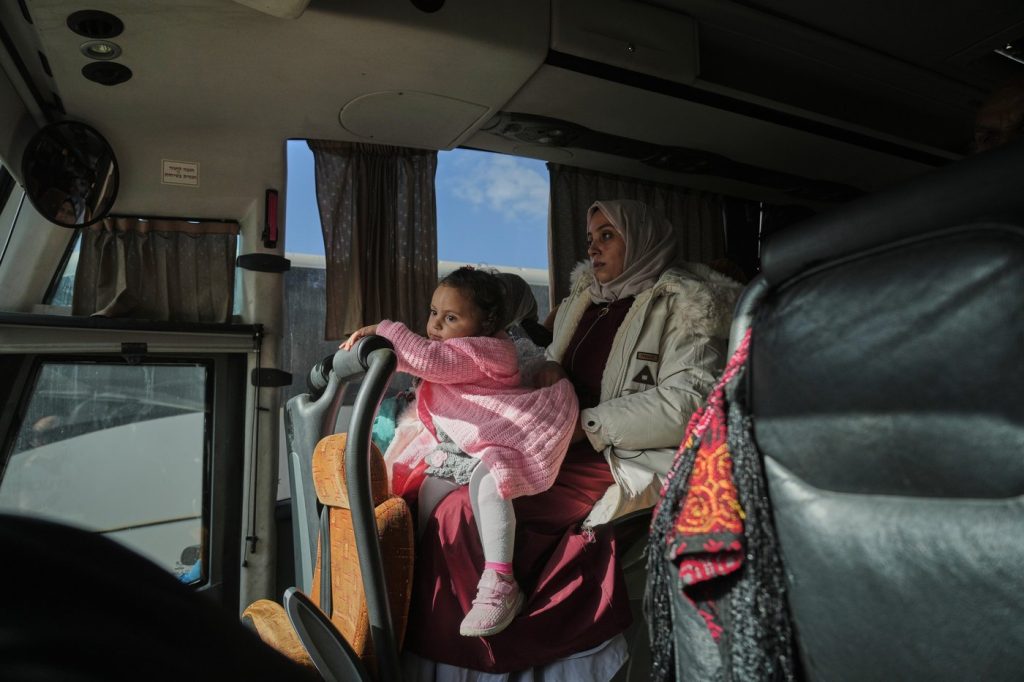
The North Sinai governorate confirmed that an undisclosed number of patients and their companions successfully crossed from Gaza into Egypt. A bus carrying around 40 Palestinians who returned to Gaza arrived at Nasser Hospital in Khan Younis early Wednesday morning, where family members greeted them after a lengthy wait.
Despite being perceived as a step forward in the fragile ceasefire agreed upon in October, the reopening was marred by lengthy waits. Over 10 hours passed before only approximately a dozen returnees and a few medical evacuees managed to cross in each direction on the first day, indicating significant logistical challenges.
Three women who crossed into Gaza on Monday reported being blindfolded and handcuffed by Israeli troops, subjected to hours of interrogation and threats before release. The total number of crossings on Monday fell dramatically short of the expected 50 individuals, revealing the significant humanitarian gap for tens of thousands of Palestinians in urgent need of evacuation for medical care or family reunification.
Furthermore, the flow of humanitarian aid or goods through Rafah remains strictly prohibited. In a further demonstration of the ongoing humanitarian crisis, evacuation efforts convened early Tuesday morning at a Red Crescent hospital in Khan Younis, where a World Health Organization (WHO) team arrived. A vehicle carrying patients and their relatives entered from another hospital, as both WHO and Palestinian ambulances prepared to await crossing.
Health officials voiced that the limited number of individuals allowed to exit pales in comparison to Gaza's overwhelming healthcare needs. With two years' worth of conflict devastating medical infrastructure, hospitals currently struggle to manage trauma injuries, amputations, and chronic conditions such as cancer. In Gaza City, Shifa Hospital director Mohamed Abu Selmiya criticized the situation, calling it "crisis management, not a solution to the crisis," and highlighted the dire implications of denying patient evacuations and medical supply entries.
U.N. and WHO representatives echoed concerns that the minuscule trickle of patients exiting, combined with the restrictions on much-needed supplies, only exacerbates Gaza's humanitarian disaster. Tom Fletcher, the U.N.'s top relief official, emphasized that “Rafah must function as a real humanitarian corridor” to facilitate an increase in aid deliveries.
Reports from Palestinian Red Crescent spokesperson Raed al-Nims indicated that merely 16 patients with chronic conditions or war injuries, accompanied by 40 relatives, crossed from Khan Younis to Gaza on Tuesday—again, fewer than anticipated. After days of anticipation surrounding the reopening, hope remained that this might mark an essential initial step toward alleviating the humanitarian plight. Iman Rashwan, waiting for her mother and sister's return from Egypt, clung to the hope that other families would soon be reunited.
Officials conveyed that the number of crossings might eventually increase if the system proved effective, with Israel and Egypt jointly vetting those allowed to enter and exit. However, security concerns and bureaucratic hurdles quickly dampened expectations that had built up regarding the Rafah reopening, which officials previously touted as a significant advancement in the ceasefire process.
Delays on Monday were attributed to disagreements over luggage allowances. Reports indicated that returnees were required to relinquish nearly all personal belongings, allowed only to carry the clothes they wore and one bag each. The gradually increasing number of crossing permissions remains largely symbolic; Israeli and Egyptian officials had mentioned the intention for 50 medical evacuees and their caregivers to depart alongside 50 returning Palestinians. With over 20,000 individuals identified by Gaza's Health Ministry as needing treatment abroad, the pace of current procedures indicates prolonged waiting periods are likely.
Concerns linger regarding the criteria for permitting passage through Rafah, as both Israeli and Egyptian authorities seek to restrict passage. Israeli Prime Minister Benjamin Netanyahu has assured that anyone wishing to leave will ultimately be allowed to do so, although Egypt maintains that the crossing must operate in both directions to offset fears that Israel could exploit the situation to expel Palestinians from Gaza.
The reopening of Rafah is viewed as crucial as the ceasefire agreement transitions into a complex second phase, which includes establishing a new Palestinian governance committee for Gaza, deploying an international security presence, disarming Hamas, and initiating reconstruction efforts.
On a separate note, Nasser Hospital reported the shooting death of 19-year-old Ahmed Abdel-Al by Israeli troops in southern Gaza City on Tuesday morning. This incident highlights the ongoing violence, as Israeli military officials stated they had no immediate knowledge of any shooting in that area. According to the Gaza Health Ministry, Abdel-Al is among 529 Palestinians killed by Israeli fire since the ceasefire commenced, contributing to a staggering death toll of over 71,800 Palestinians since the war's inception, as the ministry maintains reliable casualty records acknowledged by U.N. agencies and independent analysts.