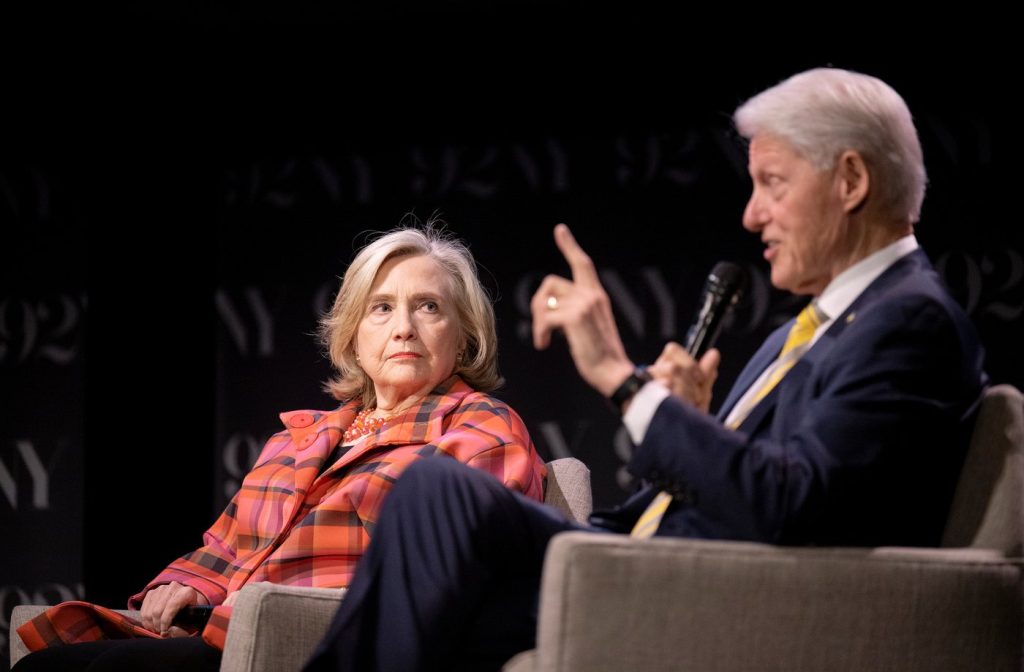
Former President Bill Clinton and former Secretary of State Hillary Clinton have reached an agreement with House Republicans to testify in a House investigation focused on Jeffrey Epstein. This decision was made to avoid a contempt of Congress vote against them, which had been threatened by House Republicans. Hillary Clinton is scheduled to testify before the House Oversight Committee on February 26, while Bill Clinton will appear the following day on February 27. This event will be notable as it marks the first instance of lawmakers compelling a former president to testify.
The arrangement comes after several months of negotiations during which the Republicans sought to make the Clintons a central focus of the inquiry into Epstein, a convicted sex offender who died by suicide in a New York jail in 2019, and his former accomplice, Ghislaine Maxwell. Rep. James Comer, the chair of the House Oversight Committee, expressed eagerness to question the Clintons as part of their investigation, emphasizing the need for transparency and accountability regarding Epstein’s crimes.
Initially, both Clintons resisted the subpoenas issued by the committee. However, in light of the ongoing discussions with House Republicans and the looming threat of criminal contempt charges, they began to seek an alternative resolution. House Speaker Mike Johnson announced that any contempt efforts were currently “on pause.” Despite this truce, negotiations were characterized by a lack of trust, with the Clintons and Republican lawmakers wrangling over the specifics of the deposition agreements. They ultimately decided to have the depositions transcribed and recorded on video, as confirmed by Comer.
The tension surrounding the negotiations is expected to intensify as Republicans plan to probe the Clintons under oath. Comer has indicated that the inquiry aims to understand how Epstein associated with influential individuals. While the Clintons have expressed a preference for public testimonies, Comer has insisted on keeping these sessions private initially, proposing to release transcripts afterward. He remains open to a later public hearing should the Clintons request it.
Bill Clinton had a documented history with Epstein during the late 1990s and early 2000s, yet neither he nor Trump has faced credible accusations regarding their interactions with the financier. Both Clintons have maintained that they had no prior knowledge of Epstein's illicit activities involving underage girls. They had previously contended that the subpoenas for their testimony were invalid, only to reverse their stance under the threat of serious legal consequences, including potential fines and imprisonment if found guilty of contempt.
The Clintons’ decision to comply with the subpoenas has led to discussions among Democrats regarding the precedent this sets for future congressional interactions with former presidents. Some party members view this as a potential tool that could be leveraged if they regain congressional control in the upcoming elections. In a significant contrast, former President Donald Trump's attorneys successfully resisted a congressional subpoena in 2022 concerning the January 6 Capitol riot investigation, citing longstanding legal protections for former presidents. Ultimately, Trump's subpoena was withdrawn.
During a signing of an unrelated bill, President Joe Biden commented on the Clintons' impending depositions, characterizing it as "a shame." He also praised Bill Clinton, referring to him as a person he always liked, and commended Hillary Clinton for her intelligence and debate skills. This ongoing political narrative and the circumstances surrounding the Clintons’ testimonies are shaping the future landscape of congressional accountability and the dynamics of political rivalry.