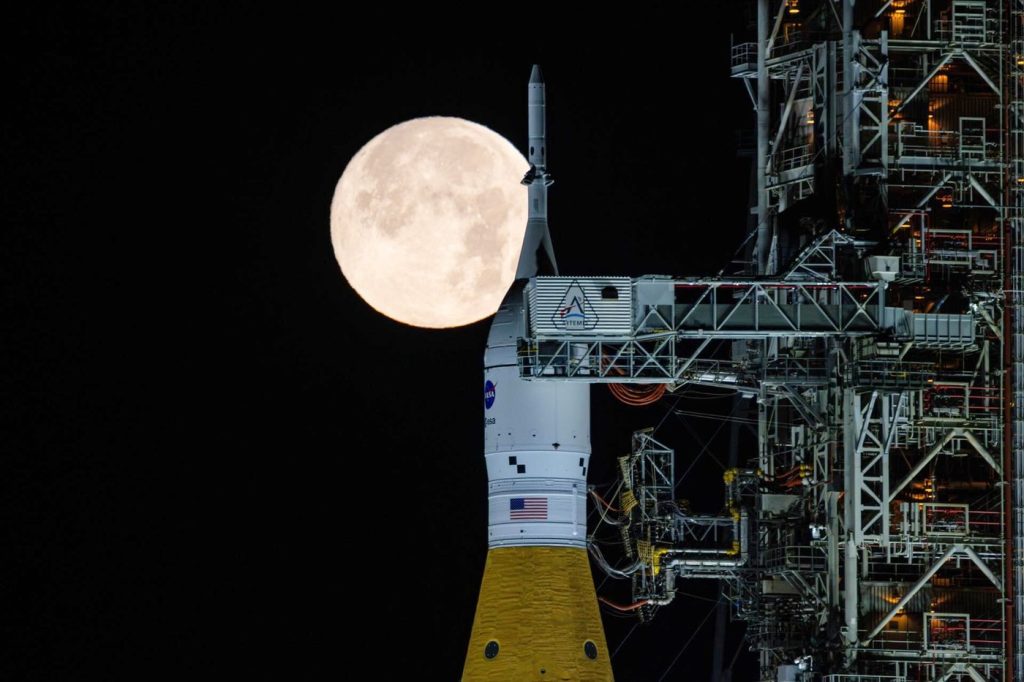
CAPE CANAVERAL, Fla. (AP) — NASA's highly anticipated lunar mission with astronauts has been postponed until at least March due to recurrent hydrogen fuel leaks encountered during the dress rehearsal for its Artemis II mission. This issue is reminiscent of the problems that plagued the Space Launch System (SLS) rocket's initial test flight three years ago, which was also delayed due to fuel leaks that pose significant safety risks.
During a press conference, NASA's John Honeycutt expressed surprise at the recurrence of the leaks, which halted the countdown at Kennedy Space Center just five minutes before the launch. The agency had originally aimed for a launch as early as the upcoming weekend, marking humanity's first journey to the moon in over 50 years. Honeycutt explained the challenges of working with hydrogen, describing it as a “small molecule” that is “highly energetic” but also difficult to manage.
NASA officials stated that the month-long delay will enable the team to conduct another fuel testing procedure before committing to the upcoming lunar fly-around involving four astronauts — three Americans and one Canadian. It remains uncertain when the countdown rehearsal will be rescheduled. The team anticipates that repairs to any damaged seals or components can likely be performed at the launch pad, as moving the rocket back to the Vehicle Assembly Building would result in further delays.
The hydrogen leaks first appeared during the initial loading operations on Monday and reoccurred multiple times, prompting the launch controllers to try various techniques to reseat loose seals. Despite these efforts, including attempts to warm the area between the rocket and fuel lines, the adjustments failed to address the leaks, just as they had during the successful 2022 crew-less test flight.
As a result of the launch delay, mission commander Reid Wiseman and his crew have been allowed to exit quarantine in Houston, but they will undergo another period of quarantine two weeks prior to the next launch attempt. Wiseman expressed pride in how the dress rehearsal unfolded, especially considering the complexities faced by the launch team in these high-risk situations.
NASA officials clarified that the extreme cold at the launch site did not contribute to the fuel leaks or other mechanical issues. The Orion capsule, positioned atop the 322-foot (98-meter) rocket, was kept warm by heaters, while the rocket's ground systems were maintained through a continuous purging process.
Amit Kshatriya, NASA's associate administrator, emphasized the experimental nature of the SLS, asserting that more lessons are yet to be learned from this mission. He cautioned against labeling any of these vehicles as operational, recalling the tragedies associated with previous spaceflights, including the Challenger disaster, as a reminder of the inherent risks in space exploration.
NASA has a limited number of launch windows each month for its Artemis programs, as this mission intends to send astronauts around the moon for the first time since the Apollo 17 flight in 1972. While this mission does not include a landing on the lunar surface, it focuses on evaluating life support and other critical systems in preparation for future missions aimed at achieving sustained human presence on the moon's surface, especially in the unexplored south polar region.
The Artemis program signifies a new chapter in lunar exploration, building upon the legacy of the Apollo missions, which saw 24 astronauts visit the moon during the 1960s and 1970s. NASA aims to establish longer-term human presence on the lunar surface, paving the way for future exploration and scientific endeavors.