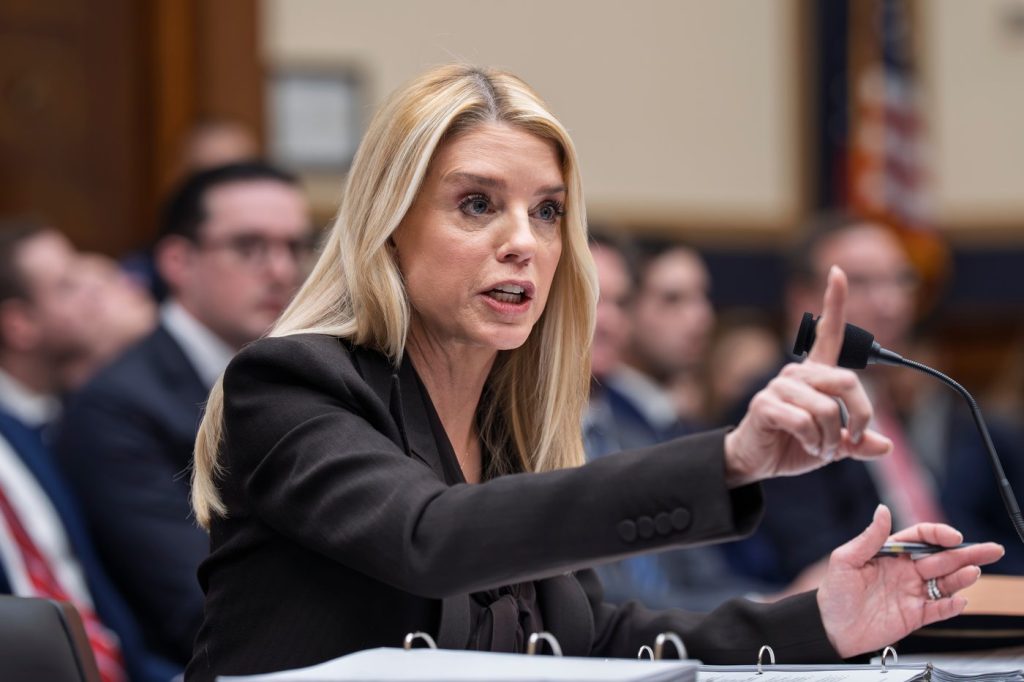
On Wednesday, Attorney General Pam Bondi delivered a vigorous defense of former President Donald Trump during a tense House Judiciary Committee hearing focused on the Justice Department's handling of the Jeffrey Epstein files. Bondi's emotional address sought to counter ongoing criticisms of the department, portraying herself as a staunch defender of the Republican president while accusing Democrats of attempting to distract from Trump's achievements.
During the hearing, Bondi claimed that Democrats were leveraging the Epstein case to undermine Trump's accomplishments, specifically mentioning the stock market's performance as part of her defense. "You sit here and you attack the president and I'm not going to have it," Bondi asserted, displaying her combative stance amid a room where Epstein's victims were present.
As the hearing escalated into a partisan skirmish, Bondi took aim at several Democratic lawmakers, including Rep. Jamie Raskin from Maryland, who accused her of dodging questions. In response, Bondi derogatively labeled Raskin a "washed-up loser lawyer," a remark that encapsulated the hostile tone of the proceedings. Despite efforts from Republican members to steer the discussion towards more general law enforcement issues like violent crime and illegal immigration, Bondi repeatedly deflected inquiries about the Epstein files, instead making pointed counterattacks against her Democratic questioners.
Rep. Becca Balint, a Democrat from Vermont, expressed her frustration with Bondi's approach, stating, "This is pathetic. I am not asking trick questions here. The American people have a right to know the answers." This highlighted the growing impatience among Democrats as Bondi deflected pointed questions regarding the handling of sensitive information related to Epstein.
Since the controversial distribution of binders containing Epstein-related materials to conservative influencers in February 2025, Bondi has faced significant backlash over how the Justice Department managed these files. Critics, including members of her own party, have voiced concerns over the release, which revealed intimate details and led to further calls for transparency regarding those involved with Epstein. In her opening remarks, while she expressed sympathy for Epstein's victims, Bondi notably declined to face them or directly apologize for the department's shortcomings, dismissing requests for accountability as "theatrics."
Bonds’ testimony came amidst allegations that the Justice Department had been politicized under her leadership. While she maintained that the department's focus should be on reducing violent crime and returning to its core missions, recent events, including a grand jury's refusal to indict lawmakers for a military video deemed controversial, have only intensified scrutiny of her role. Republican Rep. Jim Jordan praised Bondi's efforts to reverse actions taken under President Joe Biden that he claimed unfairly targeted conservatives, including Trump.
Democrats, for their part, were unyielding in their criticisms of Bondi, particularly concerning what they described as haphazard and improper redactions in the released Epstein files. Raskin articulated this concern in his statement, claiming that Bondi was compromising the dignity of victims while being unnecessarily secretive about the files. Similarly, Republican Rep. Thomas Massie criticized Bondi for her mismanagement of the personal information of survivors, emphasizing the seriousness of her failures.
As the hearing progressed, Bondi continued to assert that the department had acted responsibly, despite mistakes that were acknowledged as inevitable due to the volume of materials involved. She stated that they removed sensitive files upon realizing they contained victim information and defended the urgency and practicality of their operations amidst political pressure.
Looking back, Bondi's testimony illustrates the complex intersection of justice, political alliances, and the sensitive handling of high-profile cases like Epstein's. Critics remain divided on her efficacy, while proposals for increased transparency and accountability continue to resonate within the ongoing discourse surrounding the Justice Department and its mission to serve justice impartially.