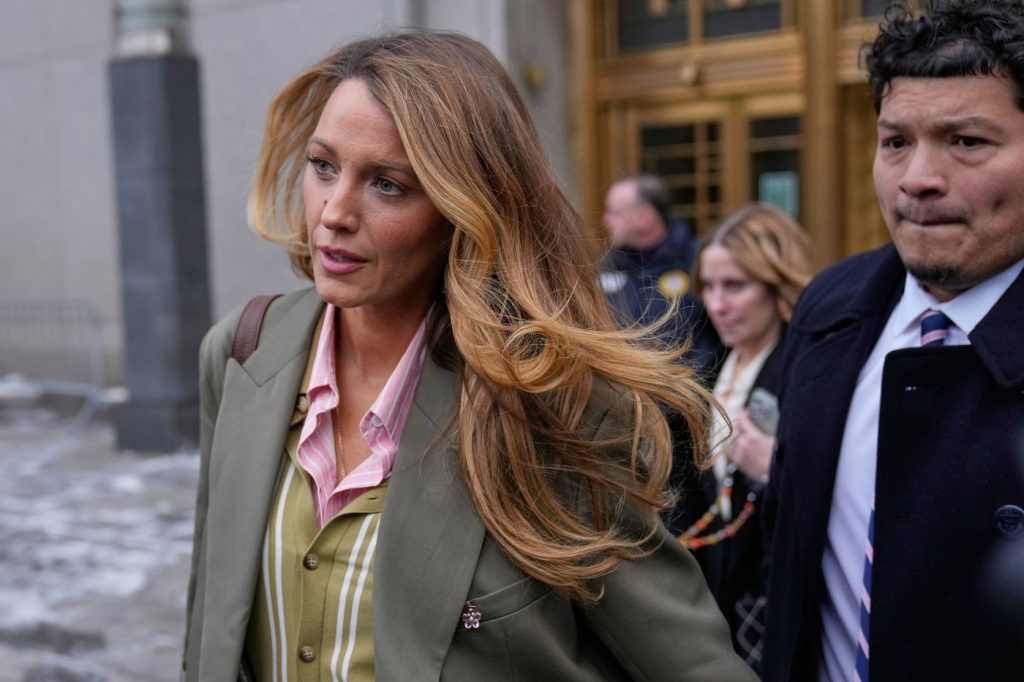
On February 11, 2026, actor Blake Lively and director Justin Baldoni attended a Manhattan federal courthouse in New York to discuss the possibility of settling Lively's lawsuit, which alleges sexual harassment that occurred on the set of the upcoming 2024 romantic drama “It Ends With Us.” The primary focus of the settlement talks was to see if the ongoing litigation could be resolved prior to the scheduled trial date of May 18, 2026.
The mandatory settlement talks extended over a duration of six hours, culminating without a resolution. Both Lively and Baldoni left the courthouse separately, with Lively appearing stern and Baldoni displaying a smile. Following the settlement discussions, Baldoni's attorney, Bryan Freedman, confirmed via email that the discussions did not culminate in a settlement, indicating that the legal battle would proceed toward trial.
The legal dispute, characterized by its acrimonious nature, has had widespread implications within the entertainment industry, attracting significant media attention and raising essential questions surrounding power dynamics, influence, and gender relations in Hollywood. Lively's lawsuit alleges that Baldoni and a hired crisis communications expert engaged in harassment and orchestrated a campaign aimed at damaging her reputation after she expressed concerns regarding Baldoni's treatment of her on set.
In response, Baldoni and his production company, Wayfarer Studios, filed a countersuit against Lively and her husband, actor Ryan Reynolds, accusing them of defamation and extortion. However, this countersuit was dismissed by Judge Lewis J. Liman in June 2025, which further complicated the legal landscape of the case.
The anticipated trial is expected to be high-profile, with several notable personalities likely to provide testimony. Lively’s legal team has indicated in official court documents that a variety of witnesses—including singer Taylor Swift, model Gigi Hadid, and actors such as Emily Blunt, Alexis Bledel, America Ferrera, and Hugh Jackman—could be called to testify, highlighting the far-reaching implications of the case.
This ongoing dispute not only underscores the complexities of legal battles within the entertainment industry but also emphasizes broader societal concerns, including the treatment of women in Hollywood and the mechanisms of reputation management in the face of allegations. As the parties continue their legal engagement, the outcomes of this case may resonate beyond the immediate individuals involved, potentially influencing discussions around workplace behavior and accountability in the entertainment sector.