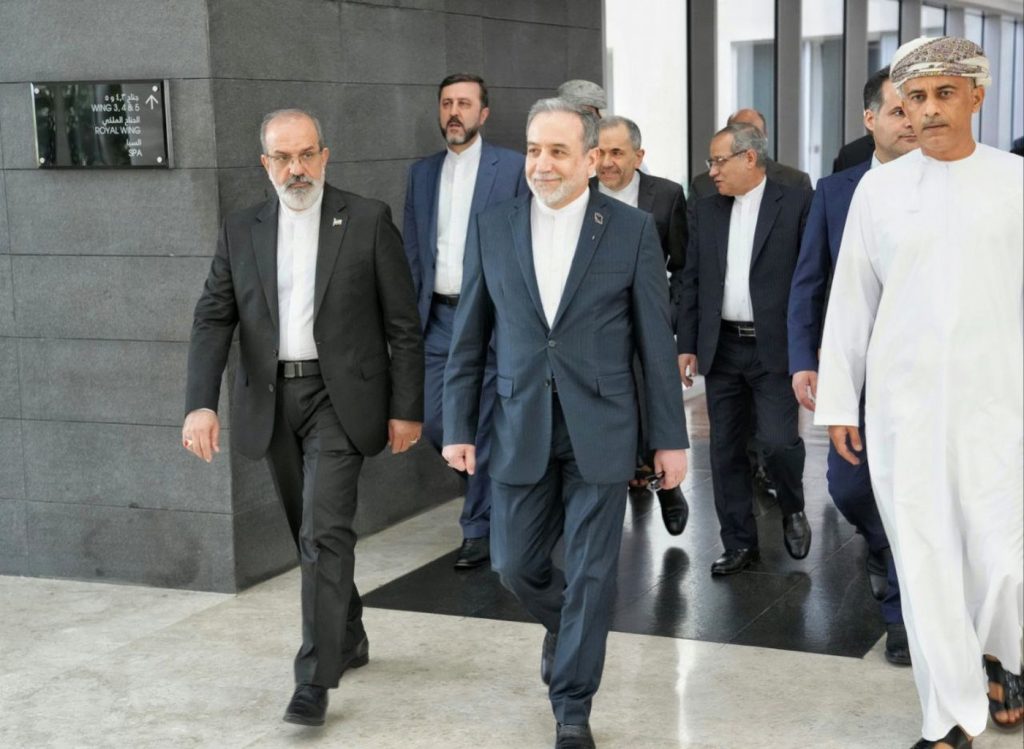
GENEVA (AP) - Iran and the United States are set to engage in a second round of talks regarding Tehran's nuclear program next week, as confirmed by the Swiss Foreign Ministry on Saturday. These discussions will take place in Geneva, hosted by Oman, which facilitated the first round of indirect talks on February 6, although specific dates for the upcoming meetings have yet to be announced.
The first set of discussions came after considerable tension between the two nations. Following the initial round of talks, U.S. President Donald Trump issued a stark warning to Tehran, emphasizing that failing to reach a consensus with his administration could result in severe consequences, characterizing it as "very traumatic."
Previous negotiations last year faced significant challenges, culminating in a failed attempt in June coinciding with a military conflict initiated by Israel. This conflict evolved into a 12-day war on Iran, which was marked by the U.S. bombing of Iranian nuclear sites.
Trump has consistently threatened military action to compel Iran to limit its nuclear ambitions, asserting that a change in regime would beneficially transform the situation. Iran, in response, has threatened retaliatory measures. Additionally, Gulf Arab states have expressed concerns that such an attack could escalate tensions, leading to wider regional conflict.
In a show of military strength, Trump announced that the USS Gerald R. Ford, the largest aircraft carrier in the world, would be dispatched from the Caribbean to the Middle East, augmenting the existing U.S. military presence in the region. This move comes amid rising tensions stemming from Iran's violent response to recent nationwide protests.
The initial indirect talks on February 6 involved Iranian Foreign Minister Abbas Araghchi and U.S. Mideast envoy Steve Witkoff, marking a significant occasion as it was the first time that the top military commander in the Middle East was also present at such discussions.
While the Trump administration maintains that Iran must not enrich uranium under any agreement, Tehran has firmly rejected this stipulation. Iran insists that its nuclear program is intended for peaceful purposes but has increasingly suggested the possibility of pursuing nuclear weapon capabilities. Before the June conflict, Iran was enriching uranium to levels of up to 60% purity, just a short technical step from reaching weapons-grade standards.
Iranian President Masoud Pezeshkian has asserted that his nation is prepared to accept any verification process concerning its nuclear activities. However, the International Atomic Energy Agency (IAEA) has faced challenges in inspecting and confirming Iran's nuclear stockpile for several months.
As discussions move forward, Trump has indicated that his primary focus is to urge Iran to curtail its nuclear program, while Iran seeks to center the talks solely around this issue. Adding another layer of complexity to the negotiations, Israeli Prime Minister Benjamin Netanyahu has pressed for an agreement that also addresses Iran's ballistic missile program and its financial support for proxy groups, including Hamas and Hezbollah.