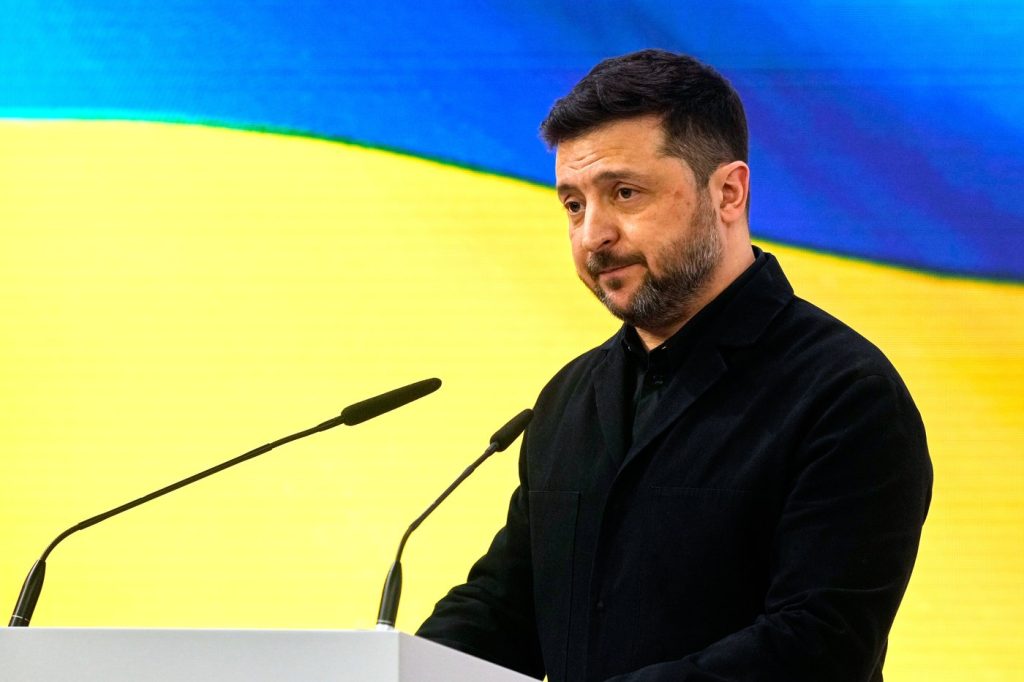
KYIV, Ukraine (AP) — Ukraine's President Volodymyr Zelenskyy expressed gratitude to his international allies for their assistance amidst ongoing discussions regarding future security guarantees for Ukraine. Speaking at the Munich Security Conference held in Germany, Zelenskyy emphasized the significance of the air defense systems provided by American and European allies, stating that these systems play a vital role in protecting critical infrastructure and "saving lives."
Amid previous U.S.-led diplomatic attempts aimed at negotiating an end to the war, including the two rounds of talks in Abu Dhabi, unresolved issues persist, particularly concerning the future status of Ukraine’s Donbas region, which remains heavily occupied by Russian forces. During his engagement with reporters, Zelenskyy raised questions about the feasibility of a proposed U.S. free trade zone, especially in light of the territorial claims being made by Russia.
Zelenskyy observed that while U.S. officials are eager for a swift resolution and prefer to finalize all agreements related to Ukraine collectively, Ukraine itself prioritizes securing guarantees regarding its future security before agreeing to any ceasefire or economic arrangements. European nations, including the United Kingdom and France, have pledged their commitment to deploy troops to Ukraine to support its security. Discussions about the role of the U.S. in this context are ongoing.
According to Zelenskyy, Russian officials oppose the presence of foreign troops in Ukraine, as President Vladimir Putin seeks opportunities to launch further attacks. He expressed surprise at Moscow's recent decision to replace the head of its negotiating team, suggesting that this move was intended to stall the negotiation process. The current backdrop for these talks involves continued hostilities along the 1,250-kilometer (750-mile) front line, ongoing bombardments of civilian areas in Ukraine, and almost daily drone strikes against war-related assets in Russia.
During discussions, Russian representatives have insisted that Ukraine must cede additional territory in the eastern part of the country to bring an end to the conflict. Zelenskyy characterized this demand as “a little bit crazy,” asserting that it would be unacceptable for Ukraine to relinquish its own land. He highlighted the human cost of the conflict, noting the thousands of Ukrainians who have died defending the Donbas region, which is home to approximately 200,000 residents.
Furthermore, Zelenskyy elaborated on the complications that could arise from the establishment of a free economic zone in the context of foreign troop presence. He warned of potential provocations from Putin that could lead to significant consequences, including the possibility of a large-scale occupation of Ukraine. The Ukrainian leader articulated that any model for peace that allows for Russian victory poses “big risks” for both Ukraine and any nations that commit to guaranteeing its security. However, he indicated a willingness to discuss such proposals if they could facilitate support for the reconstruction of Ukraine after the war.
In negotiations, Zelenskyy asserted that Russia must agree to monitor a ceasefire and accept the return of around 7,000 Ukrainian prisoners of war in exchange for over 4,000 Russian prisoners currently held by Ukraine. Previously, drone strikes in Ukraine resulted in casualties, including the death of an elderly woman in Odesa, while in Russia, a civilian was killed due to a Ukrainian drone strike in Bryansk. These incidents occurred as discussions for fresh negotiations are set to continue next week in Geneva.