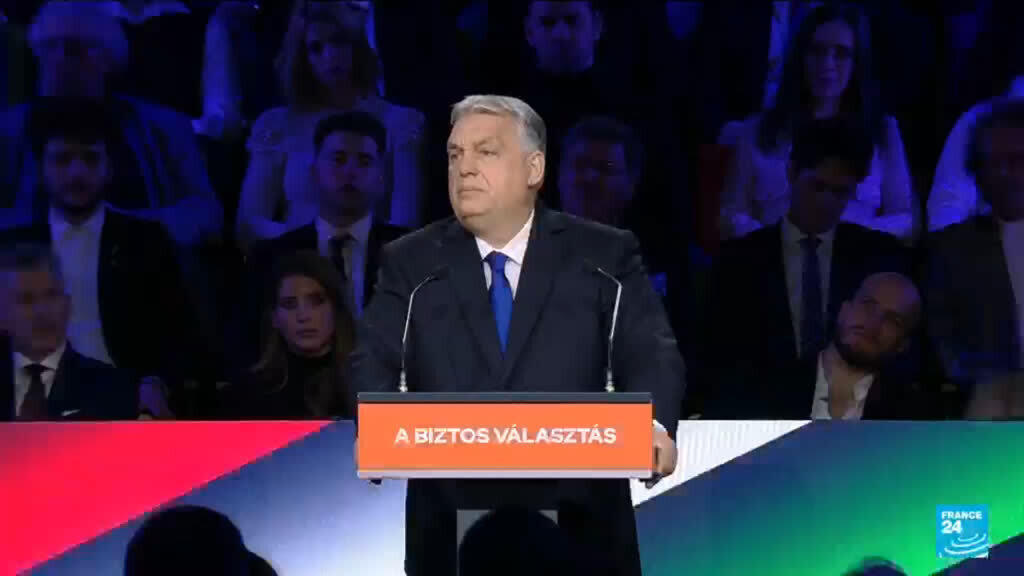
Following his recent appearance in Munich, US Secretary of State Marco Rubio is set to travel to Budapest. This visit is particularly significant as it occurs just two months ahead of critical elections in Hungary that could potentially see the long-standing Prime Minister, Viktor Orbán, lose power after a tenure of 16 years. Orbán, who has been an ally of former US President Donald Trump, delivered his annual state of the nation address on Saturday, framing the European Union as Hungary's main threat rather than Russia.
In his address, Orbán expressed concerns about the influences and policies of the European Union, suggesting that these pose a greater danger to Hungary's sovereignty than external threats like Russia. His rhetoric reflects a broader populist and nationalist approach that has characterized his governance. This perspective aligns with Orbán’s prior criticisms of EU policies and interventions that he believes undermine Hungary's independence.
Contrasting Orbán's viewpoint, opposition leader Péter Magyar is scheduled to deliver a counter-address on Sunday. Magyar’s response is anticipated to address the criticisms of Orbán's administration while presenting alternative solutions and a vision for Hungary’s future. As the elections draw near, the stakes are high, with the potential for a significant political shift in the country.
With the backdrop of rising tensions within the EU and concerns regarding national sovereignty among member states, the dynamics of the upcoming election are crucial. Voters will be faced with the choice of continuing Orbán's contentious policies or opting for the opposition's proposals that promise a different approach to governance and Hungary's relationship with the EU.
This political climate showcases the broader trends in European politics, where nationalism and skepticism towards traditional alliances are becoming more prevalent. As Rubio engages with Hungarian officials, the outcome of the elections will not only impact Hungary but also reverberate through the political landscape of Europe, influencing discussions on collaboration and governance within the EU framework.
As Hungary approaches the elections, both Orbán’s government and the opposition are gearing up for a fiercely contested political battle. With a history of contentious relations with the EU, including debates over rule of law and democratic standards, the election will serve as a litmus test for the country's future direction. As such, the outcomes are likely to be closely watched by both regional and global observers seeking to understand the shifting tides of European politics.
```