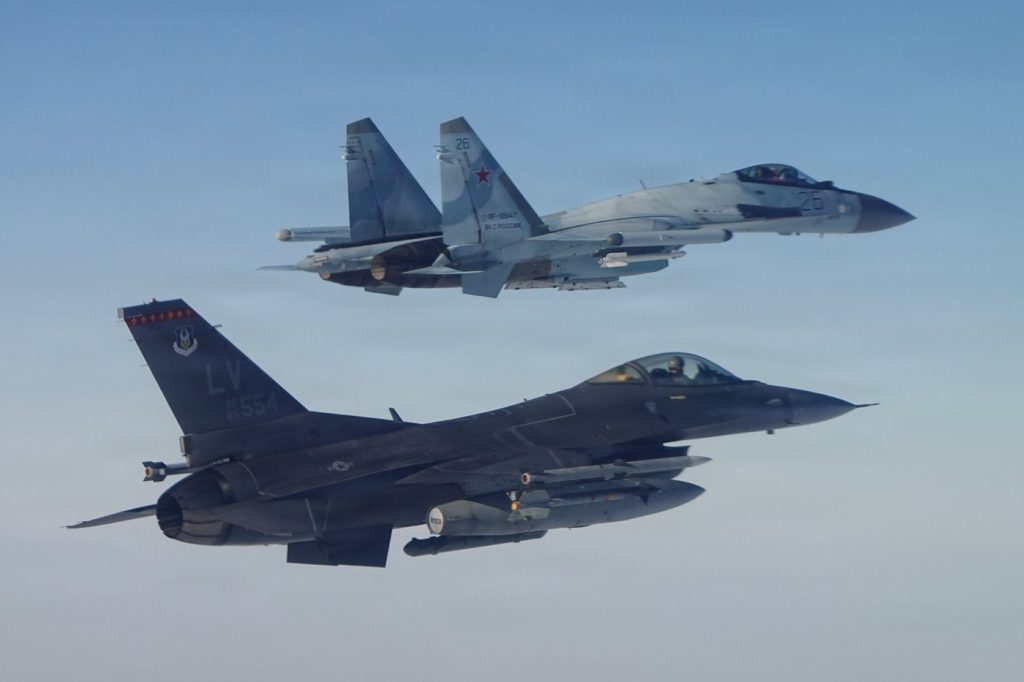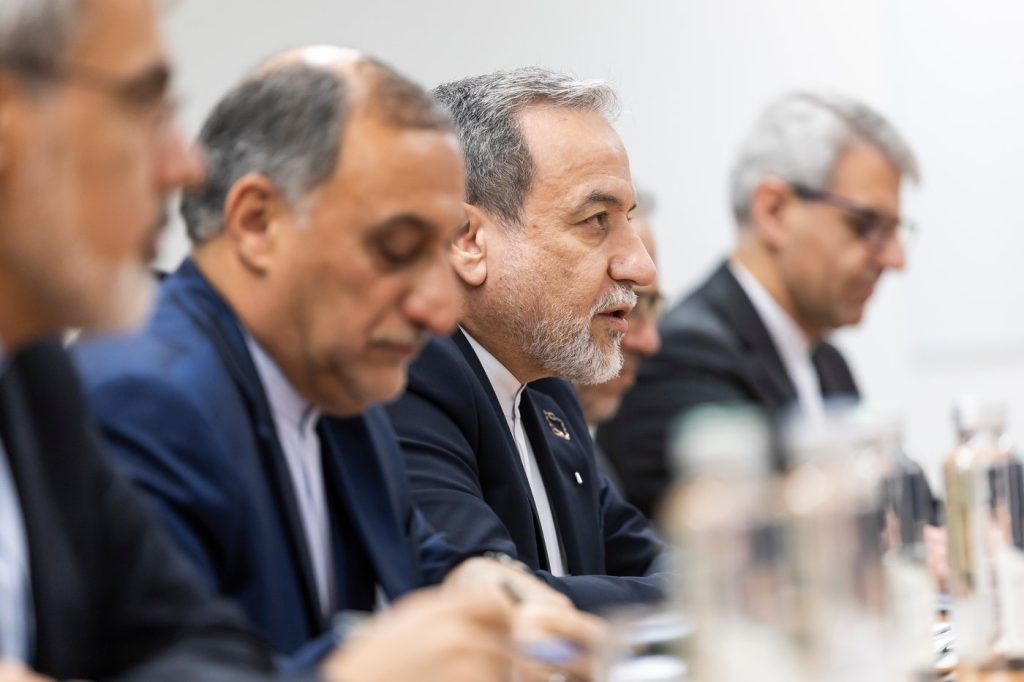
On Friday, President Donald Trump indicated that limited military strikes against Iran could be a possibility as negotiations over the country's nuclear program continue. This statement came shortly after Iranian Foreign Minister Abbas Araghchi revealed that Tehran anticipates finalizing a draft deal within the next few days to send to Washington.
When asked by a reporter whether the U.S. might engage in limited military action during the negotiations, Trump responded, "I guess I can say I am considering that." He later added that Iran "better negotiate a fair deal." The renewed tensions between the two nations have escalated, with the Trump administration reinforcing its military presence in the Middle East, deploying additional warships and aircraft.
The USS Gerald R. Ford carrier strike group recently passed through the Strait of Gibraltar, entering the Mediterranean Sea, marking one of the largest U.S. military deployments in the region in decades. Both Iran and the U.S. have signaled their readiness for conflict if negotiations fail. Araghchi emphasized Iran's preparedness for "diplomacy" as well as for "war," indicating the high stakes surrounding the ongoing discussions.
Previously, Trump expressed his belief that a deal could be reached within 10 to 15 days, following recent indirect negotiations that seemed to yield little progress. The backdrop of these talks includes the U.S.'s withdrawal from the 2015 nuclear agreement in 2018, which has left negotiations stymied for years as Iran has resisted demands from the U.S. and Israel regarding its missile program and support for regional militant groups.
In his interview, Araghchi also noted that U.S. officials have not insisted on terms for zero uranium enrichment, which contrasts with statements made by American representatives publicly. Instead, he mentioned that discussions focus on ensuring Iran's nuclear program remains peaceful. In exchange for concessions related to economic sanctions, Iran is prepared to implement confidence-building measures. However, a White House official reiterated that Trump has made it clear that Iran cannot pursue nuclear weapons or the capacity to develop them.
Despite Iran's insistence on the peaceful nature of its nuclear program, the U.S. and its allies harbor suspicions regarding Iran's intentions, fearing that the program may ultimately lead to weapon development. The ongoing dialogue has raised significant concerns among U.S. lawmakers, leading to bipartisan discussions about the necessity for congressional approval before any military action against Iran. Democratic Senator Tim Kaine of Virginia has introduced a war powers resolution aimed at requiring such approval, although it faces considerable obstacles in a Republican-controlled government.
Kaine's statement reflects a growing unease among lawmakers regarding the potential for military confrontation, urging colleagues who support war to take accountability by voting openly rather than avoiding responsibility. The atmosphere surrounding negotiations and potential military actions continues to be fraught with high tension as both sides seek to navigate the complexities of diplomacy in the shadow of potential conflict.