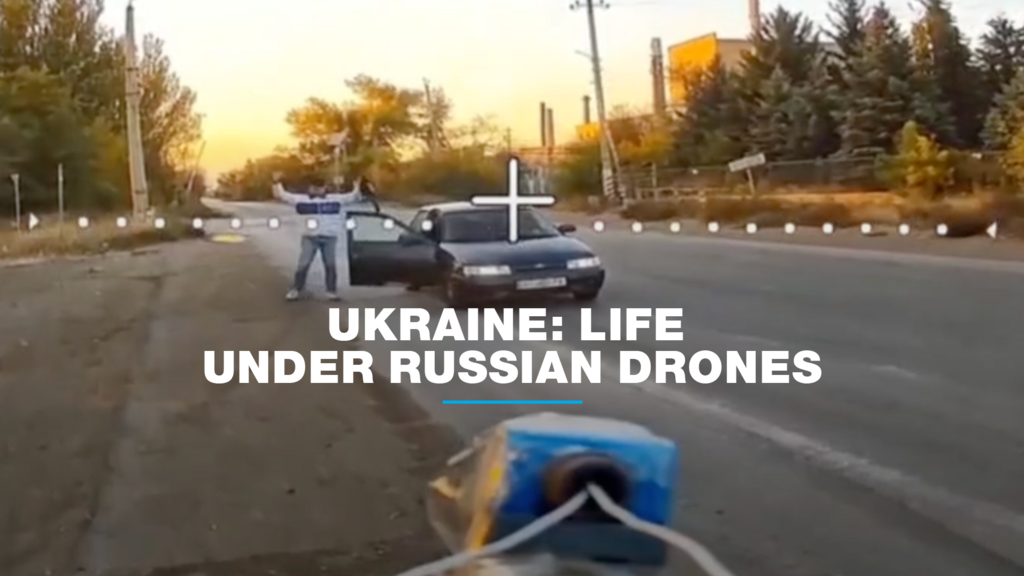
Four years into Russia's full-scale invasion of Ukraine, the landscape of warfare has significantly changed, primarily due to the integration of drones into military tactics. These unmanned aerial vehicles have not only altered the dynamics of battles but have also brought the ramifications of war directly to the homes of ordinary Ukrainians. Among the various types of drones utilized, small First-Person View (FPV) drones and the long-range Iranian-made Shahed drones have emerged as instruments of terror for the civilian population.
The impact of these drones on daily life in Ukraine has been profound. FPV drones, which can be maneuvered remotely by operators, allow for precise strikes on targets, often with little warning. Civilians recount experiences of sudden explosions, leaving them with no time to react. The psychological toll of living under the constant threat of drone attacks has intensified, creating an atmosphere of fear and uncertainty in communities across the country.
Meanwhile, the Shahed drones, which are capable of traveling substantial distances to hit strategic objectives, have also been deployed increasingly against urban areas. Reports indicate that as these long-range drones approach, warning systems often alert residents mere minutes before impact, leading to panic and chaos. For many families, these moments have transformed their homes into sites of fear, where the threat of attack looms large over their everyday lives.
Ukrainian civilians have had to adapt to this new reality, leading to a societal shift in how individuals perceive safety and security. Schools, workplaces, and recreational areas have been disrupted by air raid alerts, forcing people to live in a state of vigilance. Many residents have taken to creating makeshift shelters in their homes and developing emergency plans to safeguard themselves and their families against drone strikes.
The psychological effects on the population can be seen in increased anxiety and stress levels, leading to a growing mental health crisis. Support groups and community initiatives are emerging to help individuals cope with the trauma associated with living in a conflict zone where drone warfare has become a common threat.
In addition to the immediate dangers posed by these drones, the infrastructure of several Ukrainian cities has been significantly affected. Strategic sites, including energy facilities and transportation hubs, have been targeted, leading to power outages and disruptions in essential services. This not only affects daily life but also poses challenges for the overall economy and the war effort, as the government struggles to maintain functionality under constant aerial assaults.
As the conflict persists, the reality of drone warfare in Ukraine serves as a grim reminder of the evolving nature of modern combat. Civilians find themselves caught in a war that increasingly incorporates technological advancements, juxtaposing traditional forms of warfare with the high-stakes precision of drone usage.
This transformation in combat and its fallout highlights a crucial aspect of the ongoing conflict, showcasing how warfare extends beyond battlefields into the lives of everyday people. As Ukraine navigates this complex landscape, the stories of civilians affected by the omnipresent threat of drone strikes illustrate the extensive and often overlooked human impact of modern warfare.
```