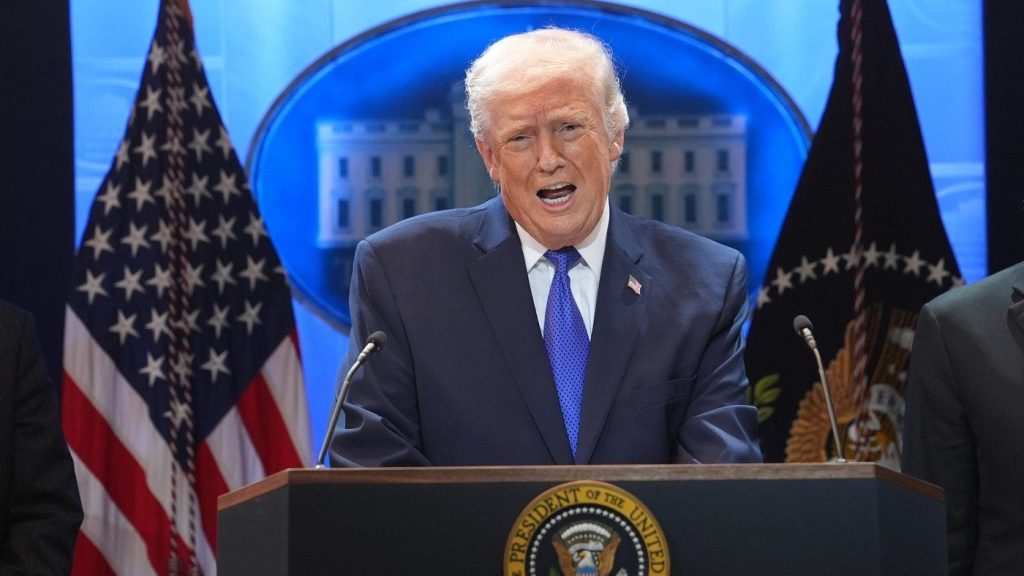
U.S. President Donald Trump has announced plans to sign an executive order imposing a 10 percent global tariff after the Supreme Court struck down his prior efforts to implement sweeping tariffs through the use of emergency powers. The decision, delivered on a 6-3 vote, reinforced the idea that the Constitution grants Congress the exclusive authority to levy taxes, including tariffs. Chief Justice John Roberts emphasized that the Framers did not grant taxing powers to the Executive Branch.
Trump's new tariffs, which would be implemented under Section 122 of the 1974 Trade Act, are intended to apply globally and are described as "over and above" existing tariffs. However, this law allows the duty to remain in place for only 150 days unless Congress votes to extend it. The president criticized the Supreme Court justices who ruled against him, calling them "a disgrace to our nation" and suggesting that foreign interests had influenced their decision. When pressed by reporters on whether there was evidence of such interference, he cryptically responded, "You’re gonna find out."
This ruling marked a significant setback for Trump, as tariffs had been a cornerstone of his economic strategy aimed at addressing trade deficits. Despite the Supreme Court's decision, Trump expressed confidence in the ability to impose tariffs through alternative legal avenues. He asserted, "Effective immediately, all national security tariffs... remain in place, fully in place, and in full force and effect," indicating that other frameworks for imposing tariffs would still be utilized.
The contentious ruling attracted attention across the political spectrum. While Trump characterized the case as one of the most critical in U.S. history, it faced legal challenges from various sources, including pro-business groups that traditionally align with the Republican standpoint. A widespread poll indicated that tariffs lack public support, particularly with rising voter concerns regarding affordability. Justices Samuel Alito, Clarence Thomas, and Brett Kavanaugh dissented, with Kavanaugh asserting in his dissent that the tariffs were lawful based on historical precedent.
The legal foundation for Trump's tariffs was based on a 1977 law that granted the president the authority to regulate imports in emergencies. Past presidents have invoked this legislation primarily for sanctions, but Trump's application to impose import taxes was unprecedented. In April 2025, he announced "reciprocal" tariffs against most nations as a response to what he described as a national emergency concerning trade deficits. This decision came on the heels of previous tariffs levied against Canada, China, and Mexico, purportedly to combat drug trafficking.
The economic consequences of Trump’s tariffs have been estimated to reach around $3 trillion over the next ten years, according to projections from the Congressional Budget Office. More than $133 billion has already been collected from these tariffs under the invoked emergency powers law. Following the imposition of these tariffs, several companies, including well-known retail chains like Costco, have initiated legal actions seeking refunds due to the economic strain caused by the additional taxes.
As the scenario unfolds, the potential effects on global trade dynamics remain uncertain, particularly as opponents continue to challenge Trump's interpretation of tariff powers. The administration has maintained that the tariff framework will persist through alternative legal channels, signaling a robust trade policy that could shape economic relations in the coming years.