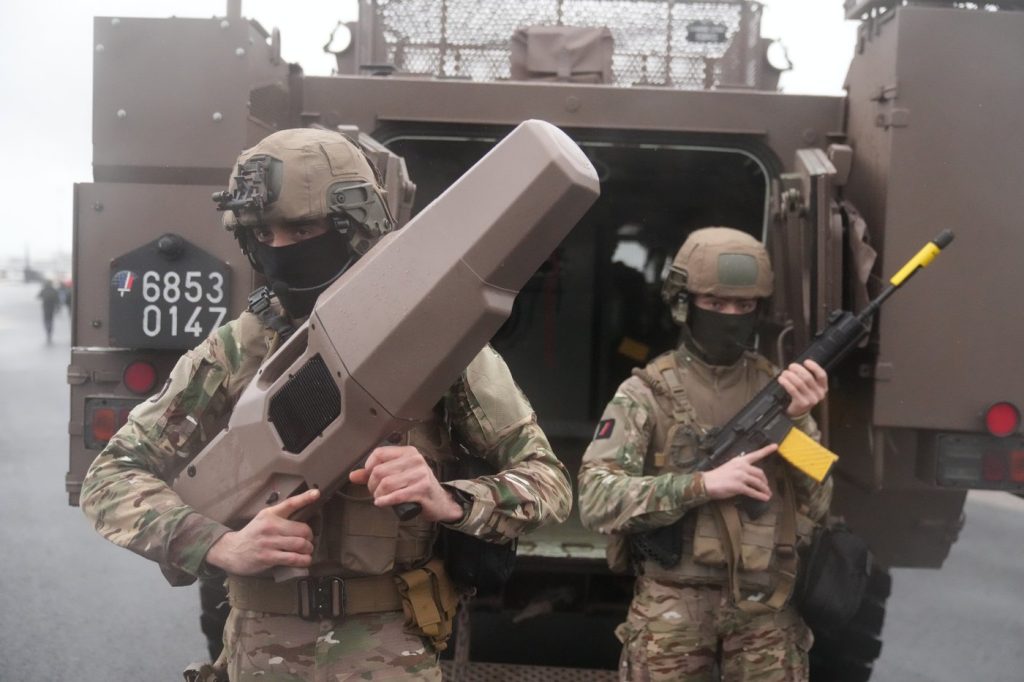
WARSAW – Five European nations have launched a new initiative aimed at producing low-cost air defense systems and autonomous drones, leveraging Ukrainian expertise developed during the ongoing conflict with Russia. The five nations—France, Poland, Germany, the United Kingdom, and Italy—have come together under a program named Low-Cost Effectors and Autonomous Platforms (LEAP) to enhance their military capabilities.
This announcement comes amidst various European efforts to strengthen defenses along borders, particularly in light of increased drone activity and hostility from Russia. The initiative aims to create a "drone wall" capable of detecting, tracking, and intercepting unauthorized drones in European airspace. Both Russia and Ukraine have demonstrated advanced drone warfare capabilities, significantly altering contemporary battle tactics.
Poland is already collaborating with Ukraine on developing drone technology as part of military training and manufacturing partnerships, prompted by incidents involving unauthorized drones testing Europe’s borders and airports. Although Russia has been accused of orchestrating some of these incidents, it denies any intentional involvement.
Luke Pollard, the UK's minister for defense readiness and industry, emphasized the necessity of investing in the next generation of defense systems to reinforce NATO's security. He remarked on the importance of balancing the costs of emerging threats with effective defense strategies, highlighting the need for affordable solutions to counter the low-cost nature of drones and missiles.
Poland’s defense minister, Wladyslaw Kosiniak-Kamysz, confirmed that the E5 nations have agreed to jointly invest in the production of drone capabilities and affordable defense systems. He stressed the need for rapid adaptation to changing combat technologies and techniques, pointing out that their collaboration will include the usage of artificial intelligence in developing combat payloads.
Referring to an incident in September 2025, when Russian drones entered Polish airspace, Warsaw and its NATO allies had to deploy multimillion-dollar jets to respond to inexpensive drones that crashed into the countryside. The introduction of low-cost kinetic or electronic effectors could contribute to the effective detection and neutralization of such threats at a significantly reduced cost.
The urgency to enhance European defense capabilities follows critiques from former U.S. President Donald Trump regarding NATO and European military spending. These pressures have prompted the EU to increase defense budgets and rethink military collaborations. Kaja Kallas, the EU's foreign policy chief, articulated that Europe’s security landscape remains highly uncertain due to factors like Russian aggression and instability in the Middle East, reinforcing the necessity of a dedicated low-cost interceptor program as a measure of security commitment.
Kallas pointed out that strengthening Europe’s military capacity is vital for overall security, not merely as a counterbalance to NATO but as an enhancement to the alliance. A stronger European military framework, she argued, would inherently strengthen NATO as well.
Despite Trump's divisive second term and controversial actions, such as threats to seize Greenland, there are ongoing concerns regarding the cohesion of NATO and its ability to deter adversaries effectively. Trump’s administration has drawn criticism from various allies, further complicating transatlantic relations and affecting the operational effectiveness of the world's largest security coalition.
Amid these challenges, the E5 initiative represents a proactive step toward modernizing European defense systems and fortifying collective security in a time of heightened tension and uncertainty across the continent.