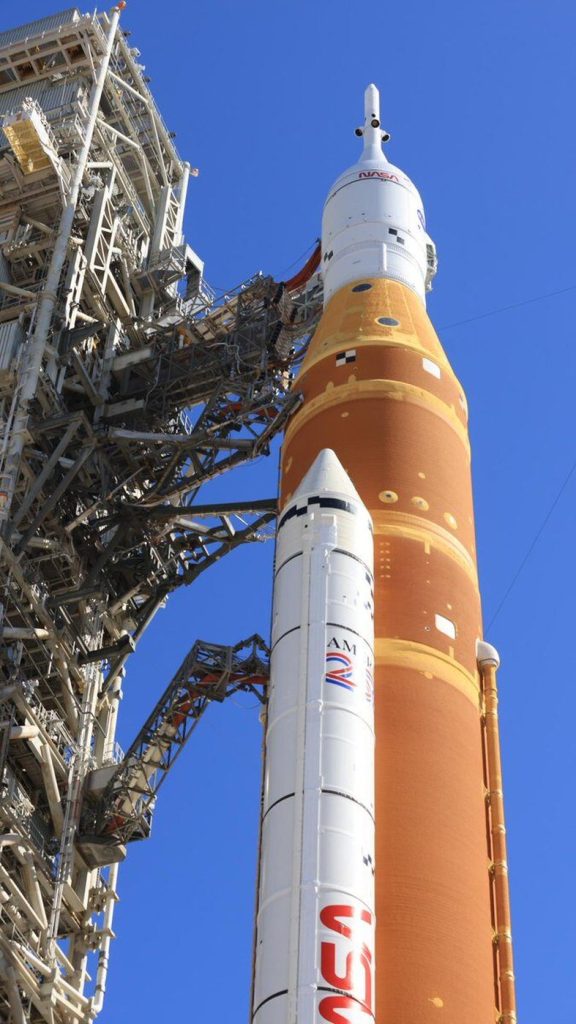
CAPE CANAVERAL, Fla. — NASA has announced plans to send astronauts to the moon in March 2024, following a successful rocket fueling test that marked a significant milestone for the agency's Artemis program. The announcement was made on Friday, just two weeks before the first targeted launch opportunity on March 6.
Lori Glaze, NASA's exploration systems development chief, expressed excitement about the impending mission, stating, "This is really getting real, and it’s time to get serious and start getting excited." The enthusiasm was echoed by Administrator Jared Isaacman, who highlighted the "major progress" made since the first countdown rehearsal that faced disruptions due to hydrogen leaks earlier in February.
The second fueling test, conducted on Thursday, was completed with exceptionally low seepage, demonstrating the effectiveness of the modifications made to the rocket's system. Isaacman referred to this successful test as "a big step toward America’s return to the lunar environment." The last time astronauts visited the moon was more than 50 years ago, during the Apollo missions.
As preparations continue, NASA officials expressed confidence in launching four astronauts on the Artemis II lunar fly-around as early as March 6 from the Kennedy Space Center in Florida. To ensure their readiness, the team of three Americans and one Canadian began their mandatory two-week health quarantine on Friday night in Houston.
NASA has limited launch windows available, with only five days in March for the countdown aboard the Space Launch System (SLS) rocket. If the March launch does not occur, the agency will need to wait until late April for the next opportunity. Previous chances in February were lost due to dangerous liquid hydrogen leaks that occurred during the initial fueling demonstration.
Following the leaks, technicians replaced two Teflon seals, leading to the successful re-test on Thursday. The countdown clocks successfully reached the crucial 29-second mark, indicating the system's preparedness. The removed seals showed some minor scratches, but officials did not find any significant damage that could have contributed to the previous leaks. Additionally, some moisture was identified in the area, which may have exacerbated the issues.
On Thursday, Commander Reid Wiseman and two of his crew members monitored the operation alongside launch controllers, marking a pivotal moment as the astronauts prepare to become the first to fly to the moon since Apollo 17 concluded NASA's earlier moon exploration chapter in 1972.
A flight readiness review is set to take place late next week. If the review yields positive results, the astronauts are expected to return to Kennedy Space Center for an actual countdown at the beginning of March. Glaze shared her personal connection to the mission, stating, "Every night I look up at the moon and I see it and I get real excited because I can really feel she’s calling us, and we’re ready."
The upcoming mission will last nearly 10 days and is categorized as a test flight, with astronauts traveling aboard the 322-foot (98-meter) SLS rocket for the first time. Previously, in 2022, the SLS underwent a flight without any crew on board.
Looking ahead, Artemis III is slated to attempt a landing with a pair of astronauts near the moon’s south pole in the coming years. However, certain logistical details, including the selection of a lunar lander—whether from Elon Musk’s SpaceX or Jeff Bezos’ Blue Origin—will take time to finalize, with NASA expecting to announce the crew for the moon landing in several months, possibly up to a year.