TRUCKEE, Calif. (AP) — Authorities announced the recovery of the bodies of nine backcountry skiers who tragically lost their lives in an avalanche in California. This devastating event occurred four days ago on Tuesday, around 11:30 a.m., near Castle Peak in the Sierra Nevada, close to Lake Tahoe. The recovery operation faced significant challenges due to intense snowfall and treacherous conditions, making it difficult for rescue crews to access the area.
On Saturday, search teams located eight victims initially and discovered one more who had been missing since the avalanche. According to Nevada County Sheriff’s Lt. Dennis Hack, the ninth victim was found "relatively close" to the other bodies. However, white-out conditions obscured visibility during the initial recovery attempts, making it impossible to see everyone at that time.
Nevada County Sheriff Shannon Moon expressed gratitude towards the numerous agencies and 42 volunteers who participated in the effort to recover the victims. "We are fortunate in this mountain community that we are very tight knit, and our community shows up in times of tragedy," Moon stated during a news conference.
Victims Named
For the first time, Sheriff Moon named the three guides from the Blackbird Mountain Company who perished in the avalanche: Andrew Alissandratos, 34; Nicole Choo, 42; and Michael Henry, 30. Alissandratos hailed from Tampa, Florida, moving to Tahoe about a decade ago, while Henry relocated to Colorado in 2016 and then to Truckee three years later. No biography was available for Choo on Saturday.
The tragedy profoundly impacted the Blackbird Mountain Guides' founder, Zeb Blais, who remarked, "This was an enormous tragedy, and the saddest event our team has ever experienced." He mentioned ongoing efforts to support the families affected by the loss of their loved ones.
Additionally, six friends, all experienced backcountry skiers in their 40s, were identified as the other victims. They were part of a tight-knit group and included Carrie Atkin, Liz Clabaugh, Danielle Keatley, Kate Morse, Caroline Sekar, and Kate Vitt, whose families have requested privacy during their grieving process. Their families expressed devastation over the incident, stating, "Their focus right now is supporting our children through this incredible tragedy and honoring the lives of these extraordinary women."
Details of the Avalanche
The avalanche struck as the group of 15 skiers, including 11 skiers and four guides, decided to end their three-day tour early due to an approaching snowstorm. This "normally traveled route" led to a sudden avalanche, spanning approximately the length of a football field. Survivors, who managed to escape the avalanche, called for help approximately six hours after it struck, discovering the bodies of three skiers nearby.
First responders faced hazardous conditions that delayed their access to the area, as heavy snowfall and the potential for additional avalanches persisted. Initial reports indicated that at least two members of the group had not been swept away, with others standing close together at the time of the avalanche.
Challenges in Recovery Operations
Rescue efforts continued to be hampered by unsafe conditions, prompting agencies to wait for a break in the weather. A breakthrough came on Friday when officials employed helicopters to intentionally release unstable snowpack, mitigating the risk of further avalanches. This allowed recovery teams to safely retrieve five victims that evening in fading light.
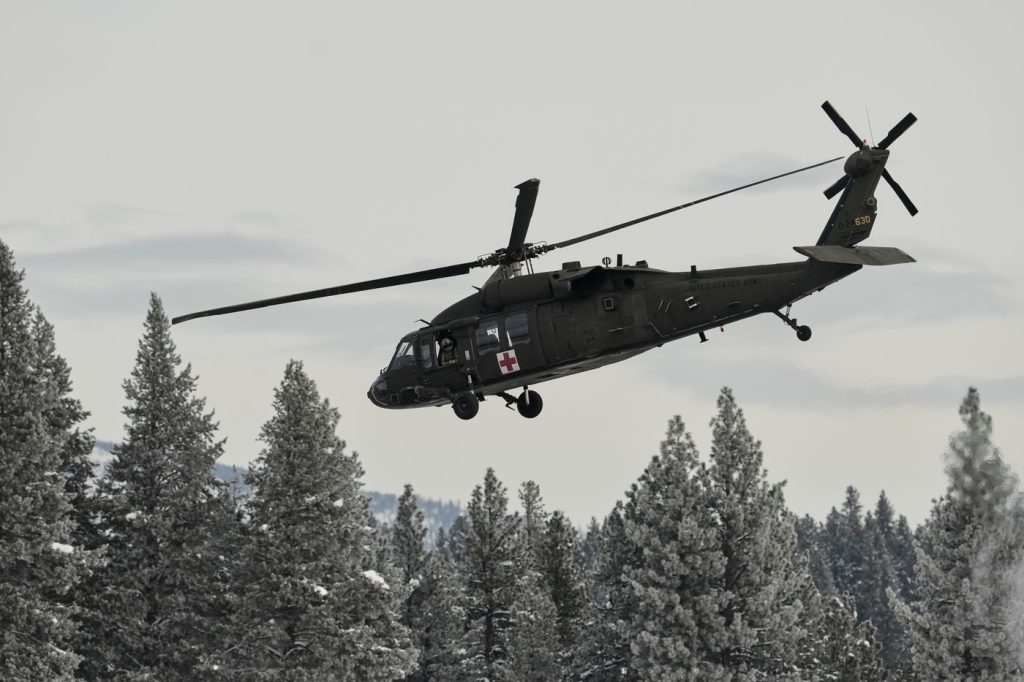
On Saturday morning, helicopters from the California National Guard and California Highway Patrol successfully retrieved the remaining victims. The bodies were carefully hoisted from the mountain despite severe winds, and then transported using snowcat trucks.
Sheriff Moon expressed condolences to the families affected by the avalanche, acknowledging the profound impact of this tragedy on the community.
Closure of the Area
In light of these events, the affected area will be closed to visitors until mid-March. Chris Feutrier, the forest supervisor for Tahoe National Forest, indicated that public access would be restored as soon as a thorough investigation is completed. "This is the public’s land, and they love to recreate on it," Feutrier stated, emphasizing the importance of responsible recreation in the region.