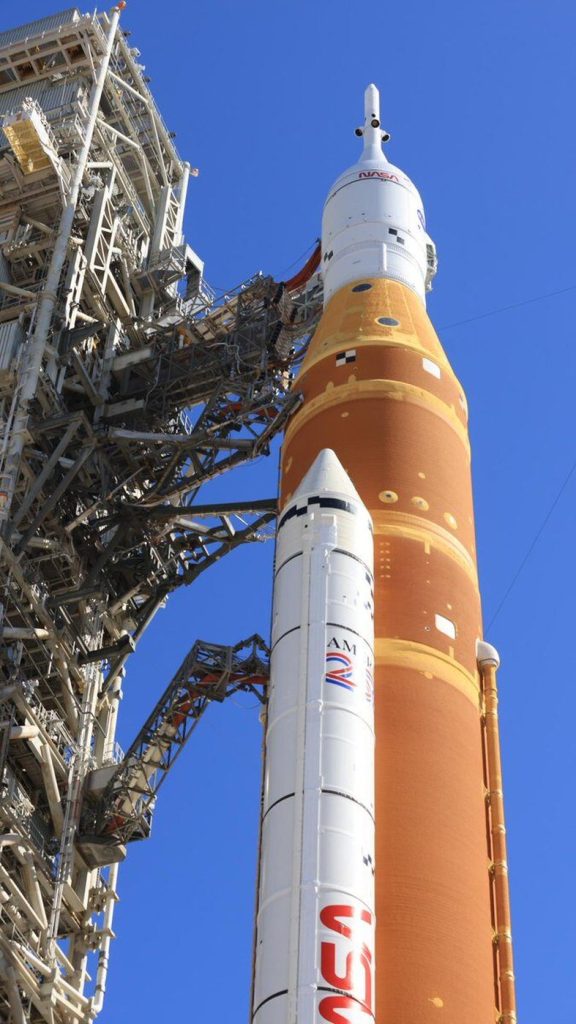
CAPE CANAVERAL, Fla. (AP) - NASA has announced yet another delay in the much-anticipated Artemis II mission, which aims to return astronauts to the moon for the first time in over fifty years. The new setback comes following an unexpected problem with the rocket that was revealed on Saturday, after NASA had previously targeted March 6 for the lunar flight.
The issue involves the interruption of helium flow to the upper stage of the Space Launch System (SLS) rocket, which is crucial for purging the engines and pressurizing the fuel tanks. NASA Administrator Jared Isaacman indicated that the interruption could be due to a malfunctioning filter, valve, or connection plate. Regardless of the root cause, engineers will need access to the area to make necessary repairs, which means the 322-foot (98-meter) rocket will be returned to its hangar.
“We will begin preparations for rollback, and this will take the March launch window out of consideration,” Isaacman stated via X. He mentioned that the earliest potential launch window would now be in April. The disappointment regarding the delay is not just felt by the public but is especially poignant among the team at NASA, who have been tirelessly preparing for the mission.
Earlier that day, NASA said it was gearing up to move the rocket back to the Vehicle Assembly Building at Kennedy Space Center. However, there remains a possibility that repairs could take place at the launch pad itself. Cheryl Warner, a NASA spokeswoman, noted that the preparations to roll back the rocket will eliminate any chances of a March launch. The situation is still developing, with officials continuing to assess the best options for repairs.
This latest setback follows previous delays caused by hydrogen fuel leaks during a countdown dress rehearsal earlier in the month. A second fueling test conducted on Thursday showed minimal leaks, giving NASA confidence in the new March timeline. The four astronauts selected for the Artemis II mission entered a two-week quarantine period on Friday as a precautionary measure against germs.
According to Isaacman, there were no issues with the rocket's helium system during the preceding dress rehearsals. The "unexpected development" arose during ongoing routine testing, causing engineers to work through the night to evaluate the situation. The interrupted helium flow specifically affects the SLS rocket's interim cryogenic propulsion stage, which is vital for placing the Orion crew capsule into its intended high-altitude orbit around Earth after liftoff.
After reaching orbit, the interim cryogenic propulsion stage is expected to separate from the Orion capsule, serving as a target for the astronauts to practice docking techniques vital for future moon missions. The Artemis program has only conducted one unmanned flight to date; this mission took place in 2022 and orbited the moon. Similar hydrogen and helium issues plagued its launch as well, underscoring the challenges faced by NASA in its current lunar endeavors.
Historically, during NASA's Apollo program from 1968 to 1972, a total of 24 astronauts successfully flew to the moon. In contrast, the Artemis program is still several years away from achieving its first crewed lunar landing, with various hurdles yet to be overcome.
The Associated Press Health and Science Department receives support from the Howard Hughes Medical Institute’s Department of Science Education and the Robert Wood Johnson Foundation. The AP is solely responsible for all content.