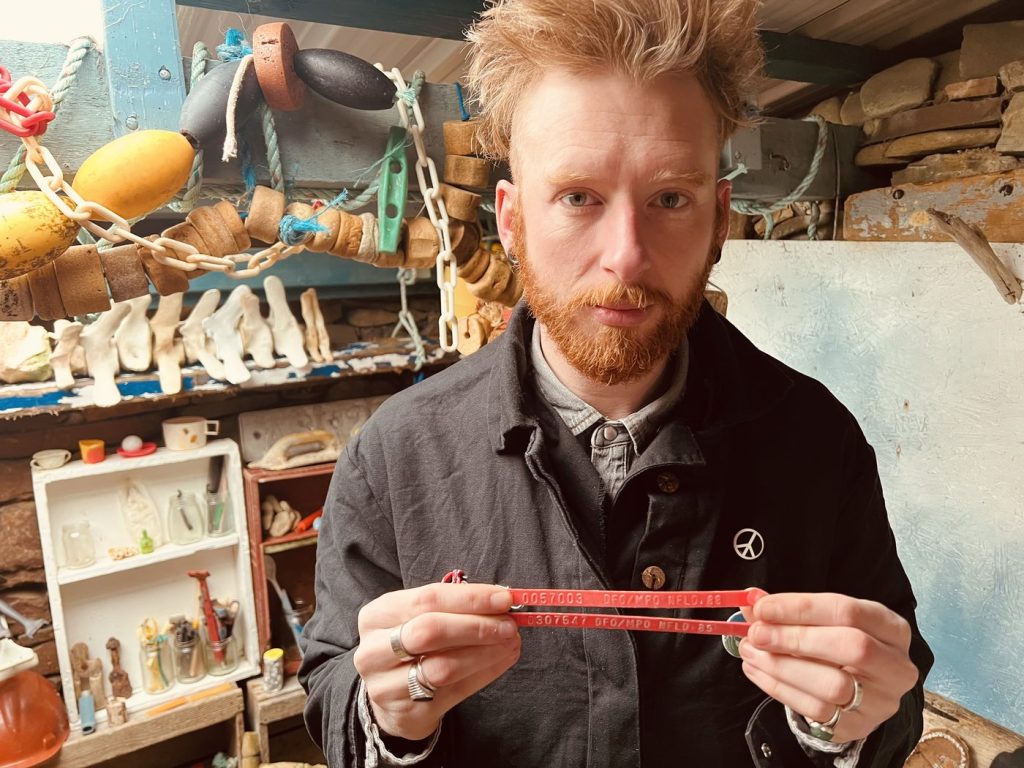
ST. JOHN'S - In a concerning ecological revelation, plastic trash from various regions, including Newfoundland, has been discovered on Sanday, an island within the Scottish Orkney archipelago. Among the debris are lobster tags dating back to the 1980s and plastic bottles, showcasing the persistent issue of pollution in otherwise pristine environments.
David Warner, who organizes regular beach cleanups on Sanday, has reported alarming increases in plastic waste washed ashore, particularly following recent storms that eroded the dunes on Howar Sands beach. Warner noted that these severe weather events have exposed decades-old plastic litter, revealing stark realities about human impact on the environment.
In a recent video interview, Warner highlighted some of the items found, including a bottle of Kirkland-brand maple syrup, labeled in both English and French, suggesting it may originate from Canada. Also among the finds was a red plastic lobster tag marked with “NFLD” and dated 1989, in addition to bottles that date back to before 1971, a period when the United Kingdom transitioned away from using shillings. The condition of these bottles is startling, with labels still intact despite their age.
Warner expressed his concerns regarding the longevity of plastic waste. He stated, “You're suddenly faced with the facts that this is out there, and the fact that it’s so old," pondering where more recent litter may be coming from. His beach cleanup initiatives are coordinated through the Sanday Community Craft Hub, where he works as the creative sustainability coordinator. Notably, last year saw a mere 42 plastic bottles collected across eight beach surveys, but this year, over 400 plastic bottles have already been retrieved from Howar Sands beach alone.
The pollution is not limited to bottles; there is also a significant amount of polystyrene found in the area. Warner discovered that in just a square meter of a test patch, there were 1,094 polystyrene fragments. This beach is recognized as a scientifically significant site, being a habitat for numerous nesting birds, highlighting the dual impact of pollution on both marine and terrestrial wildlife.
Warner emphasized that his intention is not to assign blame to any specific country, whether it be Canada, Japan, the United Kingdom, or elsewhere. Instead, he sees the pressing need for community awareness and proactive engagement with the issue. He noted, “People say, ‘What’s the solution?’ Short term, it’s beach cleaning, monitoring it, counting it, so people can be aware. But long term, I think there is no solution which is a solution in itself...we just need to stop using it, if we can.”
This haunting examination of marine litter underlines not just the immediate need for cleanup initiatives but also the larger imperative for reduced plastic usage globally. As Warner leads efforts to raise awareness on Sanday, the startling remains from decades past persist as a stark reminder of humanity’s ongoing struggle with waste management in the face of environmental commitment.