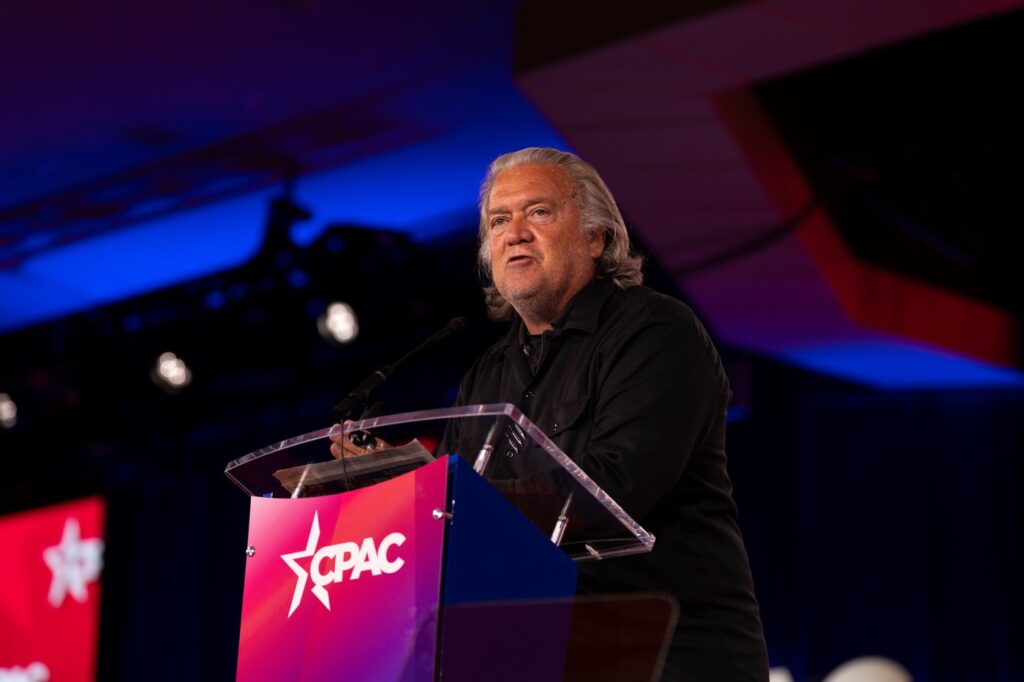
On Monday, Steve Bannon, a prominent ally of former President Donald Trump, secured a significant legal victory with a Supreme Court order that may lead to the dismissal of his criminal conviction for refusing to testify before Congress. The ruling stemmed from an appeal encouraged by the Trump administration, resulting in the justices overturning a previous appellate decision that upheld Bannon's conviction. This conviction was related to his defiance of a subpoena issued by the House committee investigating the January 6, 2021, attack on the U.S. Capitol by a mob of Trump supporters.
The Supreme Court's intervention allows a trial judge to now act on a request from the Republican administration to dismiss Bannon's conviction and indictment "in the interests of justice." Bannon's potential dismissal would largely be symbolic, as he already served a four-month prison sentence after being convicted of contempt of Congress in 2022. A federal appeals court in Washington D.C. had previously upheld that conviction.
In addition to Bannon's case, the justices also issued a similar order concerning former Cincinnati Councilman P.G. Sittenfeld, who was pardoned by Trump last year. Sittenfeld had served 16 months in federal prison after being convicted of bribery and attempted extortion in 2022. The recent Supreme Court ruling enables a lower court to consider dismissing his indictment as well.
The Justice Department initiated the case against Bannon during the presidency of Democrat Joe Biden. However, the stance appeared to shift following Trump's re-ascension to office last year. During the legal proceedings, Bannon had asserted that his testimony was protected under Trump's claim of executive privilege. Nevertheless, the House panel and the Justice Department argued that such a claim was questionable, considering that Trump had fired Bannon from the White House in 2017. Therefore, Bannon was regarded as a private citizen at the time he was consulting with Trump in the lead-up to the Capitol riot.
Separately, Bannon has pleaded guilty in a New York state court to charges involving defrauding donors who contributed to a private fund aimed at building a wall along the U.S. southern border. This plea agreement granted him the opportunity to avoid jail time. Importantly, this conviction remains unaffected by the recent Supreme Court actions.
With related cases taking center stage, the implications of the Supreme Court's ruling extend beyond Bannon's individual situation. It showcases the evolving legal landscape surrounding former Trump associates and highlights the ongoing judicial considerations regarding executive privilege and accountability in the context of the January 6 Capitol insurrection.