ISLAMABAD (AP) — In a significant escalation of conflict, Pakistan’s military, utilizing artillery and air power, has launched strikes on Afghan military installations deep within Afghanistan. The recent offensive, which reportedly led to over 300 Afghan military personnel fatalities over several days, was confirmed by a government spokesperson and various officials.
The current hostilities began on Thursday night, with Afghanistan initiating retaliatory strikes after Pakistan asserted that it targeted training camps and hideouts belonging to the Tehrik-e-Taliban Pakistan (TTP). The TTP is a group that maintains a close affiliation with the Taliban regime in Afghanistan. According to Pakistan’s Information Minister, Attaullah Tarar, the military strikes have resulted in over 331 deaths, with more than 500 additional casualties among Afghan Taliban forces. Pakistani forces claim to have destroyed 102 Afghan military posts and incapacitated a significant amount of military hardware, including 163 tanks and armored vehicles.
As the airstrikes continued on Saturday, Pakistan’s state-run media reported that the air force was actively engaging key military targets in eastern Afghanistan. The situation has prompted mass displacements, with hundreds of residents near the northwestern Torkham border crossing fleeing to safer areas. Reports indicate that Pakistan has also facilitated the transport of Afghan refugees back to regions perceived as safer.
In a response to the Pakistani airstrikes, Afghanistan's Defense Ministry stated that it had conducted attacks on Pakistani military bases in Miranshah and Spin Wam, claiming to have destroyed critical military installations and inflicting substantial casualties. Allegations have emerged from the Afghan Department of Information and Culture accusing Pakistan of targeting civilian areas, resulting in significant property damage and civilian casualties, including at least 11 deaths. However, Pakistan has maintained that its operations are focused exclusively on military targets to avoid civilian harm.
Mullah Taj Mohammad Naqshbandi, an Afghan commissioner at the Torkham border, asserted that the “brave forces of the Islamic Emirate” successfully dismantled key elements of the Pakistani military’s infrastructure during recent encounters. The Afghan government has asserted that the casualties inflicted upon the Pakistani military are far less than what Pakistan claims, with their spokesperson Zabihullah Mujahid emphasizing that these attacks serve as a warning to Pakistan regarding its military actions against Afghanistan.
On social media platform X, Pakistan’s Defense Minister Khawaja Mohammad Asif declared a complete breakdown of patience, indicating that an “open war” now exists between the two nations. Pakistan has routinely accused Afghanistan of providing sanctuary to the TTP, claims that both the TTP and the Afghan Taliban deny. Additionally, Pakistan's army spokesman, Lt. Gen. Ahmed Sharif Chaudhry, stated that Afghanistan must make a decisive choice between aligning with the TTP or Pakistan.
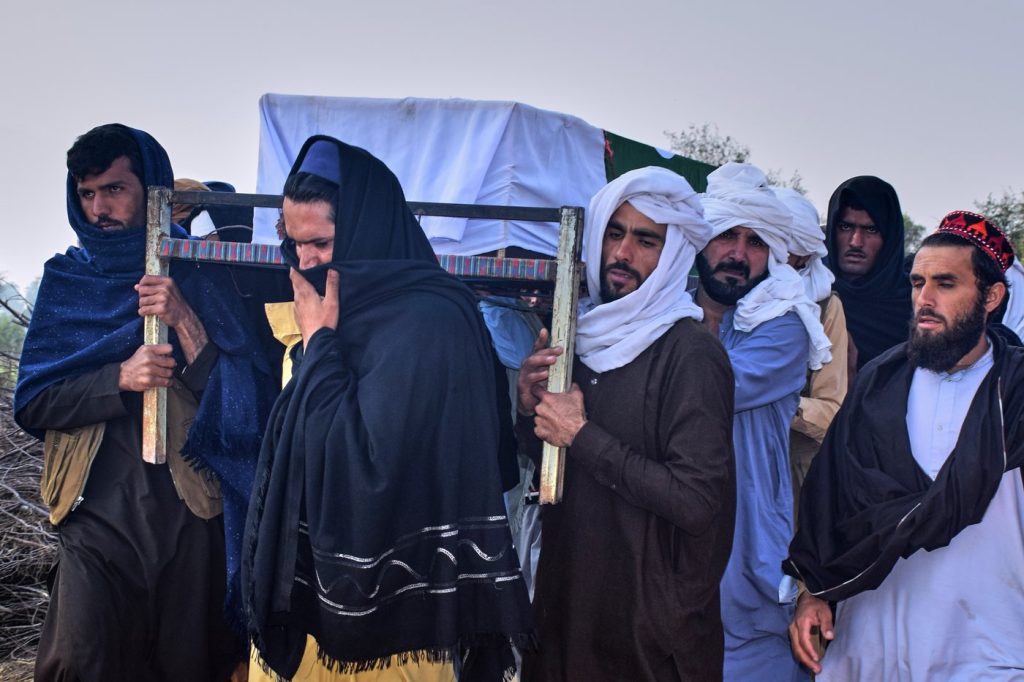
The conflict's ramifications extend to civilian populations, as indicated by testimonies from individuals like Ejaz Ul Haq, an Afghan refugee stranded near Torkham, who expressed his inability to return to Afghanistan amid ongoing fighting. Guftar, a villager from Pakistan, urged both governments to establish a ceasefire, highlighting the suffering of ordinary people caught in the crossfire.
Tensions between the two countries have been escalating since October, when myriad casualties were reported in border clashes. Although a Qatari-mediated ceasefire briefly quelled the violence, peace talks held in Turkey in November did not yield a comprehensive resolution. In the aftermath of escalating attacks by Pakistan, international efforts for mediation continue, including engagement from Turkey, Saudi Arabia, Qatar, and China, aiming to mitigate the rising tensions and restore peace in the border regions.
Qatar's Minister of State, Mohammed bin Abdulaziz Al-Khulaifi, has actively engaged with the foreign ministers of both Afghanistan and Pakistan to facilitate de-escalation discussions.