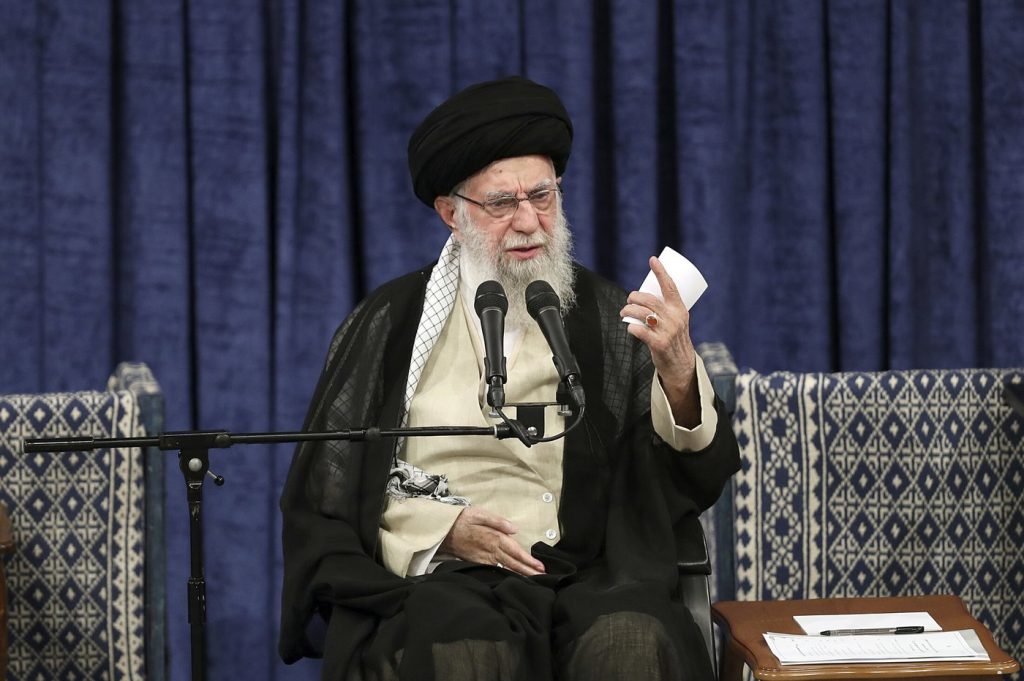
TEL AVIV, Israel (AP) — U.S. President Donald Trump expressed his dissatisfaction with the ongoing negotiations regarding Iran's nuclear program on Friday. While he is not pleased with the current state of talks, he suggested that he could allow negotiators more time to come to a deal aimed at preventing military conflict in the Middle East.
Trump's comments came following yet another inconclusive round of indirect talks held by U.S. envoys with Iran in Geneva. During a period when U.S. military forces are being mobilized in the region, Trump has threatened military action against Iran if a comprehensive agreement on its nuclear program is not reached. Conversely, Iran maintains that it has the right to enrich uranium for peaceful purposes and staunchly denies any intentions of developing nuclear weapons.
Trump stated, "I’m not happy with the fact that they’re not willing to give us what we have to have. I’m not thrilled with that. We’ll see what happens. We're talking later." He further emphasized that Iran must not be permitted to acquire nuclear weapons and criticized their negotiations as inadequate.
Despite Trump's pessimism, Oman’s Foreign Minister Badr al-Busaidi—a mediator in the discussions—urged for patience and more time for the negotiators to finalize their positions. He expressed optimism on CBS’s Face the Nation, asserting that a deal appears to be attainable if the negotiations can continue smoothly.
As tensions mount, Trump indicated that the Iranian negotiators "don’t want to quite go far enough," lamenting the situation as unfortunate. He reiterated that he opposes any form of uranium enrichment in Iran and claimed that the country does not need to pursue uranium enrichment for its energy program.
When pressed about his timeline for any military action, Trump responded obliquely, saying, "I’d rather not tell you," before acknowledging the inherent risks associated with military engagement. He remarked that with war comes the potential for both positive and negative outcomes.
Adding to the situation, U.S. Secretary of State Marco Rubio is scheduled to visit Israel early next week. The U.S. Embassy in Israel had previously advised staff to exit the region amid escalating tensions and military preparations, indicating the possibility of forthcoming U.S. military action.
Rubio’s trip aims to explore a range of regional issues including Iran and the implementation of Trump’s 20-Point Peace Plan for Gaza. His planned visit may suggest a longer timeline for any potential military operations against Iran.
Prime Minister Benjamin Netanyahu of Israel has consistently urged more robust measures from the U.S. against Iran, warning of reprisals in response to any Iranian hostilities.
Earlier Friday, the U.S. Embassy in Jerusalem announced "authorized departure" status for nonessential personnel, allowing them to leave voluntarily at government expense. U.S. Ambassador Mike Huckabee advised staff to prioritize getting flights out of Israel promptly, highlighting the uncertainty surrounding future flights.
Amid the backdrop of stalled negotiations, the U.S. and Iran have yet again failed to reach an agreement after the latest talks in Geneva. The Iranian Foreign Minister stated that while Iran has made its demands clear, it has not specified the terms. Iran has long sought relief from extensive international sanctions in exchange for limiting its nuclear program without fully dismantling it.
On a related note, a confidential report from the U.N. nuclear watchdog revealed that Iran has not granted inspectors access to critical nuclear sites since they suffered significant damage in the 12-day conflict initiated by Israel in June. The report raised doubts about Iran’s claims of halting uranium enrichment following the U.S. and Israeli military actions.
As the situation develops, various nations have urged their citizens to reconsider travel plans to the Middle East, including decisions by airlines to suspend flights out of Israel. The heightened security concerns have led countries like the U.K. and Australia to withdraw diplomatic staff from Iran and neighboring areas, while advising their citizens against non-essential travel to Israel.
In summary, the geopolitical tensions surrounding Iran's nuclear ambitions continue to escalate, with various diplomatic and military maneuvers as parties seek to navigate the delicate balance between negotiation and potential conflict.