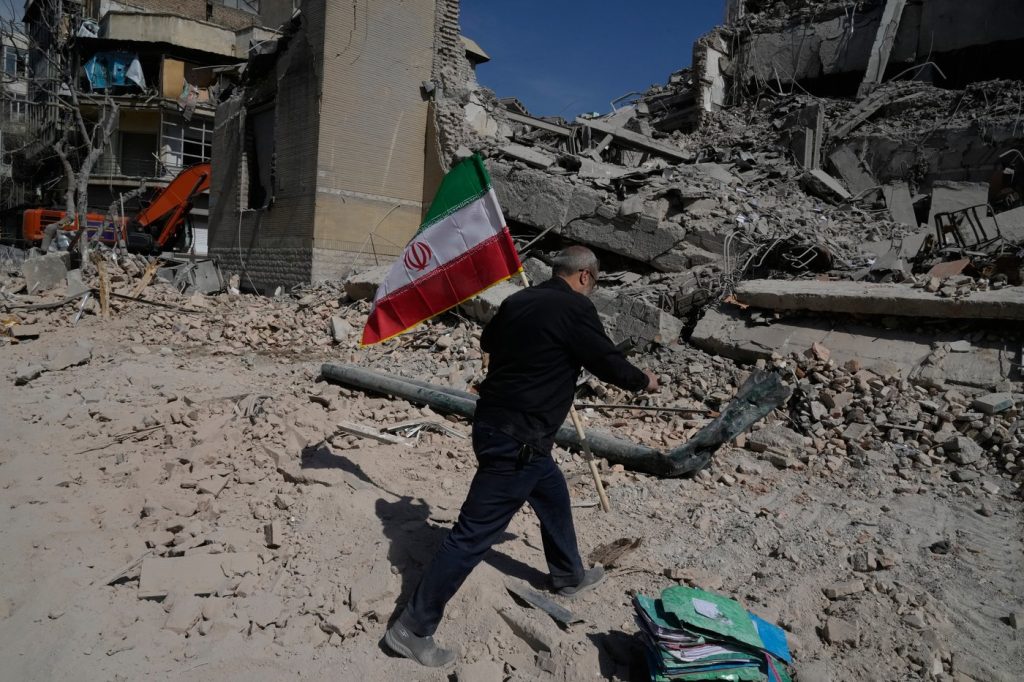
DUBAI, United Arab Emirates (AP) — Intense Israeli airstrikes targeted the capitals of Iran and Lebanon early Friday, escalating military actions in the region. Concurrently, the U.S. confirmed a strike on an Iranian drone carrier at sea, amplifying its efforts to undermine Iran's naval capabilities.
In response to a week of bombardment, Iran initiated new retaliatory attacks across the Middle East. U.S. Defense Secretary Pete Hegseth hinted that the scale of these military actions was likely to increase dramatically in the near future. The Israeli military announced a comprehensive campaign of strikes on Tehran, which witnesses described as particularly forceful, causing tremors in local residences. Additional explosions were reported in Kermanshah, an area known for its missile bases.
The Israeli forces claimed that their operations had significantly damaged Iran’s air defense systems and destroyed multiple missile launchers. The conflict has escalated to affect nations beyond Iran and Israel, as Iran’s missile and drone attacks targeted Kuwait, Qatar, Saudi Arabia, and Bahrain—countries hosting U.S. military personnel. Fortunately, there were no immediate reports of casualties from these strikes.
In Lebanon, hostilities between Israel and the Iran-aligned Hezbollah militia intensified. Israeli airstrikes on Beirut's southern suburbs and multiple locations continued late Thursday into early Friday, leading to mass evacuations as motorists jammed roads seeking safety. The U.N. peacekeeping forces in southern Lebanon reported clashes in the region, as more Israeli ground troops crossed the border.
The U.S. military reported that it had successfully struck an Iranian drone carrier, igniting it in flames. Footage released by U.S. Central Command showcased the burning vessel, the IRIS Shahid Bagheri, a modified container ship featuring a runway capable of launching drones. U.S. Central Command leader, Adm. Brad Cooper, described the size of the carrier as comparable to a World War II aircraft carrier.
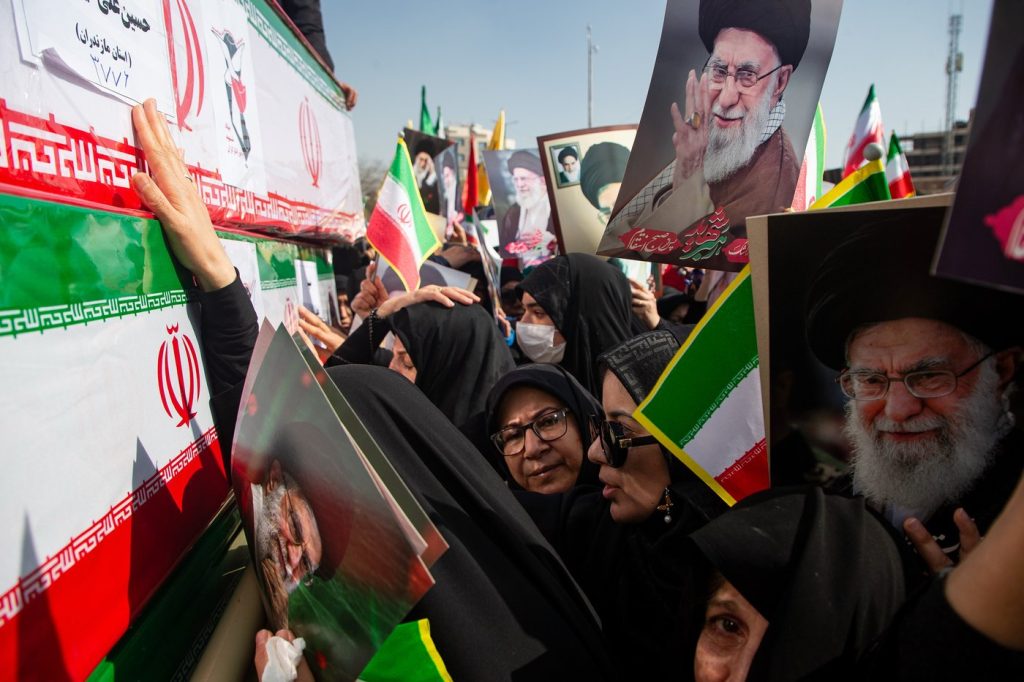
On the diplomatic front, President Trump made a call to the Iranian populace to "take back" their country, offering them immunity during ongoing military actions—but without clear details on the implications of such promises. Trump also expressed interest in influencing the selection of Iran's next supreme leader following the death of Ayatollah Ali Khamenei, dismissing his son, Mojtaba Khamenei, as a potential successor.
While the Iranian government has not publicly sought negotiations with the U.S. regarding a resolution to the conflict, Iranian Ambassador to Egypt, Mojtaba Ferdousi Pour, asserted that trust issues preclude any such discussions. He condemned U.S. actions, labeling them as an "atrocity" following the sinking of the IRIS Dena frigate in the Indian Ocean, which had reportedly led to substantial loss of life among its crew.
Meanwhile, both Saudi Arabia and Qatar reported intercepting drone and missile attacks attributed to Iran, targeting U.S. military bases within their territories. The Kuwaiti military confirmed activation of its air defenses in response to incoming assaults, following previous incidents that resulted in U.S. fatalities.
The Israeli military conducted at least 11 airstrikes around Beirut in recent days, targeting various strategic locations, including gas stations. Evacuations of hospitals were initiated as a precautionary measure. Since the start of this renewed conflict, reports indicate that at least 1,230 people have been killed in Iran, over 120 in Lebanon, and around a dozen in Israel, along with the deaths of six U.S. service members.
As the situation evolves, the potential for diplomatic engagement appears limited, shadowed by distrust and ongoing military engagements from both sides. The continuing escalation in the Middle East raises concerns about further destabilization in a region already beset by conflict.