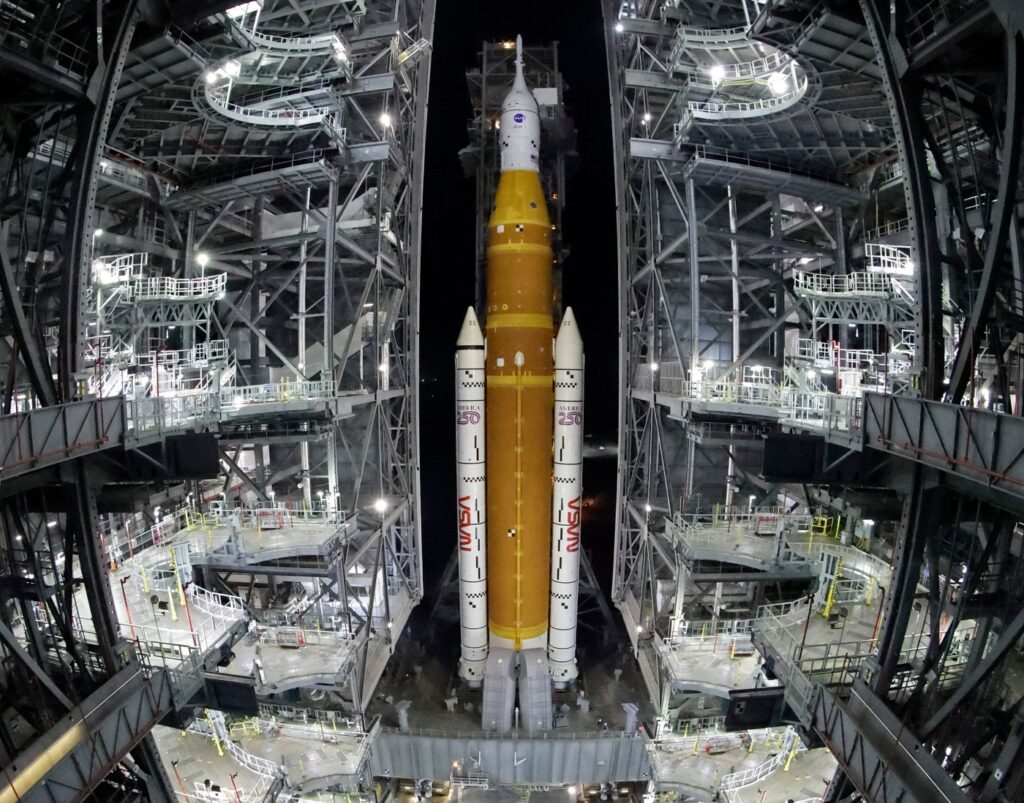
CAPE CANAVERAL, Fla. (AP) — NASA has once again moved its moon rocket from the hangar towards the launch pad in preparation for a potential mission to send four astronauts on a lunar fly-around next month. This marks the second attempt this year to prepare for the launch of the Space Launch System (SLS) rocket, which could take off as early as April 1 from Florida's Kennedy Space Center, provided that all recent repairs are successful.
The Artemis II crew, consisting of three Americans and one Canadian astronaut, entered quarantine this week in Houston as they gear up for their historic mission. Their journey will involve a trip around the moon aboard the Orion spacecraft with a direct return to Earth, eliminating any planned stops. This mission is particularly significant as it aims to follow up on the last time NASA sent astronauts to the moon during Apollo 17 in 1972.
The 322-foot (98-meter) SLS rocket commenced its slow, 4-mile (6.4-kilometer) trek to the launch pad in the early hours of the morning. The transportation was conducted using a massive crawler that has been a staple of NASA's operations since the Apollo era of the 1960s. Although the journey was delayed for several hours due to high winds, it ultimately concluded around midday, taking a total of 11 hours to complete.
The Artemis II mission has already experienced delays that pushed its timeline back by two months. Technical challenges such as hydrogen fuel leaks and clogged helium lines have impacted its readiness. Technicians managed to address the hydrogen leaks at the launch pad; however, the helium issue required the rocket to be returned to the Vehicle Assembly Building at the end of February to ensure comprehensive repairs.
NASA's Artemis program is designed to pave the way for sustainable human exploration of the moon, aiming for a historic two-person landing by 2028. The upcoming Artemis II mission is a crucial component of this broader initiative, aiming to validate the systems and capabilities needed for future lunar expeditions.
Overall, the Artemis II mission not only represents a return to crewed lunar exploration after over fifty years but also serves as a critical precursor to humanity's next steps in space exploration, setting the stage for future endeavors that include a potential presence on the moon and beyond.