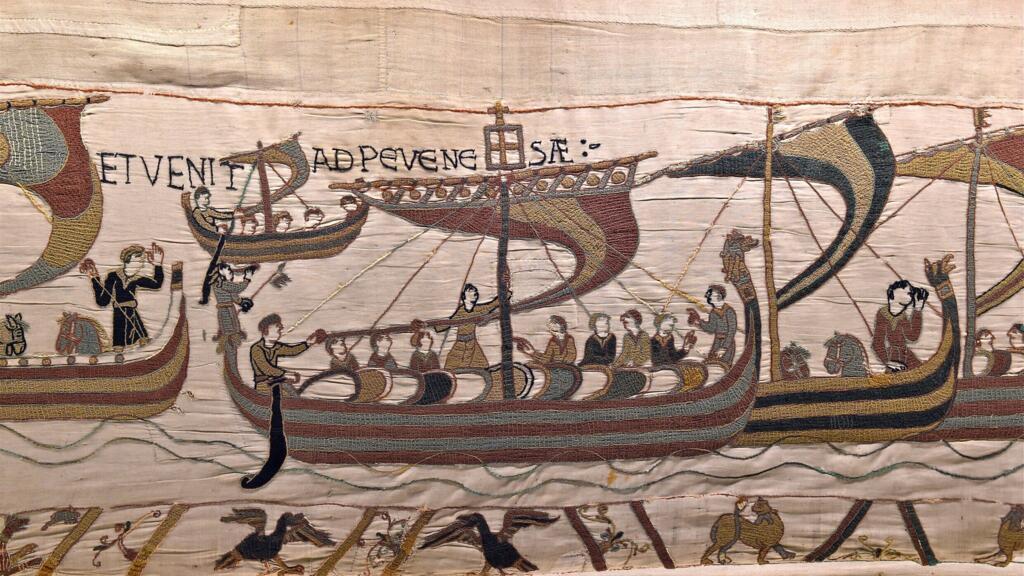
A recent investigation by a British historian has brought to light a new perspective on the events leading up to the pivotal Battle of Hastings in 1066. Instead of the historically accepted narrative that King Harold Godwinson's forces undertook a grueling 200-mile (320-kilometre) overland march to meet the invading forces of William the Conqueror, it is suggested that Harold's army may have engaged in a more complex strategy: a "sophisticated land-sea operation." This development adds layers of intrigue to one of England's most significant historical moments.
The traditional account paints King Harold as a defender of his kingdom who rapidly mobilized his troops after hearing of the Norman incursion. According to the established theory, Harold's forces quickly traversed the English countryside, resulting in their eventual confrontation with William's armies at Hastings. However, the new analysis indicates that rather than relying solely on a land route, Harold may have employed naval means to better position his forces against the Normans.
This alternative view raises questions about the logistical capabilities of Harold’s army, suggesting that it had the means and strategy to conduct a more coordinated response. The historian posits that such a land-sea operation would have allowed for a more effective use of resources, potentially altering the outcome of the invasion. By leveraging both land and sea, Harold's forces might have been better equipped to deal with a well-prepared and formidable foe.
Furthermore, this interpretation challenges the prevailing narrative of the brave but ultimately doomed march. It casts Harold Godwinson in a new light, portraying him not merely as a defender caught off-guard, but as a ruler who employed strategic thought in the face of aggressive invasion. The evidence supporting this theory may require a reassessment of the tactical capabilities and military acumen of the Anglo-Saxon armies during this crucial period.
Additionally, the historian emphasizes the importance of understanding the broader context of military logistics and naval power in medieval warfare. The 11th century was a time of significant transition, with coastal operations beginning to play a more crucial role in combat strategies. This perspective not only adds complexity to the story of the Battle of Hastings but also reflects on the ongoing evolution of military tactics in medieval England.
Such insights are particularly poignant as historians strive to understand the multifaceted nature of conflict during a time when cultural and political boundaries were being redefined. As the narrative surrounding Harold Godwinson and the Norman Conquest continues to evolve, it serves as a reminder of the intricate strategies that underpin historical events and the myriad factors influencing their outcomes.
In conclusion, this renewed examination of King Harold's military strategy ahead of the Battle of Hastings underscores the need for ongoing research and critical analysis of historical texts. The suggestion of a complex land-sea operation invites further inquiry into how military operations were conducted during this transformative period in English history, highlighting the potential for new interpretations of well-known events.