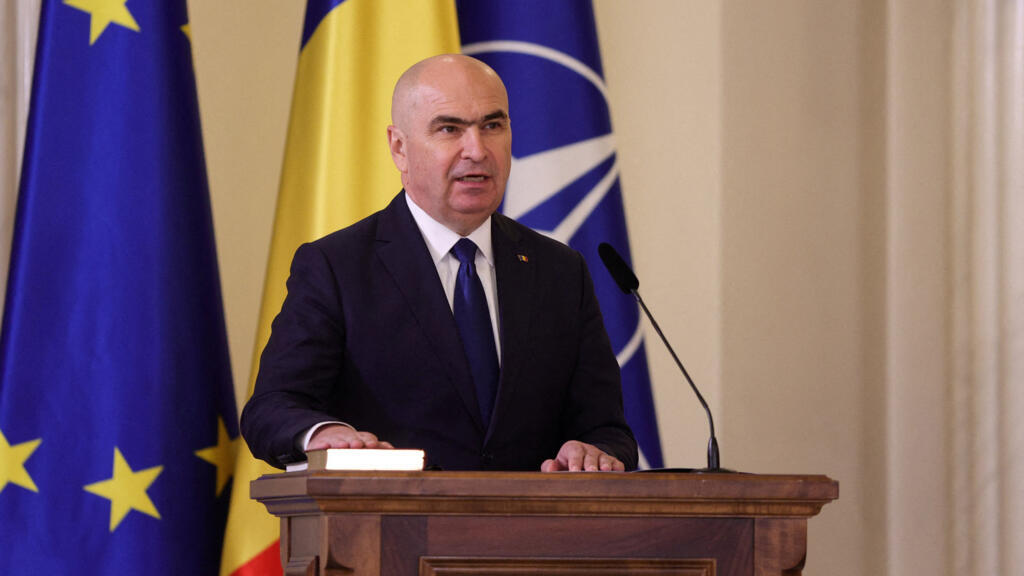
The political landscape in Romania has shifted dramatically following the collapse of the pro-European coalition government led by Prime Minister Ilie Bolojan. This upheaval was triggered by a no-confidence motion that was voted on in the Romanian Parliament on the recent Tuesday. The coalition had been in power for less than a year, having been sworn into office just last year, and its fall raises significant questions about the stability of leadership in a country deeply integrated into both the European Union (EU) and NATO, particularly at a time when it shares a border with Ukraine.
Prime Minister Ilie Bolojan, a significant figure in the country's political arena, now faces the challenge of navigating the complexities of a no-confidence vote that has left his administration in a vulnerable position. The coalition, which comprised various political parties united under a pro-European agenda, was aimed at bolstering Romania's position within the EU framework and ensuring national security amidst regional tensions, especially given the ongoing conflict in Ukraine.
The successful vote against Bolojan's government indicates a shift in parliamentary support, as dissenting factions have rallied to undermine the coalition's ability to govern effectively. This moment not only signifies a failure of the current administration but also illustrates the underlying tensions and divisions present in Romanian politics. Analysts suggest that such instability can lead to increased uncertainty in policies that affect both domestic governance and international relations.
Romania's strategic position as a NATO and EU member state makes the ramifications of this political crisis particularly pressing. Neighboring Ukraine is in a state of conflict, and Romania's government plays a crucial role in addressing security concerns and managing the regional fallout. The instability following the collapse of the coalition could affect Romania's commitments to NATO and its support for European policies regarding the Ukraine crisis.
The fallout from the no-confidence vote may prompt quick political maneuvering. Political parties in Romania may begin to form new alliances or negotiate for a new governing coalition. The effectiveness of these negotiations could determine the future direction of Romania's domestic and foreign policy as well as its reliability as an EU and NATO ally during this pivotal time in Eastern Europe.
In response to the no-confidence vote, Bolojan expressed his disappointment but also indicated a willingness to work with other political factions to restore stability. His administration's policies, which had focused on reform, investment, and improving Romania's standing in Europe, might be challenged or altered depending on the new political landscape that emerges. This situation will require deft leadership and a commitment to consensus-building among divided parties.
The political uncertainty in Romania exemplifies the broader challenges facing EU member states in the context of shifting alliances and national interests. It serves as a reminder of the fragility of coalition governments in parliamentary systems where multiple parties must cooperate to achieve a common agenda. As Romania prepares for potentially new elections or reshuffling within its political framework, the implications of this collapse will resonate not only within Romania but also across Europe.
```