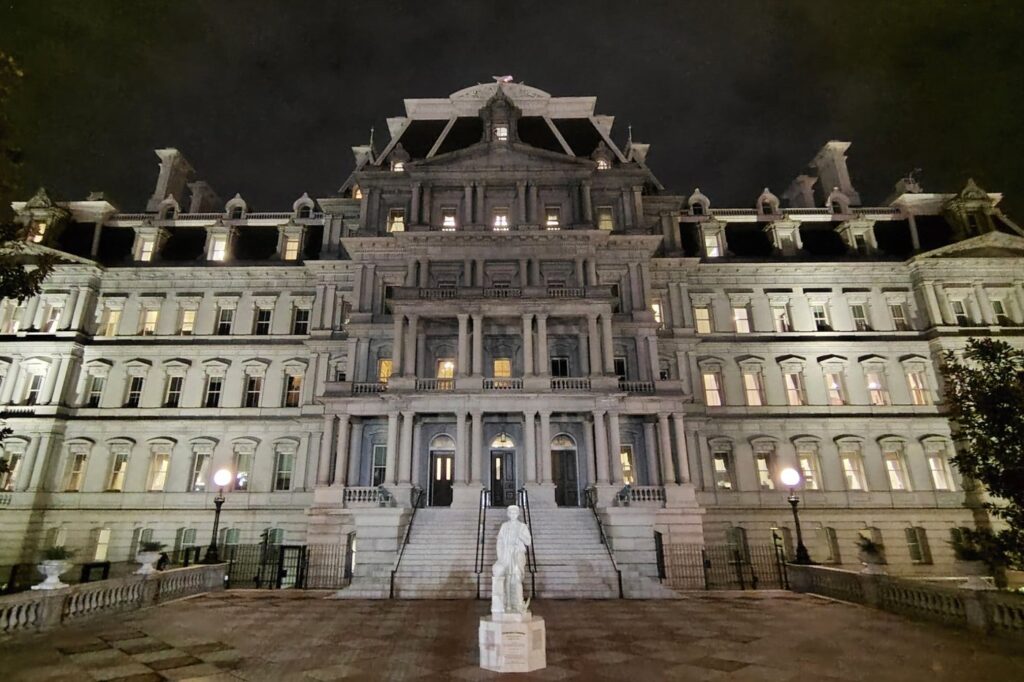
ANNAPOLIS, Md. (AP) - A statue of Christopher Columbus has recently been installed on the grounds of the Eisenhower Executive Office Building, which is adjacent to the White House. This installation is part of President Donald Trump’s administration's efforts to commemorate the controversial figure of Columbus, particularly during a time when opinions about him are increasingly polarized.
The newly placed statue is a replica of the original Columbus statue that was pulled down and thrown into Baltimore’s harbor in July 2020, amid nationwide protests against institutional racism that erupted following the death of George Floyd. During Trump’s first term, this act symbolized a broader discontent with historical figures associated with colonialism and oppression.
President Trump has long endorsed a traditional view of Columbus, praising him for his 1492 voyage, which he sees as the catalyst for European colonization in the Americas. The impacts of this colonization, however, have increasingly been reframed in contemporary discussions, with Columbus being criticized as a representation of Western Europe’s exploitation of indigenous populations and resources.
In a statement posted on the social media platform X, the White House declared, “In this White House, Christopher Columbus is a hero, and President Trump will ensure he’s honored as such for generations to come.” This statement reflects the administration's commitment to upholding Columbus’s legacy in direct contrast to ongoing debates about his role in history.
John Pica, a Maryland lobbyist and president of the Italian American Organizations United, which owns the statue, expressed satisfaction regarding its installation. “We are delighted the statue has found a place where it can peacefully shine and be protected,” Pica stated, emphasizing the symbolic importance of the statue for the Italian American community.
The statue, primarily made from marble, was sculpted by Will Hemsley, who is based in Centreville on Maryland’s Eastern Shore. The original statue’s destruction in Baltimore happened on July 4, 2020, during a summer of protests that targeted symbols of racial injustice and colonial oppression. Columbus statues faced significant backlash, with many protesters arguing that he was responsible for the genocide and exploitation of indigenous peoples in the Americas.
In response to changing sentiments about Columbus, some cities, institutions, and government entities have opted to replace Columbus Day with Indigenous Peoples Day. Notably, President Joe Biden became the first U.S. president to officially recognize Indigenous Peoples Day with a proclamation in 2021. This shift highlights the evolving conversation about historical narratives and representation in the United States.
Trump has criticized the movement to diminish Columbus's legacy, describing those efforts as actions of “left-wing arsonists” who distort history and American identity. He has vowed to “bring Columbus Day back from the ashes,” reflecting sentiments that resonate strongly with his base. In April, he lamented that Democrats have worked rigorously to tarnish Columbus’s reputation and the legacy of Italian Americans who honor him.
The statue’s installation at such a prominent location as the Eisenhower Executive Office Building serves as a stark reminder of the ongoing cultural and historical debates surrounding figures like Columbus, whose legacy remains contested and reflects broader societal conflicts about race, history, and identity in America.