DUBAI, United Arab Emirates – On Wednesday, Iran rejected an American proposal aimed at pausing the ongoing conflict in the Middle East, while simultaneously escalating its attacks on Israel and Gulf Arab nations. Notably, a strike on Kuwait International Airport resulted in a fuel tank being hit, igniting a fire.
Iranian Foreign Minister Abbas Araghchi articulated the country's refusal to engage in negotiations during an interview on state television. Following this statement, Iranian state media cited an anonymous official who confirmed that Iran has rejected America's ceasefire proposal and is putting forth its own demands. This rejection occurred as Israeli forces launched airstrikes targeting Tehran, prompting the United States to deploy additional military resources, including paratroopers and Marines to the region.
Reports indicate that the U.S. ceasefire proposal consists of 15 key points, which include sanctions relief, limitations on Iran's nuclear program, restrictions on its missile capabilities, and reopening the crucial Strait of Hormuz—a vital route for global oil shipments. Furthermore, the proposal reportedly contains stipulations regarding Iran's support for armed groups.
In Washington, President Donald Trump, during a fundraiser event, claimed that Iran is still keen on striking a deal, suggesting that the regime is hesitant to voice its desires due to fears of domestic backlash. He asserted, “They’re negotiating, by the way, and they want to make a deal so badly, but they’re afraid to say it because they figure they’ll be killed by their own people.”
Iran has consistently maintained its unwillingness to discuss its ballistic missile program or support for regional militias, asserting that these elements are pivotal to its national security. Its influence over the Strait of Hormuz constitutes one of its significant strategic advantages. The ongoing attacks on energy infrastructure in the region have led to soaring oil prices, intensifying pressure on the U.S. to devise a strategy to alleviate market distress.
The Pentagon has planned to send at least 1,000 soldiers from the 82nd Airborne Division to the Middle East in the coming days, according to sources familiar with the situation. This unit is trained for rapid deployment to secure vital territories. The United States is also dispatching around 5,000 Marines skilled in amphibious assaults and thousands of sailors to support operations in the area.
Public sentiment in the U.S. appears increasingly skeptical regarding military engagement, with many Americans feeling that the actions taken against Iran have gone too far, especially in light of rising gasoline prices. A recent poll suggests the conflict could evolve into a significant political issue for Trump's administration.
Amidst these developments, mediators are advocating for potential in-person discussions between Iranian and American officials in Pakistan, possibly occurring as soon as Friday. Trump has affirmed that the U.S. is currently “in negotiations,” although he has not specified any Iranian negotiators involved.
Iran's proposed five-point terms include demands for a cessation of attacks on its officials, protection against future strikes, reparations for damages incurred during the conflict, an end to hostilities, and recognition of its control over the Strait of Hormuz. However, these terms are likely to be deemed unacceptable by the White House.
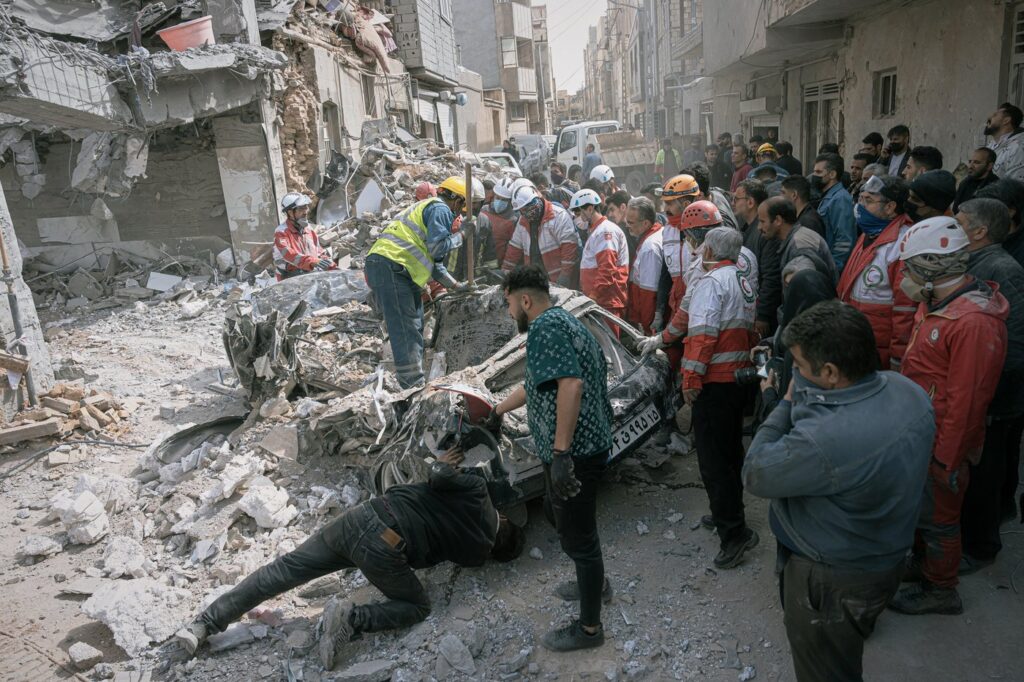
Recent reports indicate that missile alert sirens have been triggered in Israel as Iranian forces and Hezbollah have launched continued assaults. The Israeli military responded with multiple airstrikes against Tehran, focusing on facilities linked to Iran’s submarine development. In Kuwait, defense forces intercepted several drones, although one successfully struck a fuel tank at the international airport, further escalating tensions in the region.
According to Iranian Health Ministry reports, over 1,500 fatalities have been recorded in Iran since the onset of the conflict, along with casualties in Israel, Lebanon, Iraq, and Gulf Arab states contributing to a rising death toll. In parallel, energy prices have been fluctuating but remain significantly high, continuing to exert pressure on global markets.
While a limited number of ships have been permitted passage through the Strait of Hormuz, Iranian authorities have prohibited vessels from the U.S., Israel, and other nations perceived as aligned with them.