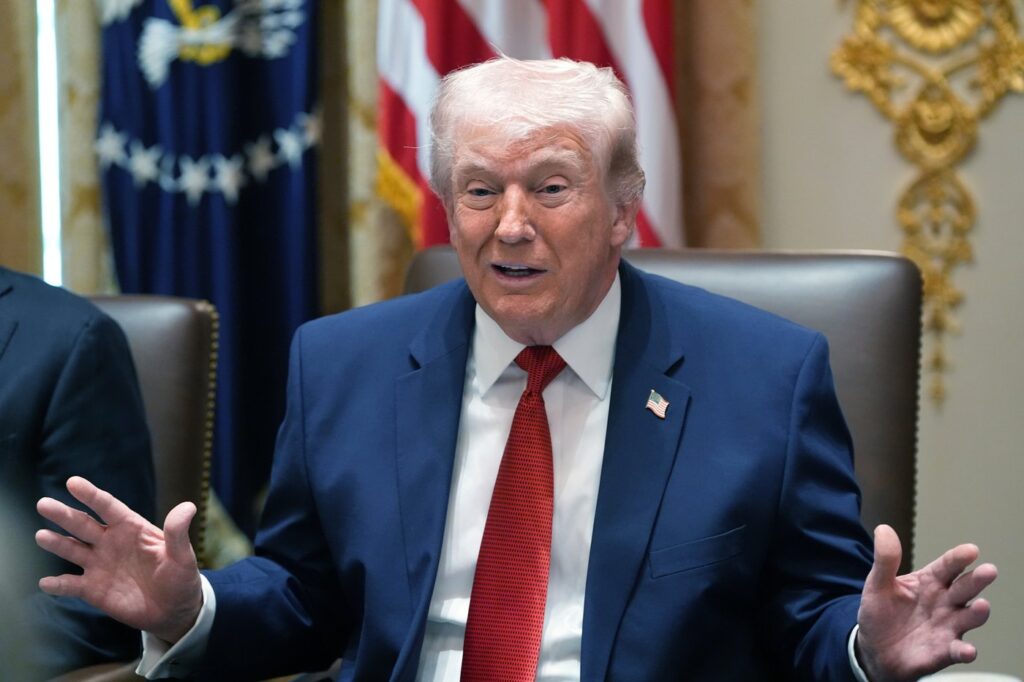
WASHINGTON (AP) – On March 26, 2026, President Donald Trump announced a delay in taking military action against Iran, despite ongoing tensions following the Islamic Republic's closure of the Strait of Hormuz, a crucial chokepoint for global oil markets. The decision came amidst a turbulent day on Wall Street, where U.S. stocks experienced significant losses, with the S&P 500 falling 1.7%, and the Dow Jones Industrial Average dropping 469 points, or 1%. In light of these market fluctuations, Trump emphasized that talks with Iran were progressing "very well," even though Iranian officials publicly maintained they were not negotiating with the U.S.
Trump stated that Iran had requested a seven-day grace period, which he extended to ten days for the reopening of the Strait. This decision followed his public threat to obliterate Iranian energy facilities, reflecting his pattern of adjusting policy in response to market volatility. Since the onset of the conflict, including a new round of threats from Trump, the chaotic nature of the stock market has further complicated the administration's narrative surrounding the conflict. Iran has responded defiantly, warning that it would retaliate against vital infrastructure if the U.S. or Israel attacked its energy plants.
Earlier, Trump had called for an immediate opening of the Strait of Hormuz but faced market pushback, leading him to backtrack on several occasions. Following another rocky day in the stock market, he was pressured into yet another delay, stating that his negotiators would advise him on the situation. Trump claimed Iran was "begging" for a deal and urged its negotiators to "get serious soon" before it was too late. His special envoy, Steve Witkoff, indicated strong signs that Iran was seeking an exit strategy from the conflict.
The administration, however, continues to play down the economic impact of rising oil prices, arguing that the situation is not as severe as anticipated. Despite being less reliant on Middle Eastern oil, the U.S. still sees prices at the pump rise significantly as a result of the ongoing conflict. Treasury Secretary Scott Bessent downplayed concerns about Iran's impact on global energy, despite the reality that the Strait of Hormuz is essential for oil shipments, especially for Asian economies. As the conflict persists, concerns about economic implications remain high.
Additionally, as diplomatic efforts unfold, Trump is shifting more U.S. troops to the Middle East. The Pentagon plans to deploy 1,000 soldiers from the elite 82nd Airborne Division, adding to the approximately 5,000 Marines already positioned in the region. While military experts believe U.S. forces could secure critical sites like Kharg Island, concerns persist regarding the potential costs in terms of lives lost and financial expenditure. Diplomacy remains the preferred route, but the success of negotiations hinges on both sides’ willingness to compromise.
Amid these developments, Trump announced that Iran is now allowing several Pakistan-flagged tankers through the Strait, which he hopes indicates a positive shift towards reaching a deal. This moment highlights the dual challenges of managing military threats while navigating complex diplomatic channels as the administration seeks to stabilize both the situation in the Middle East and the domestic economy against changing global markets.