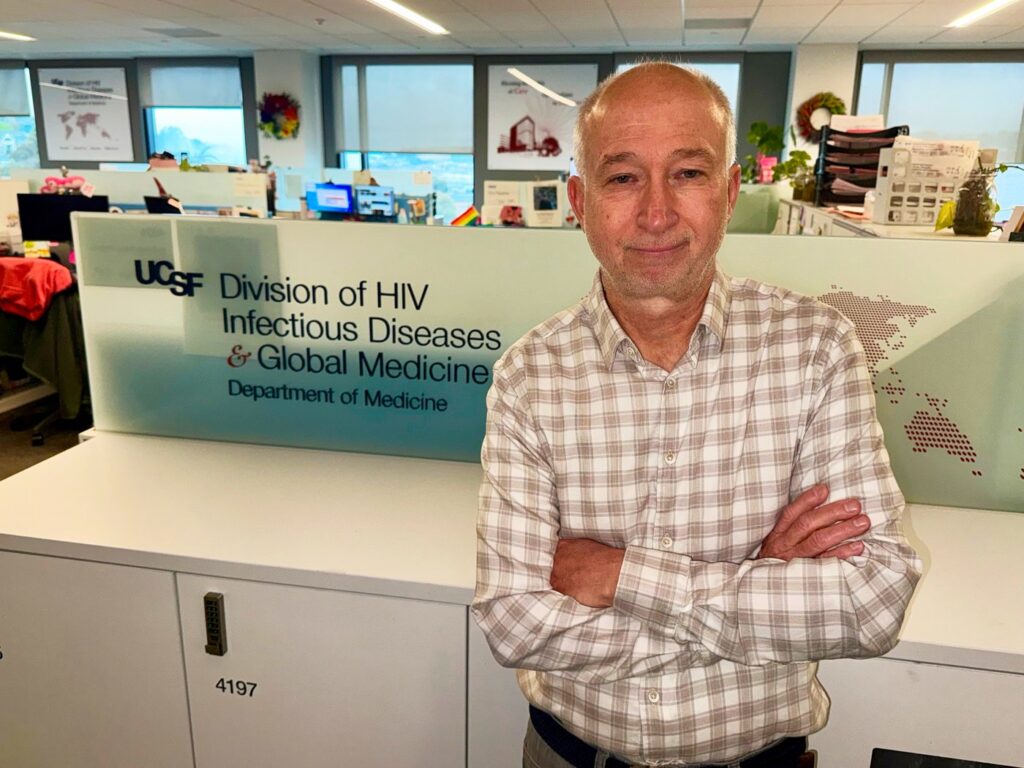
WASHINGTON (AP) - Scientists are exploring the potential of CAR-T cell therapy, a powerful cancer treatment, to combat HIV by enhancing the patients' immune response. Recently, researchers reported on a small study where a single dose of genetically modified T cells suppressed HIV in two patients, one for nearly a year and the other for close to two years, without the need for their usual antiretroviral medications.
Dr. Steven Deeks of the University of California, San Francisco, who leads the research, emphasized the need for larger and more extended studies to determine if CAR-T cell therapy could provide a sustainable solution for HIV. He stated, “We find the fact that two people have had such a really sustained response provocative. There is a real need for a one-and-done, safe and scalable cure ... and this is one of the strategies that we’re pursuing.” This data was presented at a meeting by the American Society of Gene and Cell Therapy held in Boston.
Currently, approximately 40 million individuals worldwide are living with HIV. Advances in medicine have transformed HIV from a rapid killer into a manageable chronic disease, keeping the virus at undetectable levels for many. However, access to medication remains a significant barrier, as the virus can quickly rebound if treatment is interrupted due to hidden reservoirs within the body.
Researchers have long sought a cure for HIV, looking into cases where certain individuals, including those with specific gene mutations and patients who have undergone stem cell transplants, were declared cured or experienced long-term remission. CAR-T therapy traditionally involves extracting T cells from a patient's blood, genetically modifying them into “living drugs,” and reintroducing them into the body. This method has already proven effective in treating certain cancers and is being investigated for other conditions.
The non-profit organization Caring Cross has developed CAR-T cells tailored for HIV, engineered to locate and destroy HIV-infected cells while being safeguarded against the virus itself. This dual functionality is anticipated to facilitate the reproduction of T cells to control HIV effectively, according to executive director Boro Dropulic.
In the early-phase clinical trial, researchers tested various dosing strategies on patients who ceased their antiretroviral medication upon receiving CAR-T cells. Importantly, there were no serious adverse effects reported. However, the initial three recipients exhibited no significant response and returned to their previous treatments.
Meanwhile, six other participants received a mild dose of chemotherapy to create space for the newly engineered T cells. Among these, two individuals displayed strong responses, with their HIV levels dropping to undetectable statuses, occasionally increasing again as the CAR-T cells activated. A third participant experienced a temporary response but eventually resumed standard HIV treatment.
All three patients had begun their original HIV treatments shortly after infection, which is crucial since those treated early typically have less HIV hiding within their bodies and possess healthier immune responses. Dr. Hans-Peter Kiem, a gene therapy expert at the Fred Hutchinson Cancer Center in Seattle, expressed cautious optimism about the findings, stating, “This is certainly very fascinating that they’ve had this positive response.” He reiterated the necessity for additional research to validate the effectiveness of CAR-T therapy in treating HIV.
Andrea Gramatica, vice president for research at amfAR, The Foundation for AIDS Research, noted that the strategy holds promise as it “boosts what our body, our immune system, can already do.” This research is part of a wider effort to develop more accessible and easier-to-use treatment options for those affected by HIV.