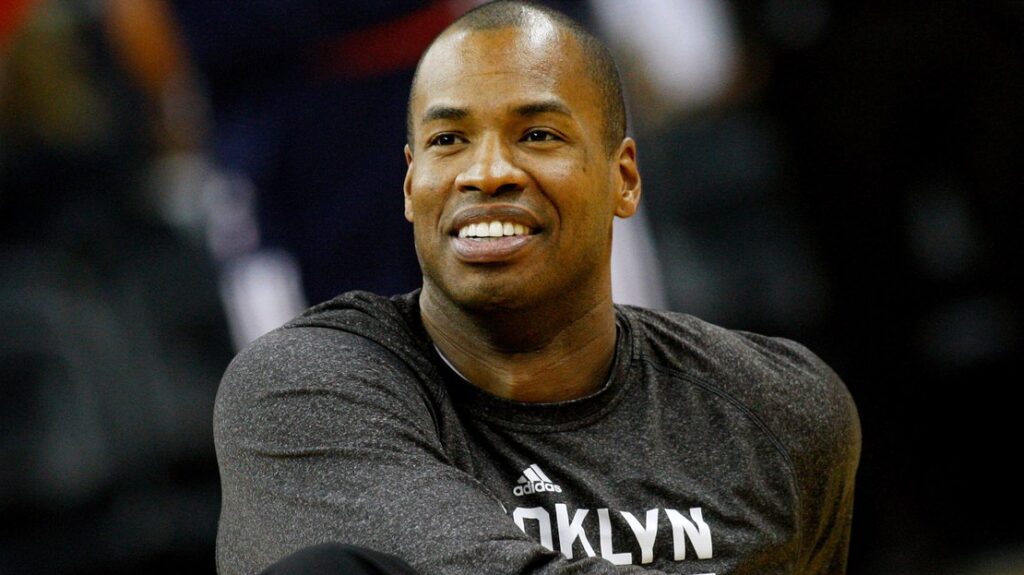
Jason Collins, the first openly gay player in NBA history and a prominent advocate for inclusion within the sport, has passed away at the age of 47 after an eight-month struggle with an aggressive form of brain cancer known as Stage 4 glioblastoma. His family made the announcement on Tuesday, expressing gratitude for the overwhelming support and exceptional medical care he received throughout his illness.
During his 13-year career in the NBA, Collins played for six teams, most notably the New Jersey Nets. He came out as gay in 2013, a significant event that occurred near the end of his playing days. At that time, he commented on his decision, expressing hope that someone else would have gone public with their sexuality before him, stating, “If I had my way, someone else would have already done this. Nobody has, which is why I’m raising my hand.” His announcement was met with widespread acclaim and support from fans, fellow players, and even political figures, including former President Bill Clinton.
Collins’ family released a statement highlighting his transformative impact on countless lives, saying, “Jason changed lives in unexpected ways and was an inspiration to all who knew him and to those who admired him from afar.” They expressed deep sadness over his passing and acknowledged the love and prayers they received in the previous months.
Just a week prior to his death, Collins was honored with the inaugural Bill Walton Global Champion Award at the Green Sports Alliance Summit. Although too ill to accept the award himself, his twin brother, Jarron Collins, who is also a former NBA player, accepted on his behalf, calling Jason “the bravest, strongest man I’ve ever known.”
Throughout his career, Collins averaged 3.6 points and 3.7 rebounds per game, but his contributions to the sport transcended statistics. He provided critical support to the New Jersey Nets as they reached the NBA Finals in consecutive years. His best season came in 2004-05, where he averaged 6.4 points and 6.1 rebounds per game.
NBA Commissioner Adam Silver recognized Collins' legacy, stating, “Jason Collins’ impact and influence extended far beyond basketball as he helped make the NBA, WNBA and larger sports community more inclusive and welcoming for future generations.” Silver emphasized Collins' exemplary leadership and kindness, noting that he would always be remembered for breaking barriers while demonstrating humanity.
Collins’ journey began at Stanford University, where he was a standout player and made the All-America team in 2001 before being drafted by the Houston Rockets as the 18th overall pick. During his time in college, he was known for his impressive shooting percentage and was celebrated as a remarkable athlete. The former Stanford coach Mike Montgomery paid tribute to him, reflecting on the enormous impact he had on the program and the kind of person he was.
Before coming out publicly, Collins had been private about his beliefs regarding gay rights. He notably wore jersey number 98, symbolizing the year Matthew Shepard, a gay college student, was murdered, as a form of homage to the LGBTQ+ community. Collins' decision to disclose his sexuality was inspired partly by witnessing his friend Joe Kennedy III participate in Boston's gay pride parade in 2012.
Jason Collins leaves behind a legacy as both a talented player and an advocate for social change, paving the way for greater acceptance and inclusivity in sports. His death marks a significant loss not only for the basketball community but also for the countless individuals who looked to him as a trailblazer and inspiration.