A U.S.-brokered ceasefire between Russia and Ukraine was set to expire on Monday, amidst mutual accusations of violations by both sides of the 72-hour agreement. Following the ceasefire's conclusion, U.S. and European officials have been deliberating on ways to encourage further discussions between the two countries embroiled in conflict.
Ukrainian officials reported that on Monday, Russian aerial attacks, which included drones, bombings, and artillery fire, resulted in the deaths of at least two civilians and injuries to seven others, including a 14-year-old boy in the Kharkiv and Kherson regions. In contrast, Russia's Defense Ministry maintained that its forces had "strictly observed" the ceasefire, arguing that Ukraine was the party breaching the terms.
Previous ceasefires declared since Russia's invasion of Ukraine over four years ago have similarly failed to halt hostilities, and diplomatic initiatives led by the U.S. during the past year have yielded little success. Observations from the Washington-based Institute for the Study of War, based on data collected by NASA, indicated a decrease in military activity following President Donald Trump's announcement on Friday that both Russian President Vladimir Putin and Ukrainian President Volodymyr Zelenskyy had agreed to the ceasefire.
This ceasefire was intended to coincide with Victory Day, a Russian holiday commemorating the defeat of Nazi Germany. The Institute noted that ceasefires lacking comprehensive enforcement mechanisms and credible monitoring are unlikely to be effective.
In conjunction with the ceasefire, Trump proposed an exchange of prisoners, suggesting that this would represent a potential turning point in the ongoing conflict. Zelenskyy confirmed preparations for the exchange of 1,000 prisoners from each side, although indications suggest that neither side is willing to compromise on their core negotiating positions.
Putin has expressed a desire for full control over the Donbas region, Ukraine's industrial center, yet this territory remains only partially under Russian control. Zelenskyy has consistently rejected the notion of ceding Donbas, offering a ceasefire and a face-to-face meeting with Putin, who has declined such discussions until a preliminary agreement is nearly finalized. Putin has floated the idea of former German Chancellor Gerhard Schröder as a mediator, but European officials have dismissed this notion while suggesting that the EU could assume a more active role in peace negotiations.
Finnish President Alexander Stubb, who shares a cordial relationship with Trump, emphasized the urgency for Europe to re-engage directly with Moscow, stating, "It’s time to start talking to Russia." However, EU foreign policy chief Kaja Kallas cautioned that internal consensus within the EU is crucial before engaging in negotiations with Russia.
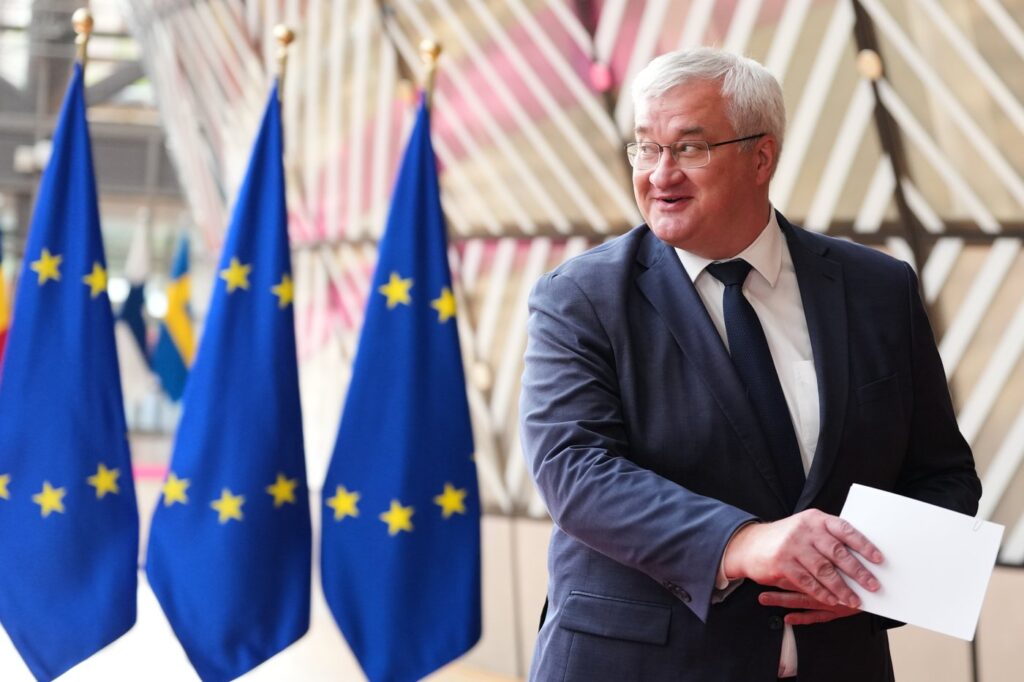
While addressing the EU foreign ministers' meeting in Brussels, Ukrainian Foreign Minister Andrii Sybiha highlighted the importance of U.S. leadership in ongoing peace talks, stressing that Europe also has a significant role to play. Zelenskyy mentioned that Ukraine maintains "nearly daily communication" with U.S. representatives and noted recent meetings between Ukraine’s National Security and Defense Council chief and Trump administration envoys.
Sybiha also pointed out Ukraine's improved performance on the battlefield, indicating that it has forced Russian forces into a more drawn-out conflict along the extensive 1,250-kilometer front line. Additionally, Ukraine has been employing domestically developed long-range drones and missiles to strike targets deep within Russian territory.
Ukraine's advance in drone technology has garnered attention from nearly 20 countries across the Middle East, Gulf, South Caucasus, and Europe, all seeking to establish deals for these highly effective military tools, which in return provide Ukraine with fuel and financial support.
On Monday, German Defense Minister Boris Pistorius made an unannounced visit to Kyiv, aiming to strengthen defense cooperation. According to Ukrainian media, Germany has become a primary ally in providing security assistance to Ukraine, representing about one-third of the total military aid received, and has recently offered an "unprecedented package" of air defense systems while facilitating the production of advanced strike drones.