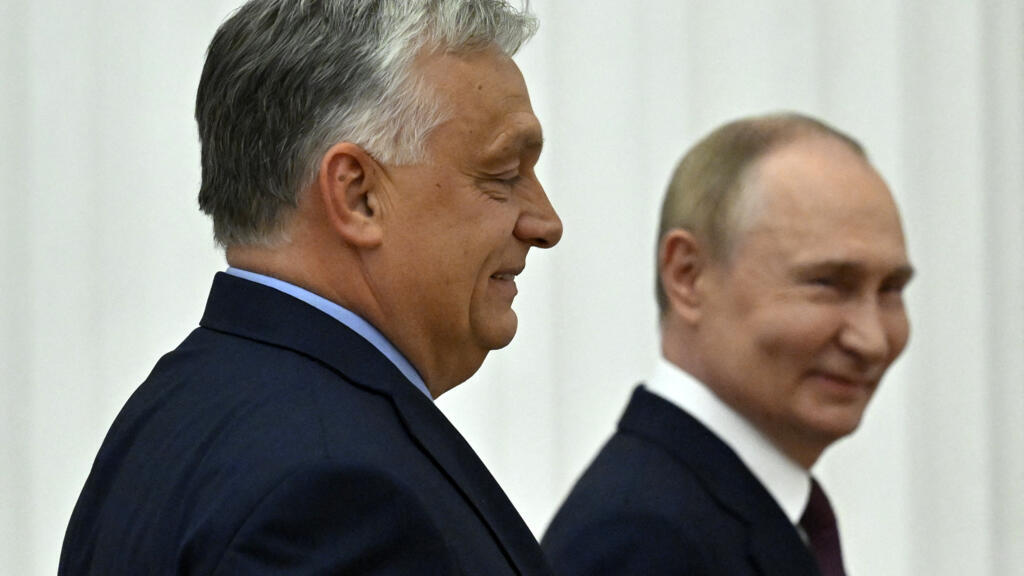
Hungary's legislative elections on Sunday are attracting significant attention from Moscow, given the geopolitical implications tied to the country's political landscape. Prime Minister Viktor Orban has established himself as a prominent ally of Russian President Vladimir Putin within the European Union. His administration has been characterized by a strong pro-Russian stance, which has included maintaining close economic and political ties with the Kremlin.
The stakes are high for both Hungary and the broader European Union. A victory for the opposition Tisza party, led by Peter Magyar, could herald a shift in Hungary's foreign policy and potentially weaken Russia's influence within the EU. The Tisza party stands for a more Western-oriented agenda, advocating for stronger ties with NATO and the United States, in contrast to Orban's more nationalist and pro-Russian approach.
Orban's tenure has been marked by controversial policies that have raised concerns among EU member states regarding democratic governance and rule of law. His government has often been at odds with EU institutions over issues such as media freedom, judicial independence, and migration policies. Thus, the upcoming elections are not merely a domestic matter; they are seen as a referendum on Orban's rule and a potential pivot point for Hungary's future direction within the EU.
The political climate in Hungary has become increasingly polarized, with Magyar's Tisza party capitalizing on public discontent concerning economic issues and perceived authoritarianism under Orban’s leadership. Polls suggest that the electorate is divided, making for a highly competitive election. If the opposition succeeds, it could lead to significant changes in both domestic policy and Hungary's international alignments, particularly concerning Russia.
Moscow's interest in these elections stems from its desire to maintain allies within the EU who support its objectives. A shift in Hungary's leadership could disrupt Kremlin strategies aimed at influencing European politics. Orban has often been a vocal supporter of the Russian government's positions, notably in areas such as energy policy and international sanctions. As such, any alteration in Hungary's political trajectory could reverberate further across the continent, challenging Russia's involvement in EU affairs.
International observers are closely monitoring the elections, analyzing not just the campaign tactics employed by each party, but also the broader implications for regional stability and EU unity. The outcome could redefine Hungary's role in Europe and reshape the geopolitical landscape in which Russia operates.
The elections' impact could extend beyond Hungary's borders, as they will likely influence attitudes within the EU regarding relations with Russia. Should the opposition Tisza party gain ground, it might embolden other nations within the bloc to reevaluate their ties with Moscow, potentially shifting the EU's overall approach to Russian engagement. As both sets of voters head to the polls, the results will undoubtedly resonate beyond Hungary's borders, influencing international relations in a complex and rapidly evolving geopolitical environment.