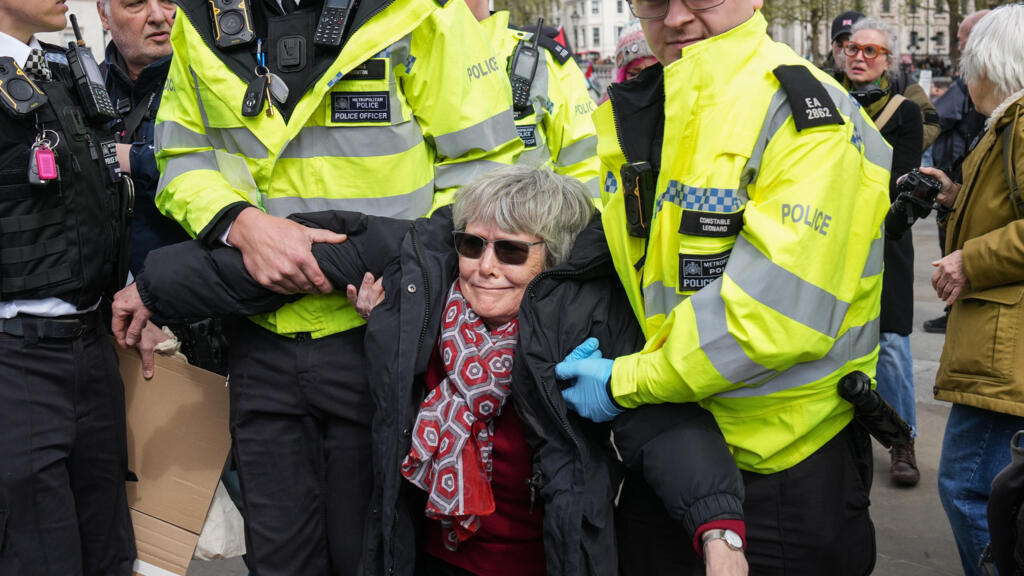
On Saturday, police in London apprehended over 500 individuals during a significant pro-Palestinian demonstration in Trafalgar Square. This protest was organized to express solidarity with Palestine Action, a group that has faced a ban due to its controversial activities. The event highlighted escalating tensions surrounding civil liberties and the right to protest, generating widespread discussion within the community and beyond.
Activists and supporters gathered at this iconic London location, transforming Trafalgar Square into a hub of passionate expression. The atmosphere was charged with dissent as participants called for attention to the Palestinian cause, signaling a broader movement advocating for rights and humanitarian concerns. The demonstration was not only a show of support for Palestine Action, but also a platform for activists to voice their opposition to policies they perceive as oppressive against the Palestinian people.
As the protest unfolded, it attracted significant media attention, further emphasizing the complexities surrounding freedom of speech and assembly. The presence of law enforcement was notable, with police prepared to intervene. The decision to arrest such a large number of participants has raised concerns among civil liberties advocates who argue that these actions could infringe upon the public's right to protest and express dissent.
The arrests sparked a debate about the balance between maintaining order and respecting individual freedoms in democratic societies. Various advocacy groups have come forward to support those arrested, arguing that the right to peacefully assemble should be protected. The protest underscores a growing trend where civil society engages in activism on contentious issues, often facing pushback from authorities.
Palestine Action, the group at the center of this demonstration, has been associated with direct action campaigns aimed at disrupting activities linked to Israeli businesses and military operations. Its controversial tactics have led to a divided opinion on its legitimacy. Supporters argue that such actions are necessary to bring attention to the plight of Palestinians, while critics claim they undermine the objective of the movement by resorting to illegal methods.
As the situation develops, the implications of this mass protest will likely resonate across the UK and globally, as issues of freedom of assembly and expression continue to be tested. The government’s response to such demonstrations and its ongoing policies regarding the Israeli-Palestinian conflict remain hotly debated, influencing public opinion and political discourse.