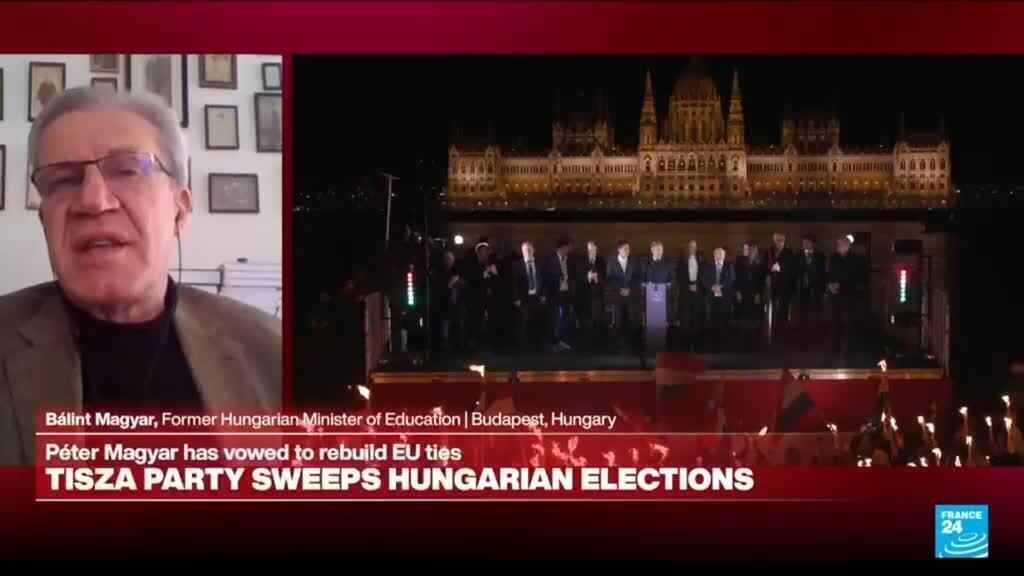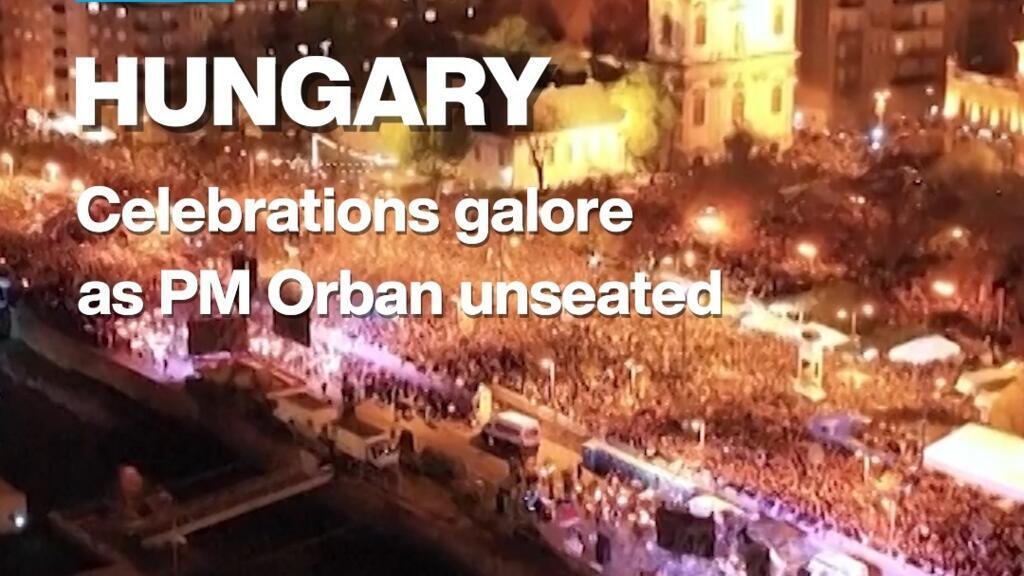
Thousands of Hungarians took to the streets of Budapest on Sunday night, celebrating a historic political shift in the country. The pro-European challenger, Peter Magyar, along with his Tisza party, successfully unseated Prime Minister Viktor Orban and his long-standing Fidesz party, which had held power for 16 years. This significant electoral change has sparked a wave of optimism among supporters who are eager for a new direction in Hungarian politics.
The elections, which were closely watched both domestically and internationally, reflected a growing desire among the Hungarian populace for a political landscape that aligns more closely with European Union values and standards. Voter turnout was notably high, indicating strong public engagement and a desire for change. Protesters and supporters alike gathered in key locations across Budapest, singing songs and waving flags, showcasing their enthusiasm for the newly elected government.
Peter Magyar, who campaigned on promises of transparency, anti-corruption measures, and improved relations with the European Union, appealed to a diverse range of voters. His victory marks a pivotal moment in Hungarian history, as many citizens have expressed frustration over Orban's increasingly authoritarian governance and his party's controversial policies over the years. Magyar's Tisza party emphasized the need for immediate reforms to address economic challenges and strengthen democratic institutions.
As the celebrations unfolded, the atmosphere in Budapest was electric. People gathered in sizeable groups, many lighting candles and chanting slogans in support of the new regime. The transition of power is anticipated to bring fresh ideas and policies aimed at rejuvenating the nation's economy and strengthening civil liberties. The election results signal a potential shifting tide in Central European politics, with several neighboring countries observing the developments in Hungary with interest.
Political analysts are now speculating on what this shift will mean for Hungary's future relationship with the European Union. There is hope that Magyar and his administration will work to mend ties that have been strained in recent years under Orban's leadership. The election result has also encouraged opposition groups and activists in other countries who have faced similar authoritarian regimes, suggesting that a movement for democratic reform is gaining momentum in the region.
The impact of this election is likely to be far-reaching, not only within Hungary but also across Europe. As the new government settles in, leaders and citizens alike will be watching closely to see how Magyar's administration addresses pressing issues such as economic growth, social justice, and human rights. The coming weeks and months will be critical for shaping Hungary's political landscape and its role within the European Union.
This electoral outcome is not only a reflection of changing political sentiments in Hungary but also a reminder of the power of civic engagement and participation in shaping a nation's future. With renewed hope and determination, the people of Hungary take their first steps toward this new chapter in their democratic journey.