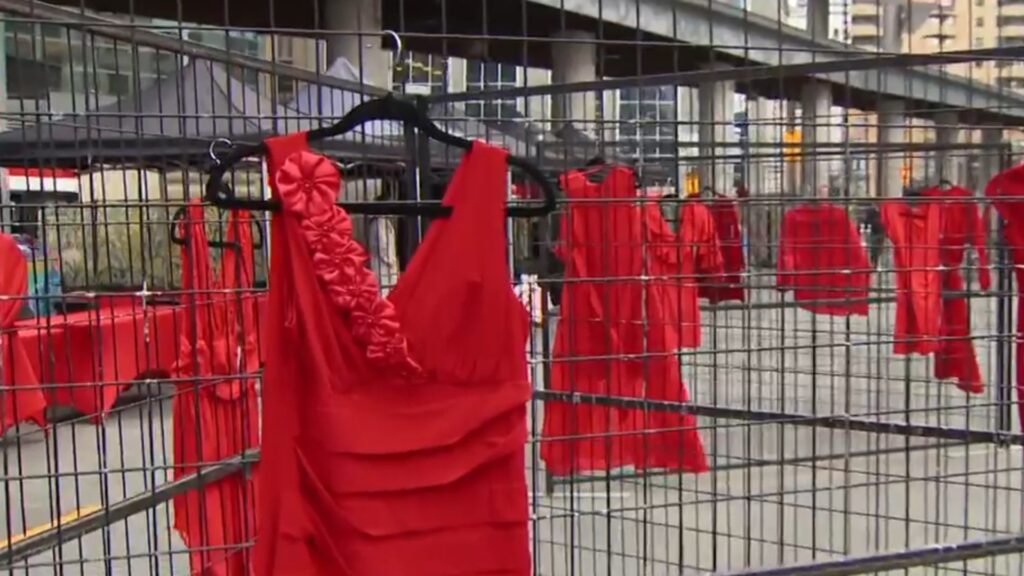
On Red Dress Day, a solemn occasion dedicated to honoring the missing and murdered Indigenous women and girls, one survivor, Shailla Manitowabie-Cooke, is actively working to raise awareness for fellow victims. Shailla, who vanished for weeks at the age of 18, experienced trauma that has shaped her life and advocacy efforts.
In 2012, Manitowabie-Cooke was trafficked in the sex trade. Upon her return, she chose to remain silent about the abuse she endured during her absence. “It was deeply traumatizing and I just knew I couldn’t stay silent about it,” she shared. Now a survivor and advocate, Manitowabie-Cooke speaks out to amplify the voices of other survivors and to shed light on the ongoing epidemic of Missing and Murdered Indigenous Women and Girls.
Events like Red Dress Day provide her with a platform to advocate for change and awareness. This day originated from an art installation created over 15 years ago by Métis artist Jamie Black-Morsette, who sees the red dress as a powerful symbol that visually represents both mourning and care for those who have been lost.
The movement has evolved into the National Day of Awareness and Remembrance for Missing and Murdered Indigenous Women, Girls, and Two-Spirit. This significant day has been observed in Canada on May 5 since 2019, serving as a day of action and solidarity. Black-Morsette notes that the color red holds various meanings, one of which is that it is the only color visible to the spirits. Each red dress displayed serves as a poignant reminder of someone who is loved and missed, symbolizing the emptiness left in the hearts of their families and communities.
On May 5, Sankofa Square in downtown Toronto was adorned with red dresses, music, and community gatherings where individuals came together to honor victims, support families and survivors, and highlight the ongoing violence faced by Indigenous peoples in Canada. Monica McKay, representing Toronto Metropolitan University’s Indigenous Initiatives, emphasized the importance of the exhibit, hoping it would encourage visitors to ask questions and better understand the significance of this day for the Indigenous community.
The attendees came with various motivations: some to mourn their loved ones, others to celebrate their survival, while many simply sought to learn and support those still searching for their lost sisters, mothers, or daughters. Charlotte Tookenay, an attendee, spoke to the cultural significance of women in Indigenous communities, describing them as the matriarchs and caregivers, and stating that it is now their responsibility to take care of those who have passed on.
Still, families are left searching for their lost loved ones while survivors continue fighting for justice. Manitowabie-Cooke expressed the difficulty many face in truly understanding the level of abuse that Indigenous women often experience..
The crisis surrounding Missing and Murdered Indigenous Women and Girls persists, with advocates underscoring the need for real action that extends beyond the symbolic gesture of red dresses. The systemic issues that contribute to the violence against Indigenous women and girls must be addressed in order to foster meaningful change and to ensure the safety and respect of Indigenous lives.