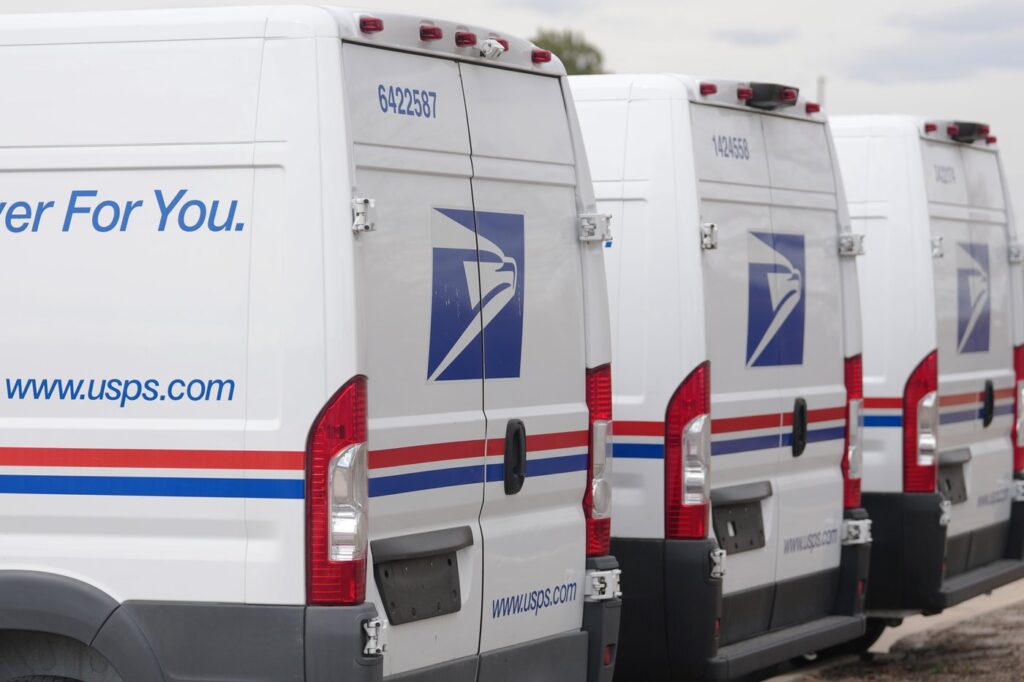
LAS VEGAS (AP) – For the first time in nearly a century, handguns might be permissible to mail through the United States Postal Service (USPS) if a proposed rule from the Trump administration is enacted. This potential policy shift has prompted pushback from Democratic attorneys general in approximately two dozen states, who sent a letter opposing the change.
Historically, in 1927, Congress enacted a law prohibiting the USPS from mailing concealable firearms, such as handguns, unless they were sent by licensed dealers. The aim was to combat rising crime rates. However, in January, the Department of Justice revisited the 1927 statute, labeling it unconstitutional and asserting that it violates the Second Amendment. The Department urged the USPS to amend its regulations to comply with constitutional protections for law-abiding citizens.
The Department of Justice stated that as long as Congress operates a parcel service, the Second Amendment compels USPS to facilitate the shipment of constitutionally protected firearms to and from lawful owners, regardless of whether those individuals are licensed manufacturers or dealers. This ruling would allow individuals to sell and ship handguns to buyers within the same state. In contrast, shipping handguns across state lines would entail stricter regulations, permitting only self-mailing of firearms with the requirement for individuals to physically open the package themselves. This provision aims to support lawful intents like travel for recreational purposes.
Opponents of the proposed rule, such as Nevada Attorney General Aaron Ford, argue that it undermines local efforts to reduce gun violence, particularly in a state like Nevada, which has faced significant tragedies, including the deadliest mass shooting in U.S. history on October 1, 2017. Following this incident, Nevada implemented stricter regulations requiring background checks on many private gun transactions. Ford expressed concern that this rule would make it simpler for individuals who are legally prohibited from possessing firearms—including those with felony convictions—to acquire them.
The attorneys general emphasized that allowing the postal service to ship handguns would complicate the enforcement of gun laws, making it challenging for law enforcement to track firearms and investigate related crimes. Moreover, they argue that the proposed rule would bypass state-level regulations that mandate background checks, mental health evaluations, and safety training courses, raising significant concerns about accountability in firearms distribution.
In addition, the attorneys general highlighted that implementing this rule could strain state budgets by necessitating the establishment of new tracking systems for firearms transported via the postal service. They noted that private shipping companies like UPS and FedEx already impose stringent restrictions on gun shipments, allowing only licensed federal firearms dealers to send firearms, thus ensuring greater control over the distribution of these weapons.
Proponents of the rule change include firearm advocacy groups, which have praised the move as a positive step for lawful gun owners. John Commerford, executive director of the lobbying arm of the National Rifle Association of America, called the proposed change a significant victory that allows the shipping of handguns under similar regulations to those governing rifles and shotguns.
Conversely, gun safety organizations have raised alarms about the potential implications of the rule. John Feinblatt, president of Everytown for Gun Safety, described the rule change as transforming USPS into a "gun trafficking pipeline" for illicit firearms, complicating law enforcement's efforts to control gun-related crime.
As USPS reviews public comments on the proposed rule, which were due this past Monday, the future of handgun shipments through the postal service remains uncertain. The tension between advocates for gun rights and those prioritizing gun safety continues to intensify amid this pivotal debate over firearms regulation in the United States.