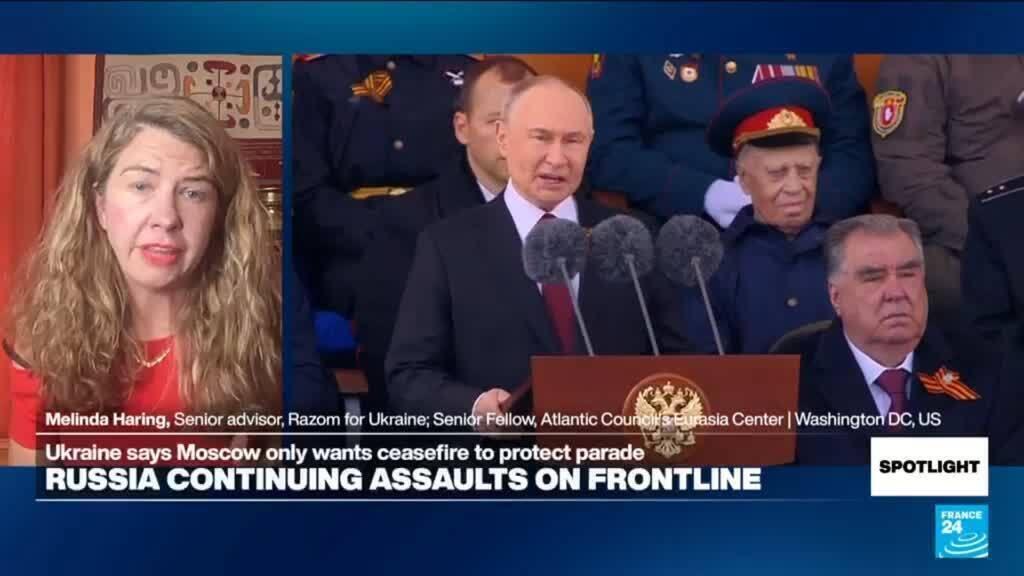
Melinda Haring on Shifting Dynamics in the Ukraine-Russia Conflict
Mark Owen recently welcomed Melinda Haring, a leading expert on Ukraine and a non-resident Senior Fellow at the Atlantic Council's Eurasia Center. Haring is also a Senior Advisor to the advisory board of Razom Advocacy. In her latest analysis, she discusses the evolving dynamics of the ongoing conflict between Russia and Ukraine, focusing particularly on the upcoming May 9 Victory Day celebrations in Russia.
Haring argues that there has been a significant shift in the psychological and military balance between the two nations. This shift is characterized by what she perceives as an increasingly defensive posture from the Kremlin. "Vladimir Putin is finally afraid," Haring asserts, indicating that the Russian leadership is beginning to recognize the risks posed by Ukraine's military strength and international support.
The context of Haring's claims is crucial in understanding the current state of the conflict. As the May 9 Victory Day approaches, a day of significant national pride for Russia, Haring suggests that the Kremlin's need to celebrate past military glories contrasts sharply with its current defensive stance. This day, which commemorates Russia's victory over Nazi Germany in World War II, often serves as a platform for displaying military might and patriotism. However, this year, the atmosphere feels markedly different, according to Haring.
Haring emphasizes that the shifts are not solely military. The fear that Putin may be feeling is reflective of broader anxieties within Russia's political landscape. As Ukraine continues to receive robust support from Western nations, confidence appears to be on the rise among Ukrainian forces. Haring reiterates that Ukraine has made significant strides in its capabilities and morale, contributing to the psychological warfare aspects of the conflict.
Moreover, Haring points out that the Kremlin’s strategies have started to reveal cracks, potentially indicating a loss of confidence in achieving its initial objectives in the war. This insecurity is evident in the Russian government's attempts to project a façade of strength while grappling with internal challenges and the realities on the battlefield.
As the global community watches closely, Haring’s insights indicate that Russia's challenges may not solely stem from military failures but also from the eroding public support domestically. The propaganda narrative that has long bolstered the legitimacy of Putin's actions is facing greater scrutiny as the hardships of war become more apparent to the Russian populace.
In conclusion, Melinda Haring’s analysis paints a complex picture of the ongoing conflict, underscoring that the dynamics between Russia and Ukraine are shifting in favor of Ukraine. Her perspective offers critical insight as the world anticipates the upcoming May 9 celebrations, which will likely highlight this new reality—and perhaps expose the vulnerabilities of the Kremlin more than ever before.