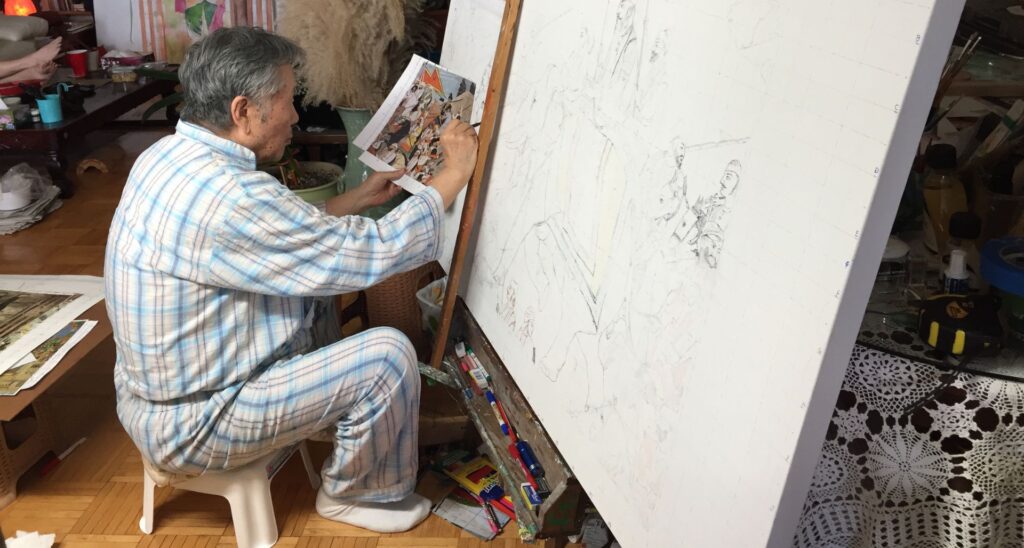
In Canada, May is recognized as Asian Heritage Month, highlighting the stories and contributions of Asian communities. One intriguing narrative is that of Duck Yull Park, a 92-year-old Korean War refugee. His artistic work not only reflects his own history but also resonates with the Sikh community, underlining shared experiences of displacement and resilience.
Duck Yull Park was born in what is now North Korea and was forced to flee his homeland at the age of 17 amid the chaos of the Korean War during the early 1950s. Like millions of others, he experienced separation and migration due to conflict. After the war, Park spent years as a structural engineer near the Korean Demilitarized Zone (DMZ) but rekindled his childhood passion for painting, which continues to define his life today.

Park's artwork has garnered attention in Canada for its ability to connect the histories of two communities that have both endured partition and displacement. He became intrigued by Sikh art when he encountered several books in a library showcasing its rich history. The advanced nature of Sikh art captivated him, allowing him to draw parallels with traditional Korean art.
Through his vivid paintings, Park portrays Sikh heritage, significant architecture, and notable historical figures, intertwining his own experiences of migration with those of the Sikh community. One of his significant pieces—a portrait of Maharaja Duleep Singh—was recently showcased at a Sikh Heritage Month exhibition hosted at the Peel Art Gallery, Museum and Archives. At this event, Park was also honored for his contributions to art.
Friends of Park emphasize that his work goes beyond aesthetic appeal; it encapsulates emotional narratives surrounding loss, identity, and resettlement—experiences that are deeply rooted in the Sikh community's history over the last 200 years. Satwinder Gosal, a lawyer and longtime family friend, highlights Park's early promise as a gifted painter and describes how themes of losing one's homeland and community resonate with both Korean and Sikh histories. “Through his art, Korean communities can understand another aspect of Sikh history,” Gosal noted.

Park’s paintings serve as a testament to the stories of migration, memory, and belonging—narratives that resonate with many immigrant and refugee populations in Canada. The recognition he has received from the South Asian community has been profoundly meaningful for him. “I surprised myself,” he said, expressing joy at the engagement his paintings have received. “So many people gathered around my paintings, looking at them and talking about them.”
As Canada celebrates Asian Heritage Month, Duck Yull Park's journey and artistry remind us of the profound connections that art can create across cultures, transcending borders and languages to connect different communities through shared experiences of loss, resilience, and hope.