As wildfire crews continue to work tirelessly to combat the ongoing wildfires across northwestern Ontario, tensions have escalated as certain American politicians express their frustration towards Canada. Republican Senator Bernie Moreno from Ohio has taken to social media, proclaiming his intent to introduce a bill by the week of July 20 to impose sanctions on Canada and responsible government officials, labeling the situation an "atrocity."
In a related vein, Congressman John James, who represents a district north of Detroit and is backed by former President Donald Trump for the Michigan governorship, issued a "final warning" to Canada. He urged Canada to manage its forests effectively to prevent such fires, citing the detrimental effects of Canadian inaction on American air quality. He emphasized, "Sovereignty comes with responsibility," indicating that Canada's failure to prevent smoke from crossing borders is unacceptable.
Further intensifying the discourse, Congressman Tom Barrett of Central Michigan shared a photo from inside an airplane that displayed smoke filling the sky, questioning whether the opening of the Gordie Howe Bridge should be postponed until Canada addresses its wildfire management issues. This bridge is destined to connect Detroit and Windsor, Ontario. Meanwhile, Representative Lisa McClain from northern Michigan stated in a video that she had reached out to both the White House and U.S. Ambassador to Canada Pete Hoekstra to discuss the matter.
McClain remarked, "Another summer of more Canadian wildfires... it’s serious out there," encouraging residents to check on vulnerable neighbors and adhere to safety guidelines. She pointed out that last year, Michigan had even sent firefighters to assist Canada in firefighting efforts, criticizing what she perceives as insufficient action on Canada's part regarding fire management. In another social media post, she declared that Michigan residents should not have to "breathe Canada’s negligence," demanding that Canada take measures to control its wildfires more effectively.
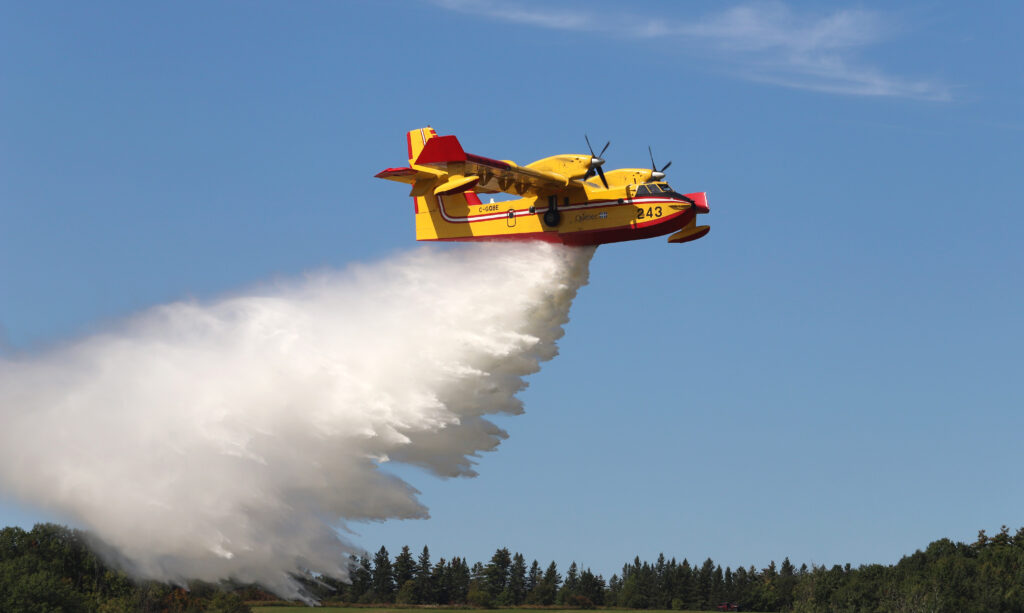
Despite the political rhetoric, many fire crews across North America routinely assist each other during times of crisis. Premier Doug Ford of Ontario acknowledged the support from Alberta and Yukon fire crews currently engaged in fighting the fires in Ontario. He reported that as of mid-July, Ontario has faced over 480 wildfires this year, exceeding the average incidence for this period, with 136 active fires observed in the northwest region. Ford confirmed that around 150 fire crews are actively responding to these emergencies.
The air quality situation has deteriorated significantly, with unhealthy levels reported across the Midwest. Detroit's air quality ranked among the worst globally due to smoke from countless Canadian and Minnesota wildfires. Residents have been urged to remain indoors or wear protective masks, as conditions reached hazardous levels. The National Weather Service has indicated that even if conditions improve temporarily, smoke may return until the wildfires are resolved, which could take several weeks.
In recent developments, officials have closed areas along the U.S.-Canadian border, including the Boundary Waters in Minnesota, to ensure public safety. A successful evacuation of 15 individuals, including Minnesota teenagers and staff from Ontario's provincial park, was accomplished by the Royal Canadian Air Force amid the ongoing crisis. Ontario forest fire officials reported a concerning number of uncontrolled fires in the region, with new wildfire incidents emerging continually.
While the fires rage, Prime Minister Mark Carney addressed criticisms from U.S. officials during a news conference, emphasizing Canada’s commitment to clean energy investment. He noted the responsibility falls on all nations, including the U.S., to combat climate change effectively, countering criticisms regarding Canada's environmental policies. Carney acknowledged his government’s emissions may exceed previous projections but defended the need for a balanced approach that includes resource development alongside environmental considerations.
Ultimately, the ongoing wildfire situation has sparked significant dialogue between American politicians and Canadian officials, highlighting the complex interplay of environmental management, international relations, and public health amidst a disastrous wildfire season.