DUBAI, United Arab Emirates (AP) — The United States has intensified its airstrike campaign against Iran, focusing on infrastructure targets such as bridges as part of President Donald Trump’s strategy to exert pressure on Tehran regarding its control over the Strait of Hormuz. This escalation follows a series of Iranian missile assaults on U.S.-allied nations in the Middle East, with Iran issuing warnings of further retaliatory actions.
In Qatar, authorities advised citizens to seek shelter amid a wave of missile strikes launched by Iran. Residents reported hearing explosions as Qatari air defense systems engaged incoming missiles. Qatar plays a significant role as a mediator alongside Pakistan in efforts to negotiate peace in the ongoing conflict with Iran, although dialogue has stalled over Iran's maritime influence in the Strait of Hormuz.
Iran has escalated its hostilities, targeting Bahrain and Kuwait in response to U.S. airstrikes that struck bridges within Iranian territory overnight. A previously established interim ceasefire between the U.S. and Iran, agreed upon last month, has effectively collapsed, leading to a sequence of retaliatory strikes as both nations contend for dominance over the strategic waterway. Iranian officials report that U.S. airstrikes have resulted in over 35 deaths and more than 300 injuries, with additional casualties arising from the recent attacks.
Since the commencement of U.S. and Israeli military operations against Iran on February 28, Tehran has taken aggressive measures to close the Strait of Hormuz, disrupting shipping traffic and significantly impacting global oil prices. This maneuver has granted Iran substantial leverage during negotiations, exacerbating an already volatile situation.
In a recent primetime address, President Trump asserted the U.S. is achieving successful outcomes in the conflict, claiming, “We are likewise winning big in Iran, and you will see the fruits of that labor very, very shortly.”
Col. Ebrahim Zolfaghari, spokesperson for the Iranian military’s Khatam al-Anbiya Central Headquarters, threatened that Iran would consider launching extensive attacks on regional infrastructure should the U.S. follow through on plans to target Iranian bridges and power stations. He emphasized that any U.S. interventions would cross a “red line” for Iran, particularly regarding its control of the Strait of Hormuz.
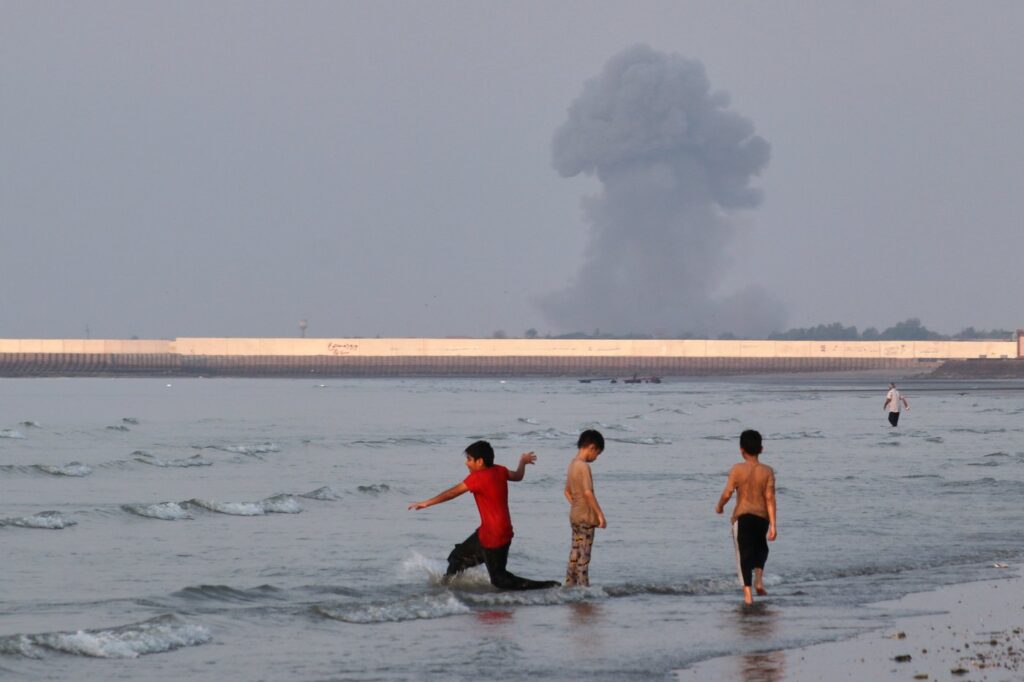
Following U.S. airstrikes that targeted bridges in Hormozgan province, Iranian state media reported at least seven fatalities in Bandar Khamir, a city along the Strait of Hormuz. The U.S. Central Command disclosed that dozens of targets were struck during these air operations, marking six consecutive nights of U.S. military activity against Iranian positions.
Moreover, Iranian state media indicated that airstrikes also occurred in areas around Tehran and Semnan province, where Iran’s ballistic missile and space programs are situated. President Trump has renewed his threats to target infrastructure, aiming to compel Iran to relax its grip on the strategic strait, which facilitates the passage of approximately 20% of the world’s oil and natural gas during periods of peace.
In addition to the airstrikes, the U.S. re-established a naval blockade on Iranian ports, thereby halting crude oil shipments. Weekly cargo traffic through the Strait of Hormuz has reportedly declined by nearly 25% since the beginning of the month, prior to the latest round of attacks. Due to increasing risks, some shipping companies are navigating the strait with their tracking devices turned off, while others have opted to remain anchored, according to data from maritime intelligence firm Lloyd’s List Intelligence. Although there has been a rise in energy supplies transported via pipelines, this volume has not compensated for the reduced shipping activity through the strait.
The U.S. military has intervened with three commercial vessels attempting to bypass the blockade, disabling one that refused to comply and boarding another to ensure adherence to the regulations, as reported by the Central Command.