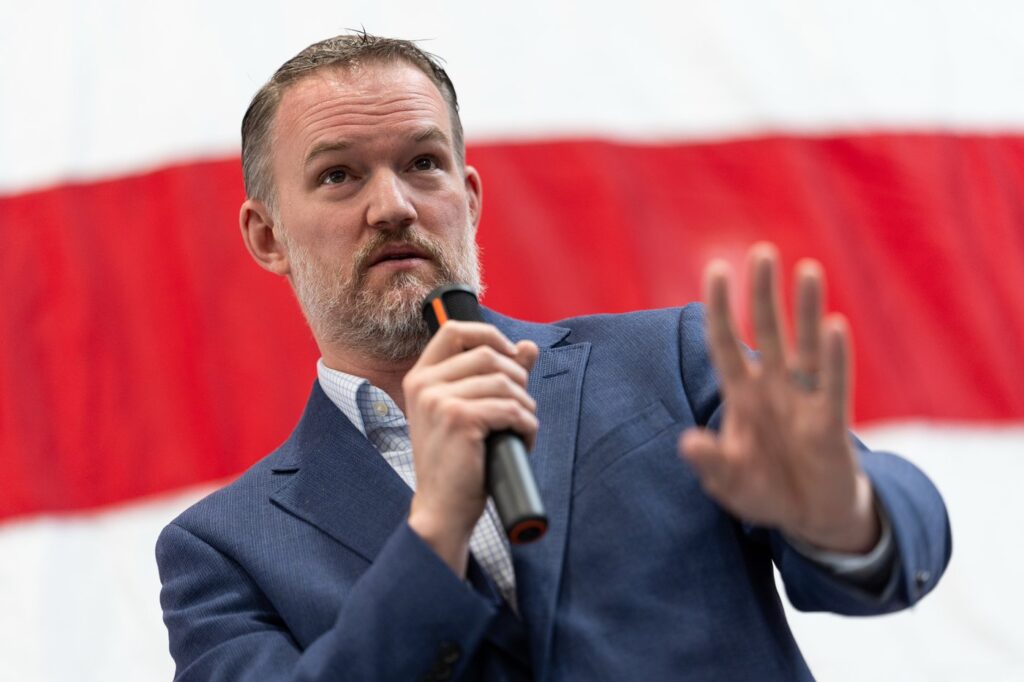
WASHINGTON The ongoing trade negotiations between the United States and Canada remain stagnant, as stated by the United States' top trade official, Jamieson Greer. He conveyed that the Trump administration would not give Canada credit for its recent trade concessions, including the elimination of its digital services tax and the reconsideration of the Online Streaming Act.
During his remarks at the Aspen Security Forum in Aspen, Colorado, Greer expressed that Canada’s decision to roll back these measures, aimed at resuming halted trade discussions, was merely a correction to previous missteps rather than a significant concession worthy of credit. He described the moves as "just good practice on their part," emphasizing that the administration does not recognize it as a positive development.
In June, Canadian Prime Minister Mark Carney had announced the removal of the digital services tax, which was set to impose taxes on revenues from Canadian users for major tech corporations. This decision was made just hours before the tax was to take effect and was seen as an effort to restart trade talks that had been suspended. A brief thaw in Canada-U.S. relations followed this announcement, with hopes for limited agreements concerning specific tariffs imposed by President Donald Trump.
However, negotiations were stalled again after President Trump reacted negatively to an advertising campaign funded by the Ontario government that featured a statement from former President Ronald Reagan criticizing tariffs. Despite this setback, Greer indicated that he maintains regular communication with Canadian trade officials, offering proposals to enhance the trade relationship, though he acknowledged a lack of significant progress.
In early July, the United States formally decided against renewing the Canada-U.S.-Mexico Agreement (CUSMA), which is designed to facilitate trade within North America. This agreement continues to operate under a system of annual rolling reviews for up to a decade, at which point it could expire unless a consensus on an extension is reached. Both Canada and Mexico expressed interest in a 16-year extension to CUSMA.
While the trade agreement has shielded both Canada and Mexico from many of Trump's tariffs, several industries, including steel, aluminum, automobiles, and cabinetry, continue to face additional duties. These sector-specific tariffs have become a critical issue for Canadian negotiators, who find that the Trump administration remains firm in its position regarding the tariffs. Meanwhile, negotiations between Washington and Mexico regarding CUSMA have commenced, yet no similar discussions have begun with Canada.
Greer described Mexico as "pragmatic" but also noted that the trade deficit with Mexico poses challenges, citing issues related to overcapacity, subsidies, unfair trading practices, and monetary policy. He did not specify trade irritants with Canada beyond reiterating the administration's stance that Canada, along with China, was one of the few nations to retaliate following the implementation of extensive tariffs by President Trump.
Moreover, Greer mentioned that the Trump administration is focused on reducing the trade deficit with Canada, which is primarily influenced by oil imports. He pointed out that if energy is excluded from consideration, the United States maintains a trade surplus with Canada.
Despite the current impasse, Greer expressed an optimistic outlook regarding a potential agreement with Canada, stressing the importance of high-level discussions between leaders to pave the way for resolution. He stated, "The reality is if the president and Prime Minister Carney have an understanding, I’m sure we can put together something that makes sense to get us over the hump." Greer concluded by reaffirming the inevitability of trade between the two nations due to their geographical proximity.