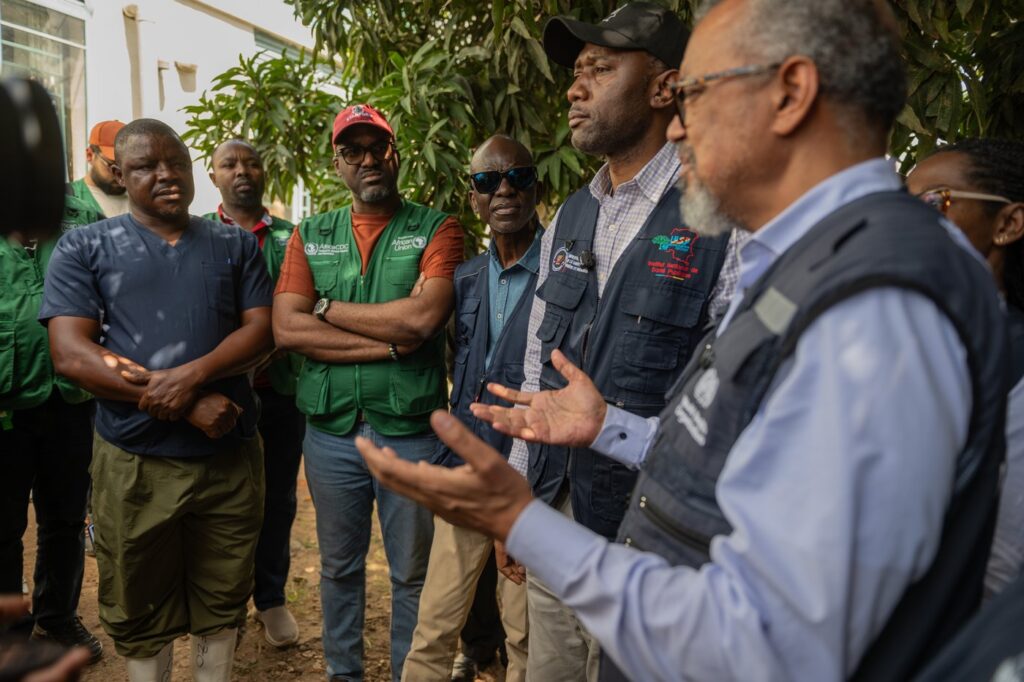
BUNIA, Congo (AP) — Five patients have successfully recovered from a rare type of the Ebola virus, according to Dr. Tedros Adhanom Ghebreyesus, Director-General of the World Health Organization (WHO). This announcement was made on Sunday during his visit to Bunia, the epicenter of an ongoing outbreak in eastern Congo. Among the recovered patients, four were scheduled to be discharged on the same day, while one had been discharged two days prior.
Dr. Ghebreyesus emphasized the ongoing efforts in vaccine and treatment development but noted that recovery from Ebola is still possible, even without approved therapies for the current outbreak of the Bundibugyo virus strain. As of May 29, the WHO reported a total of 134 confirmed cases of the virus in both Congo and neighboring Uganda, with 18 confirmed fatalities.
Patient Baraka Bulambulu shared his experience with the media, illustrating the fear within the community towards Ebola survivors, who received food and medication from a distance due to concerns about potential contagion. Bulambulu recounted the overwhelming uncertainty and fear he felt, believing he might die without knowing the specifics of his illness, until a test confirmed Ebola. "Being able to come out of this alive is an immense source of happiness," he expressed, noting that many others in similar situations did not survive.
Nurse Ezo Étienne detailed his harrowing experience that began with dizziness during ward rounds, which quickly escalated into severe symptoms such as vomiting, intense itching, diarrhea, and extreme weakness. Following multiple tests, he was finally diagnosed with Ebola, and his treatment focused on symptomatic management, including medications for symptom relief, fluids for hydration, and pain relief.
Ezo also cautioned against dismissing early symptoms such as vomiting and headaches, highlighting how misinformation leads to misconceptions about poisoning instead of seeking timely hospital care. Doctors Without Borders (MSF) reported the virus continues to spread faster than the therapeutic response, emphasizing the need for increased testing, rapid deployment of aid workers, and uninterrupted access to medical supplies.
The situation for health workers remains precarious, compounded by community anger towards strict medical protocols for handling bodies, which conflict with local burial customs. This has led to a series of violent incidents, with residents attacking health centers at least three times. Dr. Ghebreyesus stressed the necessity of community involvement in the outbreak response during the opening of a new treatment center in Bunia. He remarked, "If you come to health facilities when you have symptoms, you can get the support and recover." He underscored the collective responsibility in combating the outbreak.
Additionally, the regional security crisis fueled by the Allied Democratic Forces, a rebel group linked to the Islamic State, hampers the overall response efforts. The Congolese army and civil society organizations reported that ADF fighters killed seven individuals on a recent Saturday in Beni, North Kivu, an area also grappling with the Ebola outbreak. Health concerns also extend to neighboring provinces like North Kivu and South Kivu, where the Rwanda-backed M23 rebel group has significant control.
Pierre Akilimali, incident manager at Congo's National Institute of Public Health, communicated a hopeful message to the community, indicating that the symptomatic treatments being provided are enabling patient recovery. Dr. Davin Ambitapio, another clinician at the treatment facility, reinforced this optimism, stating, "We believe we will be able to bring this outbreak under control as quickly as possible with the support of all our partners."