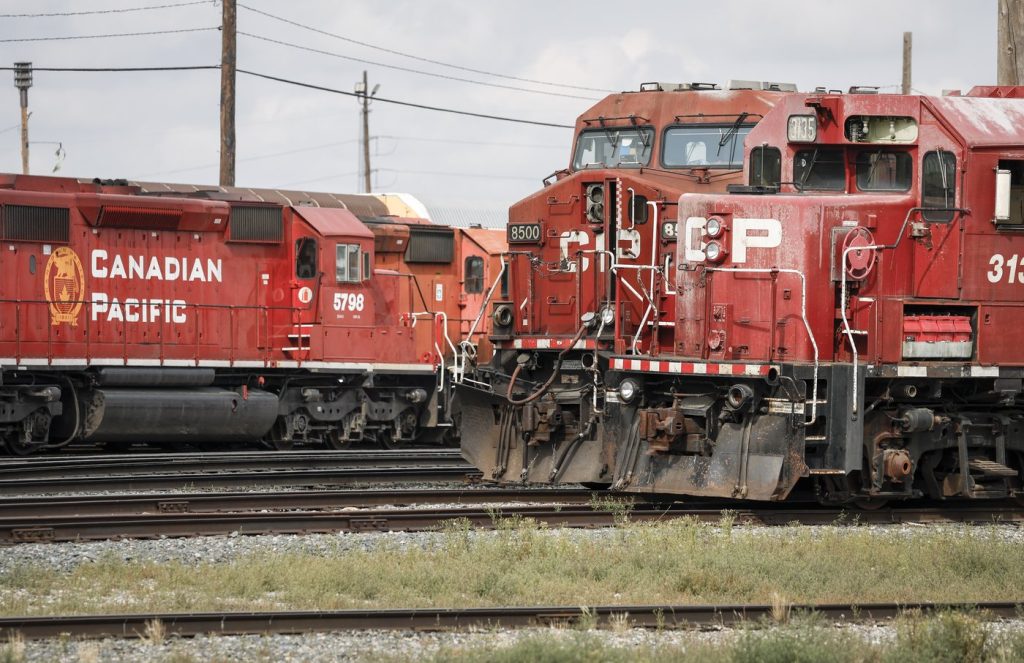
A union representing approximately 300 signals workers at Canadian Pacific Kansas City Ltd. has announced a strike, following the expiration of their 72-hour strike notice on Sunday morning without reaching a new agreement. The International Brotherhood of Electrical Workers (IBEW) stated that its members are responsible for the installation, maintenance, testing, and repair of railway signalling and communications systems throughout the CPKC network, which spans from Vancouver to Montreal.
In response to the strike, CPKC has implemented contingency plans to ensure operational continuity across Canada, asserting that safe and efficient rail service is being maintained during this labor dispute. The railway company claims it has extended offers for wage and benefit increases that align with existing collective agreements held with other unions. Furthermore, CPKC is urging the IBEW to end the strike and consider binding arbitration for settling the situation.
Despite extensive bargaining efforts that included federally mandated conciliation and mediation processes, the IBEW argues that CPKC has not adequately addressed its primary fiscal proposals. IBEW official Jason Sommer emphasized that the decision to strike was not made lightly, but was necessary due to CPKC's failure to confront key issues impacting recruitment, retention, compensation, and work-life balance within the Signals and Communications department.
The union has a strong backing for the strike, reflected in a vote that resulted in a 96-percent mandate in favor of taking job action. The IBEW remains open to discussions with the company, indicating its readiness to negotiate further. Significant issues outlined by the union include the need for improved wages, reimbursement for employee expenses, and more favorable work-life balance policies, specifically addressing the demanding schedules and extensive on-call obligations experienced by the workers.
Additionally, the union has expressed concerns over escalating retention problems within the Signals and Communications department, as seasoned employees increasingly seek better-paying opportunities elsewhere in the railway industry, including short-line railways.
In a second statement issued on Sunday, CPKC contested some of the union's claims, asserting that the wage and benefit increases demanded by the IBEW are significantly higher—essentially double—than those agreed upon with other Canadian collective bargaining units. The railway company also mentioned its proposal for a progressive scheduling option that would see workers on a seven days on, seven days off rotation. This system has been successfully utilized for five years for Calgary-based Signals and Communications workers, leading to nearly 100 percent retention in that workforce.
CPKC criticized the IBEW for not considering this successful scheduling approach for the national workforce, despite the union’s assertions that employee attrition is largely due to the challenging on-call requirements and demanding work schedules. The company expressed disappointment that a work stoppage could not be averted, especially after months of negotiations that were conducted in good faith.
This strike highlights growing tensions in labor relations in the railway industry and underscores the ongoing challenges surrounding employee retention and satisfaction amid competitive job markets.