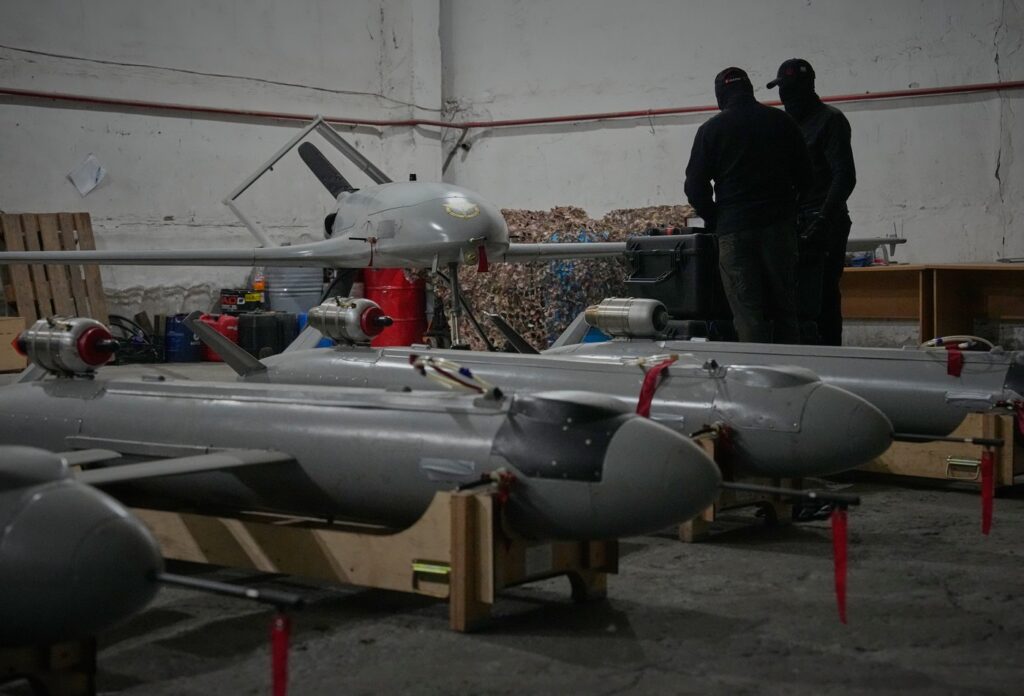
On February 24, 2022, Russian troops initiated a military invasion by crossing the Ukrainian border, a scenario that many experts had anticipated for an extended period. The situation was dire, with predictions suggesting that Ukraine, under assault, would succumb to Russian aggression in a matter of months. Yet, as the conflict stretches into its fourth year, Ukraine has not only survived but continues to actively resist, evidenced by its effective use of drones as formidable instruments of modern warfare. Despite a significant portion of Ukrainian territory remaining under Russian occupation, the Russian military has failed to make any substantial advances, resulting in a stalemate characterized by attrition. Ironically, this deadlock might present a favorable outcome for Ukraine.
In a recent episode of The Big Story podcast, host Caryn Ceolin engages in a dialogue with Dominique Arel, who serves as the chair of Ukrainian studies at the University of Ottawa. Their discussion focuses on the strategic attacks orchestrated by Ukraine targeting Russian logistical capabilities. A critical question arises: Is it plausible for Ukraine to leverage these actions to compel Russian President Vladimir Putin into considering a peace agreement?
Drones have played a pivotal role in the Ukrainian defense strategy. Their ability to conduct precision strikes, gather intelligence, and disrupt supply lines has significantly enhanced Ukraine's operational effectiveness on the battlefield. As the conflict continues, it has become increasingly apparent that these unmanned aerial vehicles have redefined the dynamics of warfare, allowing a smaller nation like Ukraine to challenge a more substantial military force.
The ongoing war has undoubtedly been one of attrition, with neither side managing to deliver a decisive blow that could alter the course of the conflict. Instead, Ukraine has maintained a resilient posture, using every available resource to target critical components of the Russian military infrastructure. By systematically undermining the logistics that support Russian operations, Ukraine aims to weaken its adversary and create opportunities for future offensives.
The dialogue on The Big Story podcast sheds light on the broader implications of Ukraine's military strategy. Arel emphasizes how these tactical maneuvers could potentially shift the balance of power, opening up avenues for negotiation. If Ukraine can sustain its operations and continue to inflict damage on Russian supply lines, there is a possibility that the international community may increasingly press for diplomatic solutions to end the conflict.
As the situation evolves, all eyes remain on the developments stemming from these military engagements. The stalemate, while challenging, provides Ukraine with the time and space needed to fortify its defenses and seek support from allies. The strategic use of drones and ongoing logistics attacks could serve as leverage in any potential negotiations, fundamentally altering how peace might be brokered in the region.
The podcast episode acts as a compelling exploration of the complex interplay between military strategy and diplomacy in the wake of prolonged conflict. As Ukraine continues to showcase its resilience, the question of how and when peace may be achieved remains at the forefront of discussions among scholars, military experts, and international diplomats alike.