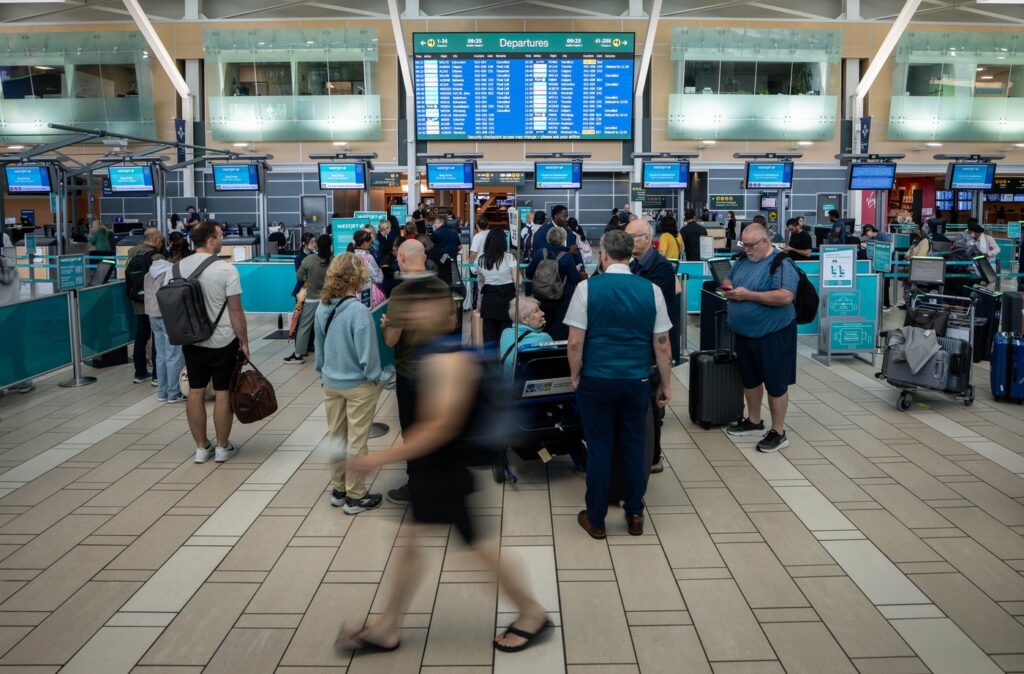
Flight disruptions at WestJet appear to be decreasing as operations resume following a short work stoppage over the long weekend. As of 4 p.m. ET on Tuesday, aviation analytics company Cirium reported that 16 WestJet flights had been cancelled, significantly less than the 300 cancellations reported on Monday, representing approximately 62 percent of the flights scheduled for that day. This situation arose despite WestJet reaching a tentative agreement that morning with the union representing its 4,400 flight attendants.
According to WestJet, a complete return to normal operations will take some time as the airline works on repositioning its aircraft and crews. Company spokesperson Ashley Tymko stated, "WestJet is resuming operations and entering the recovery phase following a labour disruption." The airline advised guests to continuously check the status of their flights before heading to the airport, as the aftermath of the disruption still affects travel plans.
Flight attendants at WestJet initiated a strike early Sunday morning after failing to secure a new contract before the strike deadline, which resulted in the grounding of flights across much of Canada. Following the work stoppage, WestJet extended the timeframe for customers to make a one-time change to their travel plans or cancel their flights without incurring fees. This concession applies to passengers set to travel between July 30 and the upcoming Thursday. Affected travelers are entitled to refunds or alternative arrangements as necessary when faced with delays or cancellations, per the airline’s policies.
Under Canadian passenger protection regulations, it is the airline's responsibility to arrange substitute transportation for ticket holders on rival carriers’ flights, if needed, within a 48-hour window. Ian Jack, spokesperson for the Canadian Automobile Association, clarified that although passengers are eligible for refunds, they are not obligated to take one if they prefer an alternative arrangement. He noted that the practicality of such regulations can sometimes be unclear due to the limited availability of seats on certain routes, particularly in Canada, which has a relatively small number of major carriers.
In response to a similar situation in the past, Air Canada established a policy allowing passengers impacted by cancellations to seek reimbursement for additional travel and related expenses. The airline committed to covering "reasonable expenses" for hotel stays and meals that arose from the three-day work stoppage, provided claims were supported with receipts.
WestJet, however, stated on its website that disruptions stemming from a labour strike are categorized as circumstances outside of its control according to Canada's Air Passenger Protection Regulations. This classification means that passengers will not receive compensation for inconvenience resulting from such disruptions. While airlines are obligated to assist travelers in getting to their destinations within 48 hours, Jack underscored that there is no legal requirement for additional compensation for "pain and suffering." He noted that Air Canada's decision to offer extra compensation was above the minimum legal requirements, which was beneficial for passengers.
Air Canada faced substantial fines totaling $426,000 due to 71 violations linked to its handling of customer obligations during the previous strike, with the Canadian Transportation Agency ruling that the airline failed to meet its obligations regarding refunds and rebooking passengers on alternative flights. The airline plans to contest these penalties.
The flight attendants at WestJet are expected to ratify their new agreement within 30 days, according to the local president of their union, Alia Hussain. While the deal includes pay increases, further details were not disclosed to ensure that union members receive proper briefings prior to public announcements. Contract negotiations have been ongoing in Calgary since January, with key points of contention being wage increases and the cabin crew’s claims of unpaid ground work.