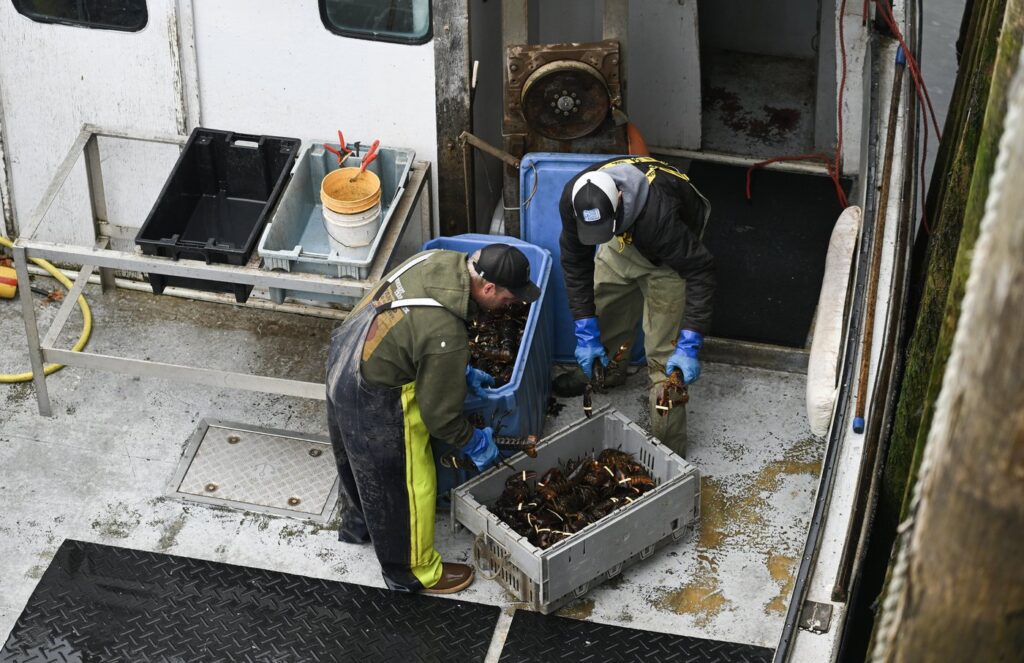
HALIFAX – Federal researchers are actively investigating methods to enhance the declining lobster populations in the Maritimes, driven by climate change and various challenges that have arisen in recent years affecting lobster catches.
A recent report from the Fisheries Department highlights that there is no singular solution to rejuvenating the lobster sector. Instead, the report suggests a combination of adjustments to lobster harvesting practices, both in the short and long term, could prove beneficial. Proposed alterations include shifting fishing seasons to earlier in the year, increasing protections for egg-bearing females, and modifying the minimum and maximum size regulations for lobsters.
Adam Cook, a research scientist with the Department of Fisheries and Oceans (DFO) and co-author of the report, affirmed that while the lobster population in the Maritimes is currently healthy, the initiative aims to initiate discussions within the industry before any drastic measures need to be taken. Cook explained, “Oftentimes in fisheries, we’re reacting to a bad situation or when things start to collapse. Here, we’re trying to provide proactive advice so that everybody can be prepared and have these discussions, essentially before (they) have to.”
Cook elaborated that lobster stocks are experiencing various pressures, primarily due to climate change, which warms ocean waters and forces lobsters, who prefer cooler environments, to migrate north. This movement results in diminished populations in their southern habitats, typically located around Maine and southwest Nova Scotia. Additionally, human fishing practices and shifts in the ecosystem, including the conditions of plankton and predator populations, are impacting lobster availability.
The report notes that lobster fishing seasons differ across the Maritimes and are often staggered throughout the year. Some seasons align with lobster biology by avoiding peak moulting periods—when lobsters shed their exoskeleton and become more vulnerable—while others are established based on traditional practices. The recommendations suggest modifying fishing seasons to commence earlier, thereby circumventing the warmer periods when lobsters are moulting and mating.
Additionally, the report proposes increasing the maximum size limit for catchable lobsters to enhance breeding stocks, as larger lobsters contribute significantly to egg production over multiple years. In contrast, while raising the minimum legal size for lobsters could be advantageous in the short term, the report notes that female lobsters tend to quickly surpass this threshold, allowing them only one additional moulting phase before becoming eligible for capture.
In the United States, regulations require fishermen to notch the tails of egg-bearing female lobsters and return them to the sea. Although it is illegal in Canada to keep a notched female, Canadian fishermen in most regions are not legally mandated to create a notch but may choose to do so voluntarily. The report indicates that increasing the notching of female lobsters could foster long-term population growth, contingent on effective implementation.
“None of the changes you put in place are going to instantaneously help your stock; they’re all going to take a bit of time,” said Cook. “When we talk about things that are protecting eggs and larvae, those are going to take eight to ten years before those larvae can return to the commercial stock. So it’s never a bad time to be talking about and thinking about harvest controls and what makes sense for your fishery.”
Kris Vascotto, executive director of the Nova Scotia Seafood Alliance and participant in the project, expressed optimism about the report's measures, suggesting they would likely be welcomed by the fishing sector, especially if tailored to local conditions. For example, releasing large adult lobsters could be prudent given their limited market accessibility and handling challenges.
“I think you’re really going to have to look at the individual fisheries to see whether they need it and what measures they actually require, because every fishery is different, and they’re all at varying stages of development,” Vascotto stated. “A one-size-fits-all approach for all of Atlantic Canada will be a challenging one to implement.”
In 2024, Canada’s lobster fishery was valued at approximately $1.97 billion, with nearly half of that figure, around $962 million, attributed to catches in Nova Scotia. Other contributions included New Brunswick at $323 million, Prince Edward Island at $318 million, Quebec at $232 million, and Newfoundland and Labrador with about $137 million.