CEUTA, Spain (AP) – Tragically, the deceased migrants have been recovered from the waters off Ceuta, following a chaotic and deadly crossing into Spain. Many of the migrants who forced their way across this frontier have since returned to Morocco. Nevertheless, an estimated 1,000 minors remain in Ceuta, left vulnerable and separated from their families in a foreign land.
A heart-wrenching account comes from a 17-year-old girl who witnessed her 8-year-old brother drown during the perilous crossing. As migrants surged around a breakwater and engaged in a frantic stampede on the rocky shore to escape the border fence last Thursday, she became separated from her mother. She has been sleeping on the streets of Ceuta since the incident. “I saw people stepping on the dead,” she recounted through a translator, emphasizing the desperation of their situation as “now we are children begging on the street.”
Spain's Interior Minister, Fernando Grande-Marlaska, provided a fresh estimate of the migrant influx, citing that approximately 72,000 crossed into Ceuta. Of these, he stated that around 70,000 had returned voluntarily, though local officials like Alejandro Ramírez estimated that 3,000 to 5,000 migrants still remain. The death toll has increased to 75 individuals, with most fatalities occurring in the water during the crossing. Morocco reported an additional 11 deaths, which are not included in the Spanish total.
Authorities indicated that many migrants returned to Morocco upon realizing the limited prospects of reaching mainland Europe or because the enclave, home to just 84,000 residents, was unable or unwilling to support them. Spanish security forces have attempted to repatriate some migrants, but by law, unaccompanied minors should be treated differently. Spanish law mandates that these minors receive care and protection, posing a significant dilemma for authorities.
Driven by a viral social media campaign encouraging a desperate bid for better opportunities, the teenage girl from Tangier is part of the surge into Ceuta. She described occasional acts of kindness from local residents, who have helped by providing food and clothing. One compassionate woman even invited her into her home for a bath. However, when attempting to seek help at a government-run center for youths, she found it already full.
In stark contrast, parents in Fnideq, on the Moroccan side of the border, are anxiously awaiting news of their children. Ibtissam Chari, a mother whose son Rayan crossed with friends last week, expressed her ongoing heartache, saying, “Every day, we come here in the hope to have any news but there is none.” While she received reports of other boys returning safely, the fate of her son remains unclear amidst rising concerns over casualties.
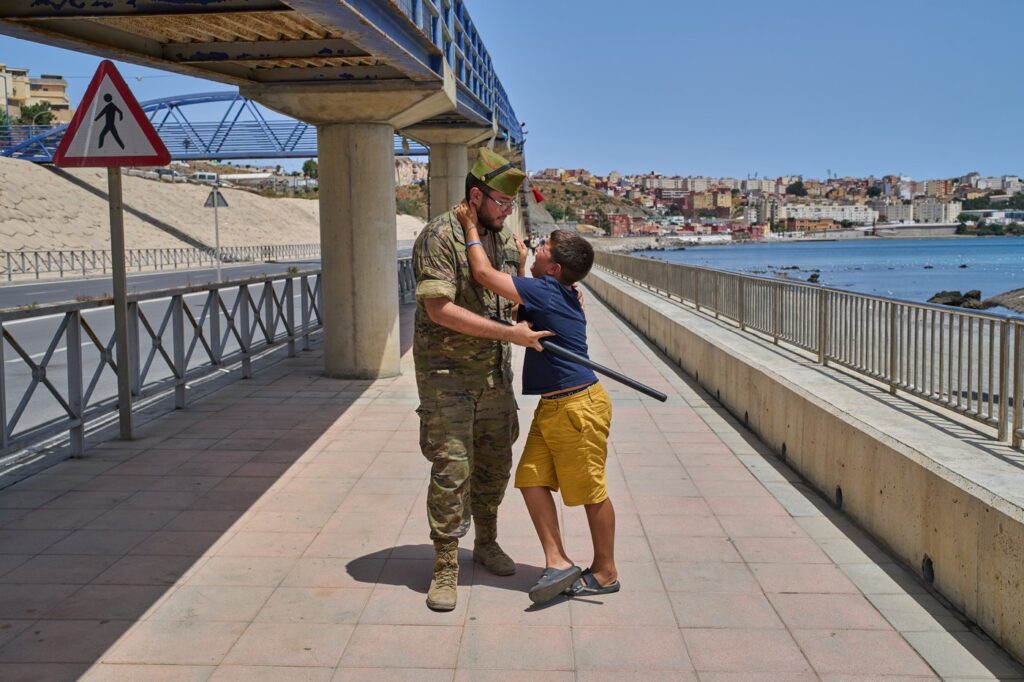
Spanish law states that while adult migrants can apply for asylum, their chances of receiving humanitarian protection are minimal. Unaccompanied minors, however, are afforded specific protections. An AP journalist observed Spanish soldiers engaging with an unaccompanied Moroccan boy, who pleaded not to be sent back. Due to local pressure and media presence, his repatriation was halted, and he was transferred to the Spanish Civil Guard.
The Spanish government recently announced a commitment of 25 million euros ($28.8 million) to assist minors in Ceuta. Additionally, the Civil Guard revealed the establishment of an office dedicated to missing persons, along with a contact email for families seeking information about their loved ones.
Amidst ongoing turmoil, the adult migrants remaining in Ceuta come from various backgrounds, including those fleeing conflict in Sudan, Gaza, and Afghanistan, alongside individuals from multiple African nations. Food scarcity remains a primary concern, with reports indicating that many have gone days without adequate sustenance due to closed grocery stores and a lack of willingness from locals to sell them food.
The city's migrant center is at capacity, holding 600 people, leading others to find shelter on beaches or hills surrounding the city. In the distance, their ultimate goal of reaching mainland Europe remains just beyond the horizon.