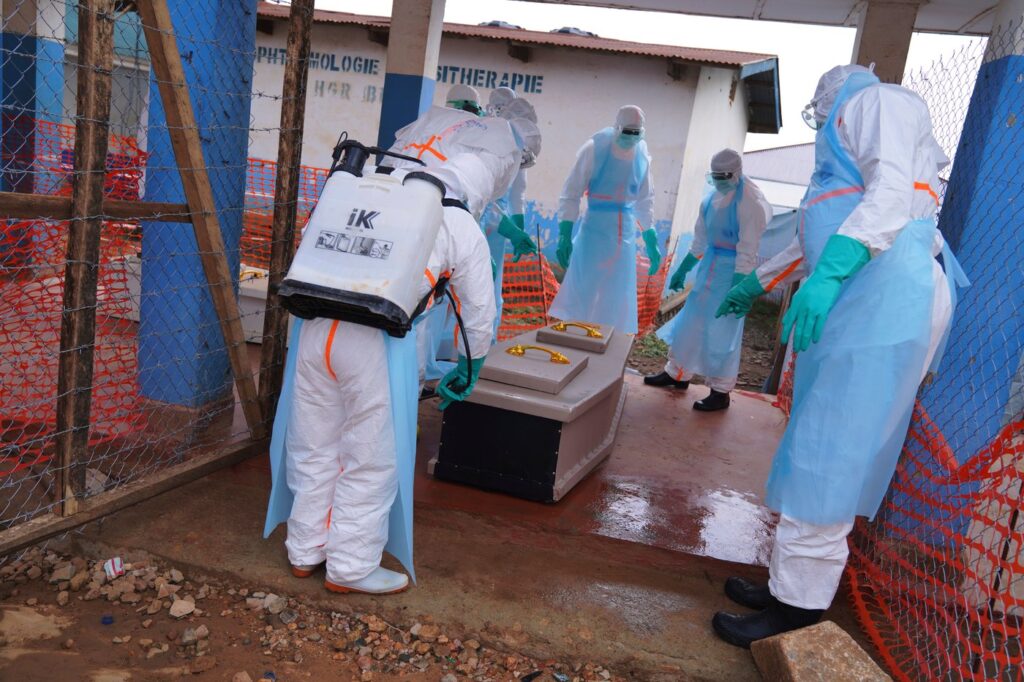
TORONTO – Health Canada has granted authorization to Moderna to initiate a clinical trial for a new mRNA vaccine aimed at combating the Bundibugyo type of Ebola, which has been responsible for the largest outbreak recorded in the Democratic Republic of Congo. This outbreak has claimed the lives of more than 1,700 individuals. Currently, there are no vaccines or treatments available for this particular strain of the virus.
Although Ebola has never been detected in Canada, the country will serve as the first participant in Moderna's global effort to develop an effective vaccine. The trial will involve healthy adult participants who will not be exposed to the virus to evaluate the vaccine's response safely. Moderna aims to enroll 80 individuals across locations in Truro, Nova Scotia, Halifax, and Toronto.
The Phase 1 clinical trial is designed to assess the vaccine's safety, establish appropriate dosage levels, monitor potential side effects, and analyze the body's antibody response. Health Canada announced in a release on Tuesday that the clinical trial received approval on July 30, indicating confidence in the vaccine's initial development phase.
A parallel initiative is underway in the United Kingdom, where a clinical trial for a Bundibugyo virus vaccine, developed by the University of Oxford, is also taking place. Health Canada emphasized that Moderna will need to undergo Phase 2 and 3 trials to confirm the vaccine's effectiveness before seeking authorization for broader public use.
According to the health department's news release, "Any final submission would need to meet Health Canada’s stringent safety, efficacy, and quality standards before the vaccine could be allowed on the Canadian market." Ebola is transmitted through unprotected contact with the bodily fluids of infected individuals or those who have died from the virus, leading to severe hemorrhagic fever.
Hamilton Bennett, Moderna’s executive director of global health security and research and development partnerships, stated that Canada was selected as the site for the first clinical trial due to Moderna's prior experience in conducting early-phase trials in the country. He highlighted Health Canada's robust regulatory oversight and Canada's established contributions to filovirus research as additional factors that influenced this decision.
Bennett expressed gratitude to Canadian researchers and participants, recognizing their vital role in a broader international effort to develop a vaccine targeted at a currently unprotected form of Ebola. The Bundibugyo variant was declared an outbreak on May 15 and has since spread throughout the Democratic Republic of Congo and neighboring Uganda. Due to the outbreak's severity, the World Health Organization has classified it as a public health emergency of international concern.
This initiative reflects a significant stride in global health efforts to combat Ebola, particularly at a time when the Bundibugyo strain poses a substantial risk to affected regions in Central Africa. With the ongoing research and trials, there is hope for the development of effective preventative measures against this deadly virus.