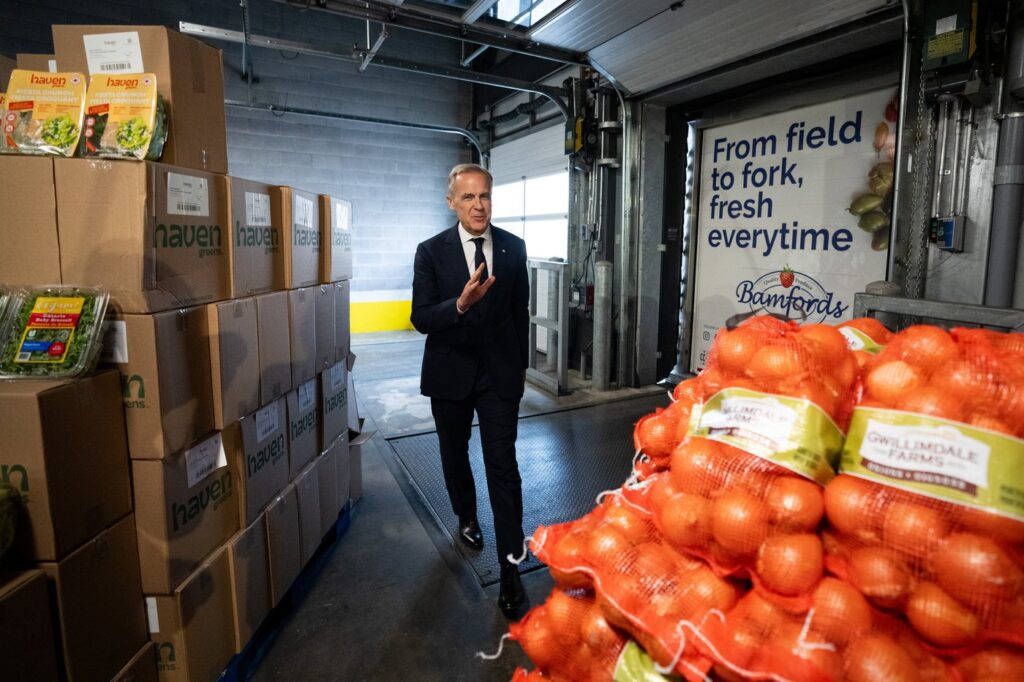
The Liberal government of Canada has unveiled a national food security strategy aimed at increasing Canadians' access to locally produced fruits, vegetables, and fresh items at lower prices. The plan, announced on June 11, 2026, is designed to transform the processes of buying, selling, transporting, and distributing food within the country, with a focus on supporting farmers, small independent businesses, and consumers.
The strategy is supported by over $3 billion in investments allocated over 10 years. Among the proposals is a significant $1 billion investment directed towards infrastructure development, which includes establishing food terminals and distribution hubs. This initiative seeks to empower independent grocers to effectively compete with larger retailers, making it easier for them to procure products directly from farmers and food processors.
This new strategy also places emphasis on enhancing the productivity and modernization capabilities of small- and medium-sized food processors to enable them to thrive in the global marketplace while attracting significant investments from larger manufacturers. Additionally, the government has earmarked $750 million to promote the establishment of greenhouses and hydroponic systems, thereby allowing for an expansion in year-round production of fruits and vegetables, particularly benefiting rural and northern communities.
To streamline the food supply chain further, the government plans to expedite the approvals for essential agricultural items such as seeds, feeds, fertilizers, and veterinary products, tackling existing backlogs that hinder efficiency in the system.
Highlighting Canada’s substantial role in the global agri-food market, Prime Minister Mark Carney noted that the nation ranks among the largest exporters of agricultural products, sending approximately $100 billion worth of goods abroad annually. Despite this, Carney pointed out that rising grocery prices—nearly 35 percent up since 2019—have created an unfavourable experience for most Canadians at the checkout. He remarked that the average Canadian family now spends around $10,000 annually on groceries, which translates to more than $800 monthly. A significant factor contributing to high grocery prices is the heavy reliance on foreign countries for food processing, with Canada importing nearly 90 percent of its fresh fruit and nuts and over 70 percent of its vegetables.
In response to these challenges, Carney emphasized the commitment to increasing domestic food production and processing, stating, "We’re going to grow more at home, process more at home, and feed more Canadians with Canadian food." He believes that the national food strategy will contribute towards the establishment of a robust and stable food system throughout Canada, from farms to grocery stores and ultimately to consumers' dinner tables.
According to the government's assessment, the Canadian grocery market is highly concentrated, with five major retailers controlling 75 percent of the market share. This dominance presents difficulties for independent grocers, as they often depend on larger competitors for supplies and may be subject to restrictions in their operations. The strategy proposes creating more opportunities for farmers to market their products and for independent grocery stores to source their inventory, enabling increased competition against large retailers.
The strategy also addresses the need for consumers to have more affordable grocery options, particularly for residents of rural, remote, and northern communities, who often face challenges accessing fresh produce at reasonable prices. A commitment is made to reduce the national dependency on imported foods by increasing local processing capabilities and leveraging new technologies to facilitate year-round production of crops that are currently not feasible to grow at scale.
The restaurant industry has lauded the new national food strategy, asserting that it marks a crucial movement in reinforcing Canada’s food system. Restaurants Canada indicated that several proposals they advocated during consultations have been incorporated into the final strategy, emphasizing the importance of domestic production, processing capacity, efficient distribution networks, competitive markets, and reliable food access.