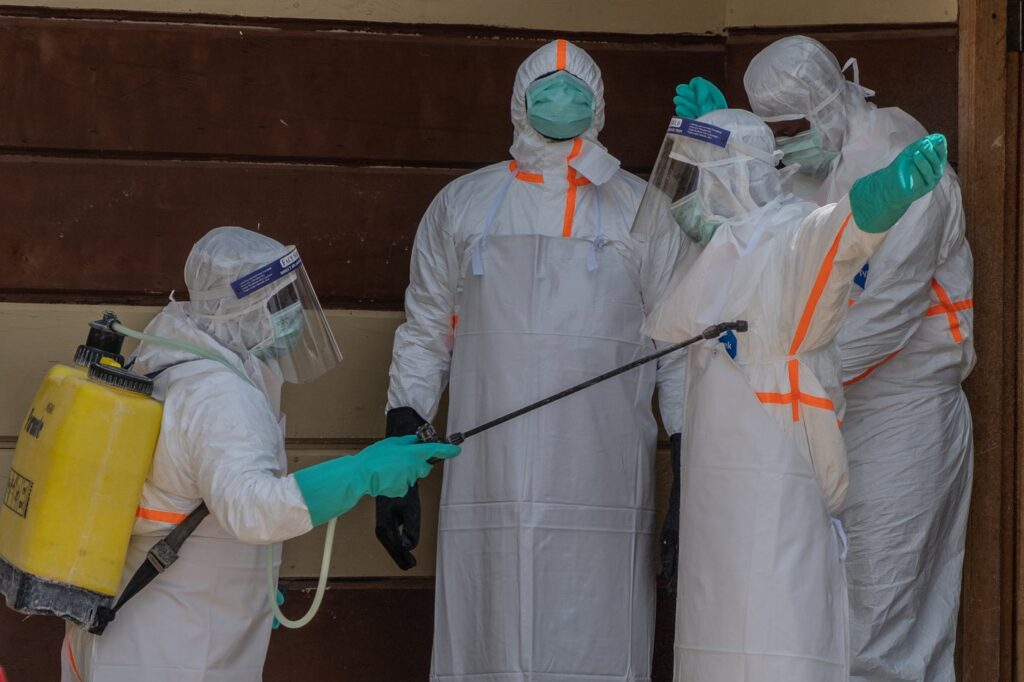
KINSHASA, Congo (AP) – The recent Ebola outbreak in the Democratic Republic of the Congo (DRC) is witnessing one of its most significant daily increases in cases, with authorities reporting 72 new infections within a 24-hour period. This surge brings the total confirmed cases to 782, of which 181 have resulted in deaths, including 29 new fatalities, as reported by Congo's Ministry of Health on Sunday.
Doctors Without Borders (MSF) emergency medical coordinator Kate White expressed concern over the rapid progression of the outbreak, stating, "One month on, the Ebola disease outbreak is outpacing the response effort. No one knows the true scale or exactly where the disease is spreading in Congo." The organization has noted that treatment centers in the outbreak's epicenter are overwhelmed with many patients arriving in severe illness, often without prior identification as contacts of infected individuals.
The Ministry of Health acknowledged that the rising numbers indicate a fast-spreading outbreak, but they also attribute this to enhanced surveillance efforts. Community members are actively reporting suspected cases, prompting response teams to investigate these reports. However, many experts believe the actual number of cases could be higher, as the outbreak was only confirmed on May 15, several weeks after it initially began.
The current outbreak is caused by the rare Bundibugyo virus, which has not been tested for in the early days of the outbreak. In contrast, most of the DRC's previous 16 outbreaks were caused by the more common Zaire virus, which now has an available vaccine. The majority of cases are concentrated in the Ituri province, accounting for over 90% of the reported infections. In addition, cases have surfaced in the North Kivu and South Kivu provinces, with some crossing into Uganda.
The contact tracing coverage rate has decreased to 56%, a significant drop from the previous week. Congolese health authorities have indicated that community resistance and the rapid spread of the outbreak into new health zones have complicated tracing efforts. The United Nations humanitarian office has noted that nearly a million people have been displaced in Ituri due to ongoing conflicts, further complicating the tracking of potential virus carriers as they frequently migrate to escape violence.
Efforts to trace contacts are especially challenging in the region's remote, mineral-rich areas, where thousands of miners move among different sites. Since the onset of the outbreak, 40 individuals have reportedly recovered, with a current fatality rate of 23% being observed. Despite the grave situation, life continues in the DRC, including aspects of nightlife as communities attempt to adapt to their circumstances.
The World Health Organization (WHO) announced that it is intensifying its efforts in testing, contact tracing, and treatment. Substantial supplies from the WHO have recently reached the DRC, while the Africa Centers for Disease Control and Prevention is deploying technical expertise to bolster laboratory systems, case identification, and community engagement initiatives to hasten the response to the outbreak.
Jean Kaseya, head of the Africa CDC, emphasized the commitment to supporting affected countries until the transmission is halted, calling on partners and donors to mobilize urgently needed resources to enhance the response efforts and save lives.