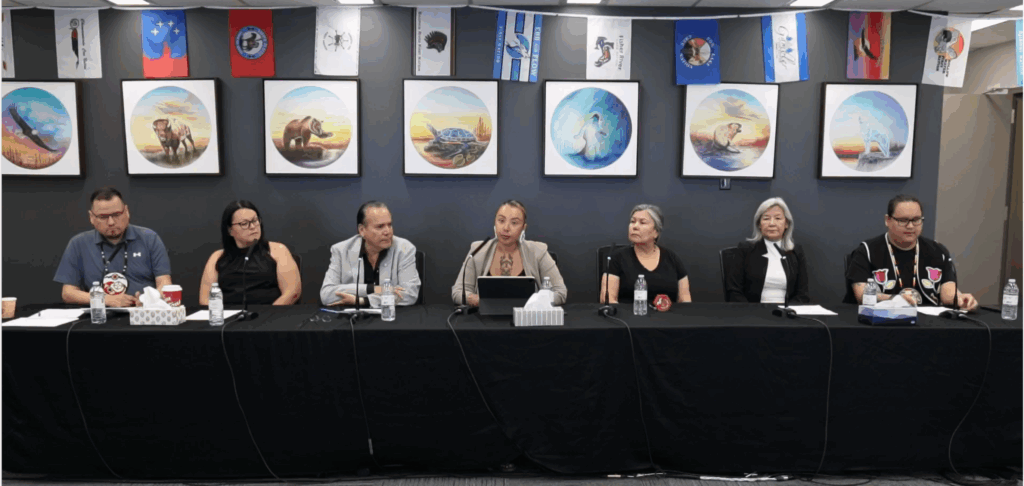
First Nations leaders from across Manitoba convened in Winnipeg, calling for urgent action on Bill S-2, known as An Act to amend the Indian Act, as Parliament is set to rise in less than two weeks. This legislation aims to repeal discriminatory status rules that currently impact children, grandchildren, and families within Indigenous communities.
Over a year since its introduction, leaders from various First Nations emphasized the importance of passing Bill S-2 before the House of Commons takes its summer recess. Grand Chief Kyra Wilson of the Assembly of Manitoba Chiefs remarked, “First Nations women, families, leaders, and advocates have done their part, and now Parliament must do its part. There is no justification for further delay on passing Bill S-2.”
Regional Chief Willie Moore of the Assembly of First Nations underscored the significance of a free vote in the House of Commons, stating, “Before the vote is called, it’s very important that Prime Minister Carney ensures a law of free vote, where all Liberal MPs and cabinet ministers can vote according to their conscience.”
Chief Lisa Young of the Bloodvein First Nation criticized how decisions about Indigenous identities are made by those detached from the communities, saying, “Someone in Ottawa sitting in a cubicle shouldn’t be deciding who we are when they have no idea where we are on the map.” Young's comments reflect a broader sentiment among First Nations leaders who feel disconnected from bureaucratic decision-making.
The proposed Bill S-2 intends to eliminate the second-generation cut-off rule, which can impede status entitlement from being passed down to future generations. This issue resonates personally for many leaders. Grand Chief Kyra Wilson shared a poignant example from her own family, noting, “It has a negative impact on our young people... my own child continually asks, ‘Why am I not registered?’”
Chief Betsy Kennedy of the War Lake First Nation expressed frustration over imposed status determinations, questioning, “To have someone determine that they are not our treaty, they are not status... Why would we want that?” Her comments reflect a growing concern among First Nations leaders that continued inaction on this legislation jeopardizes Indigenous identities.
Grand Chief Garrison Settee of the Manitoba Keewatinowi Okimakanak issued a stark warning, stating, “If we allow this to continue, seven generations down the road, will there be any treaty people left in this nation?” This sentiment emphasizes the urgency and long-term implications of the bill on the survival of treaty status within Indigenous communities.
In response, Indigenous Services Minister Mandy Gull-Masty stated that Bill S-2 would immediately restore status to approximately 3,500 individuals and address longstanding inequities under the Indian Act. The ministry acknowledged the importance of addressing the second-generation cut-off but indicated a desire to engage in further consultations with First Nations to seek comprehensive solutions before proceeding with broader reforms.
In their statement, the ministry highlighted the critical and deeply personal nature of these issues for many individuals, families, and communities, asserting that meaningful resolution of these matters is a vital aspect of advancing reconciliation efforts within Canada.