HAVANA (AP) — Observers have described Cuba's recent free-market reforms as the most extensive economic overhaul of the island's communist economy since the Cuban revolution. This significant shift comes as the grandson of former President Raúl Castro emphasized in an interview that Cuba needs to advance its economic development.
The 176 newly introduced measures aim to decentralize Cuba's state-run economy, which has struggled under a tightened embargo established during the Trump administration. Presently, the Cuban government controls what is produced, how it is produced, the pricing of goods, and the allocation of resources.
This reform plan grants more opportunities for private businesses, allowing imports and exports without state intermediation, free hiring practices, and the authorization of private banks. Additionally, it opens the door for Cubans living abroad to invest in their homeland and even permits fast-food chains to set up shop on the island.
Luis Carlos Battista, a Cuban-American political scientist and lawyer who is pursuing a doctorate at the University of Salamanca, noted that traditional pillars of Cuba's revolutionary economy, such as the state monopoly on foreign trade and the centralization of production, are being dismantled.
Previously, leaders like Raúl Castro have attempted to implement limited reforms but faced significant bureaucratic challenges. While announcing the changes, Cuban officials cautioned that effective implementation could be gradual, particularly emphasizing that these measures would not be sustainable without lifting the U.S. energy and financial embargo.
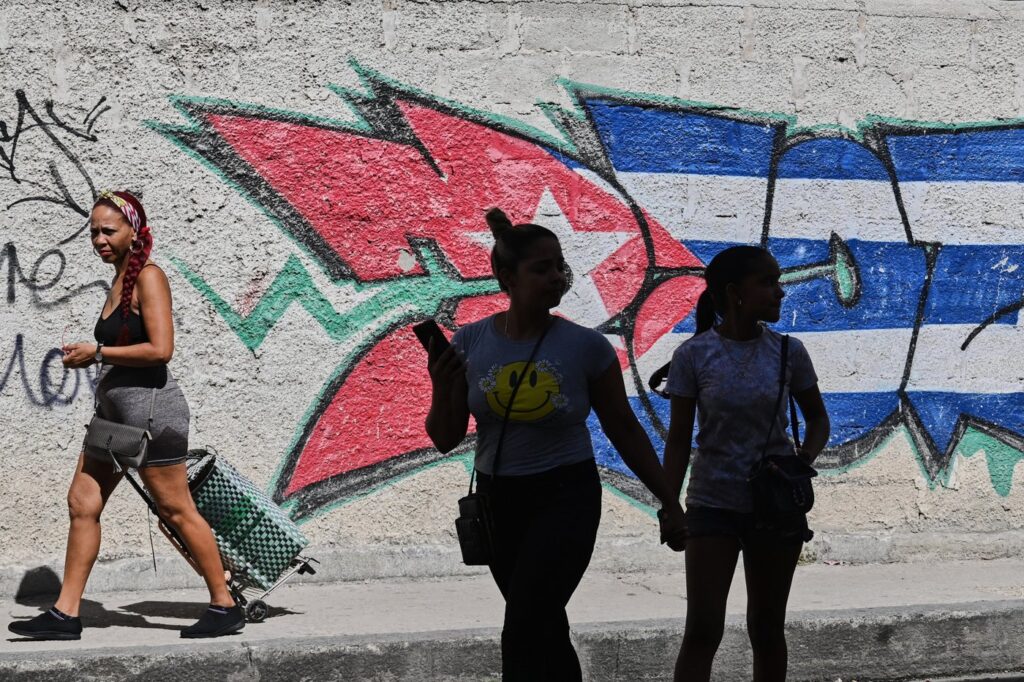
As of January, Cuba has been under a stringent energy and financial embargo imposed by the U.S., severely restricting access to fuel and exacerbating a crisis that has been mounting for over five years. The resulting blackouts have lasted up to 20 hours daily and have severely limited access to healthcare, transportation, and education.
U.S. President Donald Trump and Secretary of State Marco Rubio have acknowledged that they maintain a policy of maximum pressure to transform Cuba's political and economic system, which has withstood U.S. pressure for six decades, including military force as a potential option.
In a recent interview published by The National, Raul Guillermo Rodriguez Castro, the grandson of the revolutionary leader, reiterated that Cuba “doesn't even slightly represent a threat” to the United States. Rodriguez Castro expressed that the Cuban government is striving towards a “very Cuban” economic model.
He articulated the necessity for Cuba to pursue a path of economic development that diversifies its economy, business practices, and investment strategies. Cuban President Miguel Díaz-Canel mentioned that the proposed reforms are inspired by an analysis of the Vietnamese and Chinese examples—communist countries that have adopted market economies.
Analysts warn that U.S. sanctions will pose a significant barrier to these reforms. Lee Schlenker, a research associate at the Quincy Institute in Washington, emphasized that these new measures can only yield real effects if accompanied by a gradual lifting of U.S. prohibitions and sanctions. Without the removal of sanctions, many proposed reforms may remain ineffective, especially for potential investors who face penalties under the U.S. financial system for engaging with Cuba.
Other challenges to the implementation of substantial reforms include investor mistrust and what Battista described as “slow and inefficient” bureaucratic processes. Despite these obstacles, analysts like Paolo Spadoni, an associate professor in the Department of Social Sciences at Augusta University in Georgia, recognize that the Cuban government has a limited timeframe to deliver concrete results. Spadoni noted that to endure this unprecedented crisis and the sustained pressure from the United States, Cuban leaders must act quickly to implement reforms and achieve measurable outcomes.
For further updates on Latin America and the Caribbean, visit AP's coverage here.
— By Andrea Rodríguez, The Associated Press